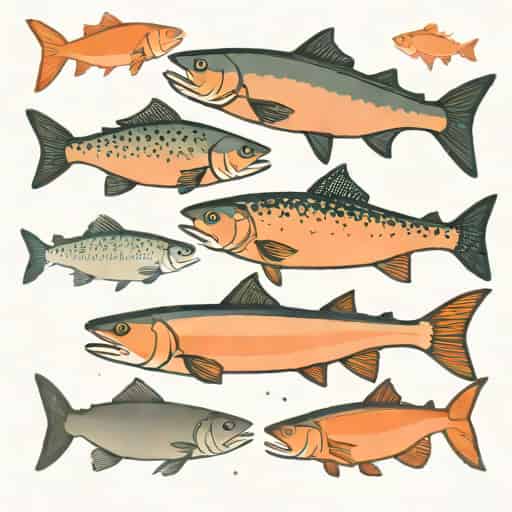
The coho salmon, also known as Oncorhynchus kisutch, is an iconic species of Pacific salmon that plays an important role in both ecological systems and human culture. Known for their remarkable migration patterns, coho salmon exhibit a fascinating life cycle that spans freshwater and marine environments. Understanding the life cycle of coho salmon is essential for conservation efforts, fisheries management, and ecological studies. From their birth in freshwater streams to their journey to the ocean and eventual return to spawn, coho salmon undergo significant changes in physiology, behavior, and habitat preference throughout their life. This topic explores the life cycle of coho salmon in detail, highlighting each stage and the challenges they face along the way.
Egg Stage
The life cycle of coho salmon begins in freshwater streams where female salmon lay eggs in gravel nests called redds. Each female can deposit thousands of eggs, which are then fertilized by male salmon. The eggs are covered with gravel to protect them from predators, sediment, and strong currents. Temperature, oxygen levels, and water quality are critical factors that determine the success of egg development. The eggs typically incubate for several weeks to months, depending on environmental conditions, before hatching into alevins.
Factors Affecting Egg Survival
- Water temperature Eggs require cool, oxygen-rich water to develop properly.
- Gravel composition Fine sediment can suffocate eggs, while coarse gravel allows water flow and oxygen exchange.
- Predation Aquatic insects, birds, and other fish can prey on exposed eggs.
Alevin Stage
Once the eggs hatch, coho salmon enter the alevin stage. At this stage, the young fish still rely on their yolk sac for nutrition. Alevins remain hidden within the gravel, which provides protection from predators. During this stage, the developing fish undergo significant growth and start forming vital organs and structures needed for survival in freshwater and, later, in the ocean.
Characteristics of Alevins
- Presence of yolk sac Provides energy and nutrients for initial growth.
- Hidden lifestyle They stay within gravel to avoid predators.
- Development of fins and gills Prepares them for free-swimming and breathing in water.
Fry Stage
After consuming their yolk sac, alevins emerge from the gravel as fry. Fry begin to actively feed on small invertebrates, plankton, and other microscopic food sources in freshwater streams. This stage is critical for growth and survival, as fry must learn to avoid predators and compete for food. They also start establishing territories and schooling behavior, which helps them navigate their environment more efficiently.
Fry Behavior and Habitat
- Feeding Transition from yolk sac to active feeding on insects and plankton.
- Protection Fry use stream vegetation, submerged logs, and rocks to hide from predators.
- Schooling Social behavior begins, providing safety in numbers.
Parr Stage
As fry grow, they enter the parr stage, which can last from several months to over a year depending on environmental conditions. Parr develop distinct vertical markings called parr marks along their sides, which serve as camouflage against predators in freshwater streams. During this stage, coho salmon continue to grow and accumulate energy reserves in preparation for their migration to the ocean. The parr stage is a time of intensive feeding and rapid growth, critical for the salmon’s survival in the more challenging marine environment.
Key Features of Parr
- Camouflage Parr marks provide protection from predators.
- Feeding and growth Intensive feeding to build energy for migration.
- Preparation for smoltification Physiological changes begin to adapt the fish for saltwater life.
Smolt Stage
Before coho salmon can enter the ocean, they undergo a process called smoltification, during which they transform into smolts. Smolts are physiologically adapted to survive in saltwater, including changes in body chemistry, color, and behavior. They become silvery and more streamlined, which helps them evade predators in the open ocean. During this stage, smolts begin their downstream migration from freshwater streams to estuaries and eventually the open ocean.
Adaptations During Smolt Stage
- Osmoregulation Ability to tolerate saltwater conditions.
- Coloration Silvery body for camouflage in open water.
- Behavioral changes Increased schooling and orientation toward the ocean.
Ocean Stage
Once in the ocean, coho salmon enter the marine stage of their life cycle. This stage can last from one to three years, depending on growth rates and environmental conditions. In the ocean, coho salmon travel long distances, feeding on fish, crustaceans, and other marine organisms. The ocean stage is a period of rapid growth, as salmon accumulate energy and size needed for reproduction. While the ocean provides abundant food, it also presents numerous predators, including larger fish, marine mammals, and human fishing activities.
Challenges in the Ocean
- Predation Sharks, seals, and larger fish pose constant threats.
- Food availability Seasonal variations affect growth and survival.
- Environmental factors Ocean temperature, currents, and pollution can influence health and migration patterns.
Spawning Stage
After maturing in the ocean, coho salmon begin their remarkable journey back to freshwater streams to spawn. This migration, often hundreds of miles, is guided by an extraordinary sense of navigation, allowing salmon to return to the same stream where they were born. Upon reaching their natal streams, coho salmon undergo physical changes, including bright red bodies and green heads in males. They spawn by digging redds in gravel and laying eggs, completing the life cycle. After spawning, most coho salmon die, providing nutrients to freshwater ecosystems and contributing to the survival of future generations.
Spawning Behavior
- Migration Journey from the ocean to natal streams.
- Reproduction Females lay eggs, and males fertilize them.
- Life cycle completion Death after spawning releases nutrients into the ecosystem.
Conservation and Challenges
Coho salmon face many threats throughout their life cycle. Habitat destruction, pollution, overfishing, climate change, and barriers like dams can negatively affect their populations. Conservation efforts focus on habitat restoration, sustainable fishing practices, and protecting waterways to ensure coho salmon can complete their life cycle successfully. Understanding the stages of their life cycle is crucial for implementing effective management strategies that preserve this important species for future generations.
The life cycle of coho salmon is a remarkable journey that highlights the complexity of nature and the interconnectedness of ecosystems. From the egg stage in freshwater streams to the ocean stage and the final spawning migration, coho salmon undergo dramatic physiological, behavioral, and ecological changes. Each stage is essential for growth, survival, and reproduction, illustrating the delicate balance between environmental conditions and species resilience. Protecting coho salmon and their habitats ensures the continuation of these incredible life cycles, maintaining biodiversity and ecological health in both freshwater and marine ecosystems.