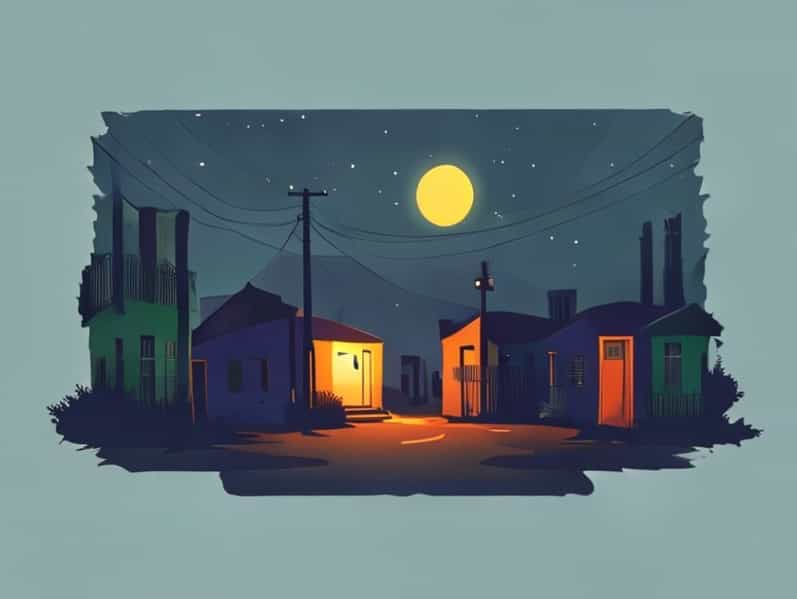
Literature offers a window into diverse human experiences, and the short story Nightfall in Soweto is a powerful example of how language can convey deep emotion, social commentary, and vivid imagery. Written by Alex La Guma, a renowned South African writer and anti-apartheid activist, the story portrays life in Soweto, a township marked by social struggle and racial injustice. Through the experiences of its characters, La Guma captures the harsh realities of apartheid-era South Africa while simultaneously employing a range of literary devices that enrich the narrative. Understanding these devices enhances the reader’s appreciation of the story, as they reveal layers of meaning and emotion embedded in the text. Literary devices in Nightfall in Soweto contribute significantly to its impact, creating a story that resonates long after it is read.
Imagery in Nightfall in Soweto
One of the most prominent literary devices in La Guma’s story is imagery. Imagery involves the use of descriptive language to create mental pictures that appeal to the senses, allowing readers to experience the setting, characters, and emotions more vividly. In Nightfall in Soweto, La Guma uses imagery to convey both the physical and emotional landscape of the township.
Examples of Visual and Sensory Imagery
- The depiction of the streets and homes of Soweto, illustrating the crowded, impoverished conditions in which the characters live.
- Descriptions of the nightfall itself, which symbolize darkness and uncertainty, creating a mood that mirrors the characters’ fears and struggles.
- Use of sensory details such as sounds of the township, including voices, footsteps, and environmental noises, which immerse the reader in the scene.
- Imagery reflecting the emotional state of characters, such as anxiety, tension, and anticipation, which enhances the story’s psychological depth.
Through these images, readers gain a tangible sense of place and atmosphere, which strengthens the emotional resonance of the narrative.
Symbolism
Symbolism is another key literary device used in Nightfall in Soweto. Symbolism involves using objects, characters, or events to represent broader concepts or themes. La Guma carefully employs symbolism to underscore the social and political realities of apartheid-era South Africa.
Examples of Symbolism
- The nightfall itself acts as a symbol of danger, oppression, and uncertainty faced by the township’s residents.
- The physical spaces in Soweto, including cramped homes and poorly lit streets, symbolize the social constraints and economic deprivation imposed by apartheid.
- Interactions between characters, such as tense encounters or moments of solidarity, symbolize broader themes of human resilience, resistance, and the struggle for dignity.
By incorporating symbolism, La Guma adds layers of meaning to the story, allowing readers to engage with its social commentary on multiple levels.
Characterization
Characterization is another literary device that is central to Nightfall in Soweto. Through characterization, La Guma develops multidimensional characters whose experiences reflect broader societal issues. The author uses both direct and indirect characterization to convey the inner lives of his characters.
Direct and Indirect Characterization
- Direct characterization is used when La Guma explicitly describes a character’s physical traits, emotions, or motivations.
- Indirect characterization is achieved through dialogue, actions, and interactions, revealing the character’s personality and social context.
- The contrast between different characters’ responses to adversity highlights themes of survival, courage, and moral complexity.
Effective characterization allows readers to empathize with the struggles of the characters, deepening the impact of the story’s social and emotional themes.
Irony
Irony is another significant literary device in La Guma’s story. Irony occurs when there is a contrast between expectation and reality, often highlighting contradictions in society or human behavior. In Nightfall in Soweto, irony is used to underscore the injustices and disparities experienced by the residents.
Types of Irony in the Story
- Situational irony, where the harsh realities of life in the township contrast sharply with the hopes or expectations of the characters.
- Dramatic irony, as readers may understand the dangers or social constraints before the characters themselves do, creating tension and emphasizing the precariousness of their circumstances.
- Verbal irony, present in the dialogue or inner thoughts of characters, highlighting their awareness of social injustice or the absurdity of certain situations.
Irony in the story serves to critique apartheid, making the social commentary more poignant and impactful.
Foreshadowing
Foreshadowing is also employed in Nightfall in Soweto to create suspense and anticipate future events. La Guma uses subtle hints and details to prepare the reader for upcoming developments, enhancing the narrative’s tension and emotional engagement.
Examples of Foreshadowing
- The use of the approaching night as a signal of imminent danger or change in the characters’ circumstances.
- Dialogue or thoughts that hint at potential conflicts or moral dilemmas.
- Descriptions of environmental cues, such as sounds or movements, that signal significant events to come.
Foreshadowing adds depth to the narrative, keeping readers engaged and emphasizing the unpredictability and challenges of life in Soweto.
Point of View and Narrative Technique
The point of view and narrative technique in Nightfall in Soweto are crucial literary devices that shape the reader’s experience. La Guma often employs a third-person limited perspective, allowing readers to understand the thoughts and emotions of specific characters while maintaining a broader view of the township and its social dynamics.
Impact of Narrative Technique
- Provides insight into characters’ inner lives and emotional states.
- Highlights the social and political environment in which the characters live.
- Facilitates a balance between personal experience and social commentary.
- Enhances the immersive quality of the story, making readers feel connected to both the characters and their environment.
The narrative perspective is therefore essential in conveying both the human and societal dimensions of the story.
Literary devices in Nightfall in Soweto play a vital role in conveying the depth, emotion, and social significance of the story. Through imagery, symbolism, characterization, irony, foreshadowing, and narrative perspective, Alex La Guma creates a rich and immersive narrative that captures the harsh realities of life in Soweto during apartheid. These devices not only enhance the reader’s understanding of the characters and setting but also emphasize the story’s broader social commentary, highlighting themes of oppression, resilience, and humanity. By analyzing and appreciating these literary techniques, readers gain a deeper insight into both the artistry of La Guma’s writing and the historical and social context that shapes the story, making Nightfall in Soweto a profound and enduring piece of literature.