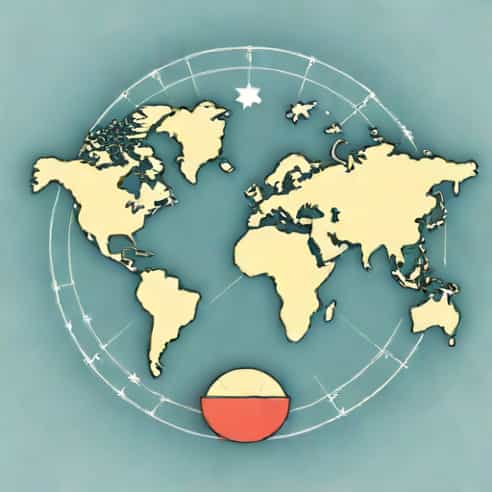
Ferdinand Magellan’s expedition to circumnavigate the globe stands as one of the most remarkable achievements in maritime history, reshaping the understanding of the world during the Age of Exploration. Undertaken in the early 16th century, this journey demonstrated the vastness of the Earth and the potential for global trade, while also highlighting the challenges and perils faced by explorers of the time. Magellan’s leadership, navigational skills, and determination set the stage for a journey that would forever change navigation, mapmaking, and the European perception of the world.
The Early Life of Ferdinand Magellan
Ferdinand Magellan was born in Portugal around 1480 and grew up during a time when European nations were aggressively exploring new trade routes. He gained early experience as a sailor, participating in expeditions to India and other parts of the Portuguese empire. These voyages allowed him to develop expertise in navigation, cartography, and maritime leadership. Despite his experience, Magellan faced challenges in Portugal, ultimately offering his services to Spain, which was eager to find a westward route to the Spice Islands of Southeast Asia.
The Spanish Sponsorship
Magellan proposed to the Spanish Crown a bold plan to reach the Spice Islands by sailing westward, avoiding Portuguese-controlled routes around Africa. King Charles I of Spain, later Emperor Charles V, agreed to sponsor the expedition in 1519. The goal was to establish Spanish influence in the lucrative spice trade and to assert European dominance in uncharted regions. The Spanish fleet, known as the Armada de Molucca, consisted of five ships and a crew of over 250 men, representing a significant logistical and financial undertaking.
The Voyage Begins
On September 20, 1519, Magellan set sail from Seville, Spain, navigating down the coast of Africa and across the Atlantic Ocean. Early challenges included navigating unfamiliar waters, maintaining crew discipline, and ensuring sufficient supplies for a long and uncertain journey. The expedition crossed the Atlantic to South America, where Magellan explored the eastern coast and sought a passage to the Pacific Ocean. This period tested both the physical endurance and leadership abilities of Magellan, as the crew faced disease, hunger, and disagreements among officers.
Discovery of the Strait of Magellan
One of the most significant achievements of the voyage was the discovery of the strait that now bears Magellan’s name. In October 1520, after months of searching along the southern coast of South America, the fleet navigated a complex and treacherous passage connecting the Atlantic and Pacific Oceans. The Strait of Magellan was narrow, filled with unpredictable currents, and lined with jagged cliffs, but it provided a navigable route to the vast Pacific. Successfully guiding the fleet through this passage demonstrated Magellan’s extraordinary navigational skill and resilience.
The Pacific Crossing
After exiting the strait, the expedition entered the Pacific Ocean, which Magellan famously described as peaceful compared to the turbulent waters of the strait. Despite this, the crossing posed its own challenges, including scarcity of food and fresh water, as well as the psychological toll of months at sea without sight of land. The crew suffered from scurvy and malnutrition, testing their endurance and Magellan’s leadership. Nevertheless, after several months, they reached the islands of Southeast Asia, marking the first European crossing of the Pacific Ocean.
The Spice Islands and Magellan’s Fate
The expedition eventually reached the Maluku Islands, also known as the Spice Islands, rich in valuable cloves and nutmeg. While Magellan’s goal of reaching these islands was achieved, he did not live to complete the circumnavigation. In April 1521, he was killed during a conflict with local forces on the island of Mactan in the Philippines. His death was a major setback, but the expedition continued under the command of Juan Sebastián Elcano, who successfully led the remaining crew back to Spain.
Completion of the Circumnavigation
On September 6, 1522, the ship Victoria returned to Spain, completing the first known circumnavigation of the globe. Only one of the original five ships survived, with 18 of the initial 250 crew members completing the journey. This historic achievement proved that the Earth was round and that it was possible to sail around it, opening new possibilities for global trade, exploration, and navigation. The expedition provided valuable knowledge about ocean currents, winds, and distant lands, laying the foundation for future explorers.
Legacy of Magellan’s Expedition
Magellan’s circumnavigation had profound and lasting impacts. It expanded geographic knowledge, reshaped global trade routes, and demonstrated the feasibility of intercontinental navigation. Magellan became a symbol of courage, determination, and visionary leadership, inspiring generations of explorers and seafarers. The Strait of Magellan, named in his honor, remains an important navigational route, and his voyage is widely studied in history and maritime education as a pioneering achievement in human exploration.
Challenges and Lessons Learned
The journey of Magellan also highlighted the immense challenges of early exploration. Sailors faced harsh weather, treacherous seas, food shortages, and resistance from local populations. The expedition underscored the importance of leadership, preparation, and adaptability in overcoming obstacles. These lessons influenced subsequent voyages and contributed to the development of safer, more efficient maritime travel, as well as improved knowledge of global geography and cultural exchange.
Impact on Global Trade and Exploration
The circumnavigation opened new avenues for trade, particularly in spices, silks, and other exotic goods from Asia. European nations began to establish colonies, trade posts, and maritime networks that reshaped global commerce. Magellan’s voyage also encouraged further scientific inquiry, mapping, and navigation techniques, forming a critical link in the chain of exploration that would continue throughout the 16th and 17th centuries.
Ferdinand Magellan’s expedition to circumnavigate the globe remains one of the most significant achievements in the history of exploration. Despite facing extreme challenges, including the loss of life and Magellan’s own death, the voyage demonstrated the vastness of the Earth and proved that the globe could be circumnavigated. Its legacy continues to influence maritime navigation, global trade, and the spirit of exploration. By understanding the journey, challenges, and outcomes of Magellan’s expedition, we gain insight into the courage, determination, and ingenuity required to expand the boundaries of human knowledge and experience.