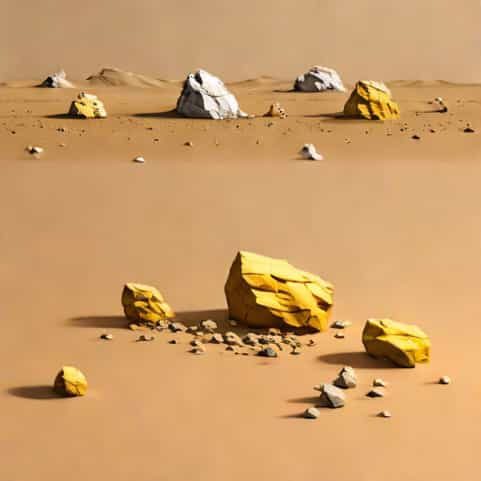
The discovery of sulfur stones on Mars by NASA’s Curiosity rover has sparked worldwide interest in planetary science and the search for ancient life. These unusual formations, found on the Martian surface, provide valuable clues about the planet’s chemical history, its environmental conditions, and the processes that shaped its geology. For scientists and space enthusiasts alike, the finding represents another piece in the puzzle of understanding Mars, a planet that has long fascinated humanity for its potential to reveal secrets about habitability beyond Earth.
The Role of Curiosity Rover
Since its landing in Gale Crater in 2012, NASA’s Curiosity rover has been one of the most successful robotic explorers in the history of space exploration. Its mission is to study the Martian climate, analyze soil and rock samples, and search for signs that Mars once had the conditions necessary to support microbial life. Equipped with advanced scientific instruments, Curiosity has made groundbreaking discoveries, from evidence of ancient water flows to the detection of organic molecules. The identification of sulfur stones is another milestone in its ongoing mission to decode the story of Mars.
What Are Sulfur Stones?
Sulfur stones, as observed by Curiosity, are rock formations containing significant amounts of sulfur-bearing minerals. These minerals may include sulfates or elemental sulfur that form through chemical processes involving water and volcanic activity. On Earth, sulfur is often associated with hydrothermal systems, hot springs, and volcanic regions. The presence of similar materials on Mars suggests that the planet once experienced geochemical processes resembling those on Earth. This makes the sulfur stones not only geologically fascinating but also important for understanding Mars’ past habitability.
How Curiosity Detected Sulfur Stones
Curiosity is equipped with instruments such as the ChemCam, the Sample Analysis at Mars (SAM) suite, and the Alpha Ptopic X-ray Spectrometer (APXS). These tools allow the rover to examine the chemical composition of rocks and soils. By directing laser pulses at rock surfaces and analyzing the resulting light spectrum, Curiosity can detect the presence of elements like sulfur. In addition, the rover collects drilled samples and delivers them to onboard laboratories for detailed chemical analysis. Through this combination of remote sensing and in-situ investigation, the sulfur-rich stones were identified with high confidence.
Geological Context of the Discovery
The sulfur stones were discovered in areas of Gale Crater where Curiosity has already observed evidence of ancient lakes and river systems. These regions show layers of sedimentary rock, which suggest that water once flowed across the Martian surface. Sulfur-bearing minerals could have formed as water evaporated, leaving behind chemical deposits. Alternatively, they may have originated through volcanic activity, as Mars has a history of massive volcanic eruptions. Both scenarios point to a dynamic and complex geological past for the Red Planet.
Importance of Sulfur in Planetary Science
Sulfur is a key element in planetary science because it provides insights into environmental conditions. On Earth, sulfur is part of many biological and chemical processes. It plays a role in energy production for certain microorganisms, and its minerals record information about the presence of water. The detection of sulfur stones on Mars is therefore significant because
- It indicates that Mars once had environments where chemical reactions involving sulfur could occur.
- It suggests the possible presence of hydrothermal activity, which is often linked to habitability.
- It provides evidence for water-related processes that shaped the Martian surface.
For scientists studying the potential for life, sulfur minerals are markers worth close attention.
Links to Ancient Water Activity
The presence of sulfur stones strongly supports the idea that liquid water once played an important role on Mars. Sulfates, for example, often form when water evaporates, leaving crystallized minerals behind. Finding such evidence in Gale Crater means that the region may have hosted shallow lakes or evaporating ponds billions of years ago. This makes sulfur stones a geological archive, preserving information about how water behaved on Mars and how long it may have persisted.
Implications for Habitability
The discovery also raises important questions about Mars’ potential to support life in the past. On Earth, sulfur is a crucial energy source for microorganisms living in extreme environments, such as deep-sea vents or acidic hot springs. If Mars had similar environments with sulfur chemistry, it could have provided the necessary energy and conditions for microbial communities to thrive. While Curiosity has not found direct evidence of life, the sulfur stones strengthen the argument that Mars once offered habitable niches.
Comparisons with Earth’s Environments
Studying Martian sulfur stones also allows scientists to draw comparisons with Earth’s geology. Regions like Yellowstone National Park or Iceland’s volcanic landscapes feature sulfur-rich formations linked to geothermal activity. These environments on Earth often host microbial ecosystems that thrive without sunlight, relying instead on chemical energy. By analyzing similarities between Martian sulfur deposits and Earth’s sulfur-rich ecosystems, researchers gain clues about how life could exist in extreme extraterrestrial settings.
Challenges in Studying Sulfur Stones
Although Curiosity has advanced tools, studying sulfur on Mars is not without challenges. Factors such as dust coverage, weathering of rock surfaces, and limitations in drilling depth can complicate chemical analysis. Furthermore, interpreting the origin of sulfur deposits requires careful consideration of multiple geological processes. Distinguishing whether they formed through volcanic activity, evaporation, or hydrothermal reactions is a complex task that requires more data and possibly future missions with more sophisticated instruments.
Future Exploration Goals
The discovery of sulfur stones is likely to guide future exploration strategies on Mars. NASA’s Perseverance rover, currently operating in Jezero Crater, also investigates signs of ancient water and habitability. Findings from Curiosity may help determine where future missions should focus, particularly in areas where sulfur minerals are present. Future robotic explorers, and potentially human missions, could collect physical samples of sulfur stones for analysis on Earth, where laboratories can provide more detailed insights into their structure and origin.
Why Sulfur Stones Matter for Mars Research
The significance of these sulfur-rich rocks goes beyond their chemical composition. They represent
- Evidence of Mars’ geochemical complexity
- A record of past interactions between water and rock
- A possible connection to energy sources that could have supported life
- A clue for reconstructing the planet’s climate history
Each of these aspects contributes to the broader mission of planetary science understanding Mars not only as a neighbor but also as a potential host for life in the past.
Public Fascination and Scientific Excitement
The public is deeply fascinated by discoveries like sulfur stones because they bring us closer to answering age-old questions Was there ever life on Mars? Could Mars one day support human settlement? Each new finding by Curiosity fuels interest in space exploration and demonstrates the importance of continued investment in robotic missions. For the scientific community, the sulfur stones are a treasure trove of data that will be studied for years to come.
The discovery of sulfur stones on Mars by NASA’s Curiosity rover is a significant achievement in the exploration of our solar system. These formations highlight the importance of sulfur as a chemical marker for past water activity and potential habitability. By studying their composition, scientists gain a better understanding of the planet’s geological history and the conditions that once shaped it. While many mysteries remain, the sulfur stones represent a step forward in our quest to unravel the secrets of Mars, reminding us of the powerful role exploration plays in expanding human knowledge and imagination.