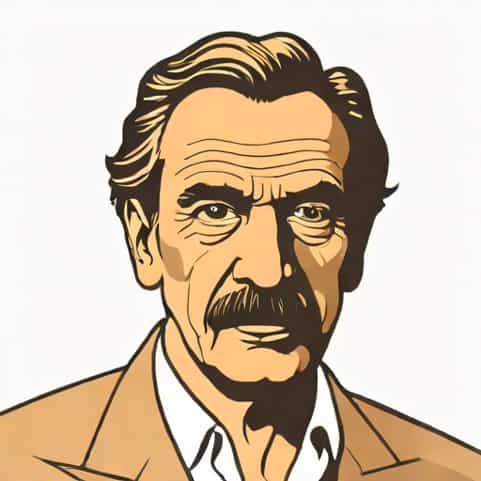
Zorba the Greek, written by Nikos Kazantzakis, is a timeless literary masterpiece that explores the depths of human experience through the lens of passion, freedom, and existential inquiry. First published in 1946, the novel continues to captivate readers with its vivid characters, philosophical undertones, and portrayal of life’s joys and sorrows. Kazantzakis’s work delves into the complexities of human nature, highlighting the contrasts between intellectual contemplation and the visceral experiences of living fully. Through the story of Zorba and his interactions with the narrator, the novel raises profound questions about authenticity, happiness, and the pursuit of meaning.
Author Background Nikos Kazantzakis
Nikos Kazantzakis, one of Greece’s most influential writers, was known for his philosophical and literary contributions. Born in 1883 on the island of Crete, Kazantzakis developed a deep interest in literature, philosophy, and religion from an early age. His experiences traveling across Europe and Asia exposed him to diverse philosophical ideas, which significantly influenced his writing. In Zorba the Greek, Kazantzakis draws upon his own explorations of human existence, blending philosophical reflection with vivid storytelling. The novel reflects his enduring fascination with freedom, mortality, and the human capacity for joy.
Philosophical Themes in Zorba the Greek
At the heart of Zorba the Greek lies a rich tapestry of philosophical themes that resonate with readers across generations. The novel contrasts two central figures the unnamed narrator, an intellectual who approaches life with cautious analysis, and Alexis Zorba, a passionate, impulsive man who embodies experiential living. Through their interactions, Kazantzakis explores existential questions about how humans should live, the pursuit of happiness, and the tension between thought and action. Zorba’s zest for life challenges the narrator to embrace unpredictability and the richness of lived experience.
Freedom and Individuality
Freedom is a recurring theme in the novel, particularly embodied by Zorba’s character. Zorba lives in accordance with his own instincts and desires, rejecting societal constraints and conventional expectations. His approach to life emphasizes personal responsibility and the courage to embrace one’s choices fully. Kazantzakis uses Zorba’s character to suggest that authentic freedom involves not only liberation from external pressures but also an acceptance of life’s inherent uncertainties. The novel encourages readers to reflect on the ways in which they might live more fully and authentically.
Plot Overview
Zorba the Greek tells the story of a young intellectual who travels to Crete to manage a lignite mine. The narrator meets Alexis Zorba, an exuberant, larger-than-life character who becomes his companion and guide. Through their experiences, from working at the mine to interacting with villagers, the novel explores themes of love, mortality, and the human capacity for joy. Zorba’s unrestrained approach to life contrasts with the narrator’s cautious rationality, resulting in moments of both conflict and deep insight. The novel’s episodic structure allows readers to explore various facets of human experience alongside the characters.
Zorba’s Influence on the Narrator
The relationship between Zorba and the narrator is central to the novel’s philosophical impact. Zorba’s approach to life-immersive, spontaneous, and fearless-gradually influences the narrator, encouraging him to confront his own fears and embrace life more fully. The novel illustrates the transformative power of friendship and mentorship, suggesting that human connections can inspire profound personal growth. Through Zorba’s guidance, the narrator learns to navigate uncertainty and appreciate the simple pleasures of existence, from dancing and music to the joys of labor and nature.
Love, Loss, and Tragedy
While Zorba the Greek is celebrated for its exuberance and vitality, it also addresses themes of love, loss, and tragedy. The novel does not shy away from life’s hardships, exploring heartbreak, betrayal, and mortality. Kazantzakis presents these moments with realism and empathy, showing how suffering and joy coexist in the human experience. Zorba’s ability to confront tragedy with resilience and humor underscores the novel’s message about the importance of embracing life in its entirety, with all its uncertainties and contradictions.
Symbolism and Cultural Context
The novel is rich in symbolism and provides insight into Greek culture and social norms of the early 20th century. Crete, with its rugged landscapes and vibrant communities, serves as both a setting and a symbolic representation of life’s unpredictability. Zorba himself is a symbol of vitality, instinct, and the celebration of the human spirit. The novel’s depiction of Cretan customs, traditions, and daily life immerses readers in the culture while also highlighting universal themes of human experience. Kazantzakis uses local color and folklore to enrich the narrative and deepen its philosophical resonance.
Dance and Music as Metaphors
Dance and music are recurring motifs in Zorba the Greek, symbolizing freedom, joy, and connection to the present moment. Zorba’s famous dancing at the novel’s conclusion is emblematic of life’s impermanence and the need to embrace every fleeting moment with passion. These elements highlight the contrast between intellectual detachment and immersive experience, emphasizing the novel’s core message about living fully. Music and dance serve as both literal and metaphorical expressions of the characters’ emotional states and philosophical insights.
Legacy and Adaptations
Zorba the Greek has left a lasting legacy in both literature and popular culture. The novel was adapted into a highly acclaimed 1964 film starring Anthony Quinn as Zorba, which brought the story to a global audience. The film adaptation preserved much of the novel’s philosophical depth while showcasing the vibrancy and charisma of Zorba’s character. Over the decades, the story has inspired stage productions, musical adaptations, and references in contemporary literature and media. Kazantzakis’s exploration of freedom, passion, and human resilience continues to resonate with readers worldwide.
Impact on Modern Literature
The novel’s influence extends beyond adaptations, shaping modern literature’s treatment of existential themes and character-driven narratives. Kazantzakis’s blend of philosophical inquiry with compelling storytelling has inspired writers to explore the tension between thought and experience. Zorba the Greek remains a benchmark for novels that seek to engage readers both intellectually and emotionally, demonstrating the enduring power of literature to reflect on life’s essential questions. Its exploration of human freedom and vitality continues to inspire reflection and debate among readers and scholars alike.
Nikos Kazantzakis’s Zorba the Greek is a literary masterpiece that examines the richness and complexity of human life. Through the characters of Zorba and the narrator, the novel explores themes of freedom, passion, mortality, and authenticity. Its vivid depiction of Crete, symbolic use of dance and music, and philosophical depth make it a compelling read that continues to resonate with audiences worldwide. By presenting life in all its contradictions-joy and sorrow, freedom and responsibility, passion and reflection-Kazantzakis encourages readers to embrace existence fully and courageously. Zorba the Greek remains a timeless work, inviting contemplation, celebration, and an enduring appreciation for the human spirit.