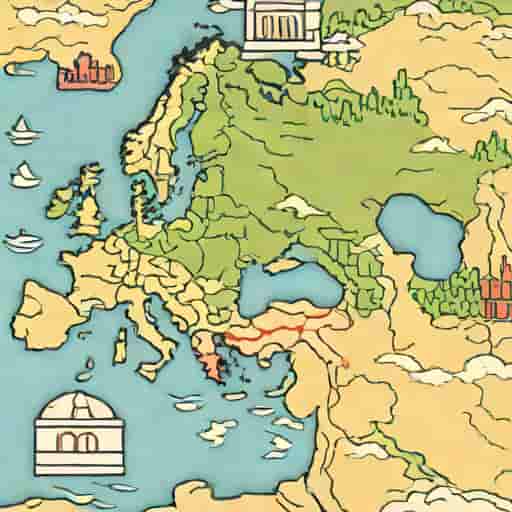
One of the most significant factors contributing to the rise and success of early Rome was its unique geographical advantages. Situated in the central part of the Italian peninsula, Rome benefited from a combination of natural features that provided protection, access to trade, and fertile land for agriculture. These geographical elements were critical in allowing the small settlements on the Palatine Hill to grow into a powerful city-state. Understanding the geography of early Rome helps explain why it became the center of political, military, and economic development in ancient Italy. The location offered strategic defense opportunities, abundant resources, and connectivity that together laid the foundation for Rome’s eventual expansion across the Mediterranean.
Strategic Location on the Tiber River
Access to Trade and Transportation
Rome’s position on the Tiber River provided an important advantage in trade and transportation. The river allowed early Romans to engage in commerce with nearby communities and facilitated the movement of goods such as grain, olive oil, and wine. The Tiber connected Rome to the Tyrrhenian Sea, giving access to broader Mediterranean trade networks. This connectivity encouraged economic growth and helped Rome establish relationships with neighboring settlements, promoting cultural exchange and the spread of influence beyond the immediate region.
Control and Defense
The Tiber River also contributed to Rome’s defensive capabilities. The river created a natural barrier against potential invaders approaching from the west, making it more difficult for enemy forces to launch a surprise attack. In combination with the city’s elevated hills, the Tiber helped protect early Rome from external threats. The natural defensive features of the river and surrounding terrain allowed Rome to grow securely while focusing on internal development and the consolidation of power.
The Advantage of Seven Hills
Natural Fortifications
Early Rome was built on seven hills, including the Palatine, Capitoline, Aventine, Quirinal, Viminal, Esquiline, and Caelian Hills. These elevated areas provided natural fortifications against attacks and invasions. Settlements on the hills could monitor surrounding territories and defend more effectively against enemies. The hills gave the early Romans a strategic advantage in warfare, allowing them to repel invasions and maintain control over the city’s core areas. This elevated terrain played a crucial role in Rome’s early military strategy and contributed to the city’s long-term survival.
Urban Planning and Settlement
The seven hills also influenced the urban development of early Rome. The higher ground was ideal for building structures such as temples, public spaces, and fortifications. Settling on elevated land reduced the risk of flooding from the Tiber and provided better visibility for monitoring trade routes and potential threats. Over time, the hills became the center of political and religious life in Rome, further consolidating the city’s importance in the region.
Fertile Land and Agriculture
Valley of the Tiber
The area surrounding early Rome, particularly the valley of the Tiber, offered fertile soil suitable for agriculture. This allowed the early population to cultivate crops such as wheat, barley, and olives, which provided food security and supported population growth. Access to reliable agricultural resources enabled Rome to sustain a growing population and feed its armies during periods of expansion. Fertile land was a key factor in ensuring economic stability and allowing the city to thrive in its early stages.
Pasture and Livestock
In addition to crops, the region provided grazing land for livestock, including cattle, sheep, and goats. Raising animals offered meat, milk, wool, and other resources essential for everyday life and trade. The combination of fertile land and abundant livestock contributed to the economic self-sufficiency of early Rome. This agricultural advantage allowed the Romans to focus on building infrastructure, establishing governance, and expanding their influence rather than struggling with food shortages.
Proximity to Other Settlements
Trade and Alliances
Rome’s central location on the Italian peninsula placed it near other important settlements, including the Etruscans to the north and the Greek colonies in southern Italy. This proximity encouraged trade, cultural exchange, and political alliances that strengthened Rome’s position. Early Romans could adopt technologies, ideas, and military tactics from neighboring civilizations, helping them grow more sophisticated and capable over time. The ability to interact with surrounding regions was a crucial geographical advantage that facilitated economic growth and political consolidation.
Expansion Opportunities
Being centrally located also provided strategic advantages for military expansion. Rome could launch campaigns north, south, east, and west with relative ease, giving it flexibility in responding to threats or opportunities. The central position helped Rome become a dominant power in the Italian peninsula, eventually paving the way for the conquest of neighboring regions and the creation of a broader empire. This geographical advantage allowed early Rome to transition from a small settlement into a major regional power.
Natural Defenses
Hills and Rivers
In addition to the Tiber River and the seven hills, other natural features of the surrounding landscape contributed to Rome’s defense. Hills, forests, and rivers in the surrounding area created obstacles for invading armies. Early Romans could use these features to control access points and establish defensive positions. The combination of elevated terrain, waterways, and natural barriers made it more difficult for enemies to attack effectively and allowed Rome to maintain security while focusing on growth and development.
Impact on Military Strategy
These natural defenses influenced Roman military strategies for centuries. By understanding and using the geographical features to their advantage, early Romans could protect their settlements and expand their territory. Geography became intertwined with military planning, giving Rome a long-term advantage in both defense and conquest. This early understanding of terrain and strategy helped Rome build the foundations of a military tradition that would later dominate the Mediterranean world.
Access to Resources
Water and Building Materials
Rome’s location provided access to essential natural resources, including fresh water from the Tiber and nearby springs, as well as stone, clay, and timber for construction. These resources supported the building of infrastructure such as roads, bridges, aqueducts, and public buildings. Access to materials facilitated urban growth and contributed to the development of Roman engineering skills, which became a hallmark of the civilization.
Tradeable Goods
The region also offered products that could be used in trade, including agricultural surplus, timber, and minerals. By controlling access to these resources, early Rome could engage in commerce with neighboring communities and build wealth. Economic strength allowed the city to invest in defense, public projects, and cultural activities, reinforcing its position as a growing power in Italy.
One of the geographical advantages of early Rome was its unique combination of natural features that supported defense, agriculture, trade, and expansion. The city’s position on the Tiber River, its settlement on seven hills, fertile surrounding lands, proximity to other settlements, natural defenses, and access to essential resources all contributed to its early success. These advantages provided a strong foundation for Rome to grow from a small settlement into a dominant power in Italy and, eventually, across the Mediterranean. Geography not only shaped the physical development of the city but also influenced its military, economic, and political strategies, ensuring Rome’s long-lasting influence and historical significance.