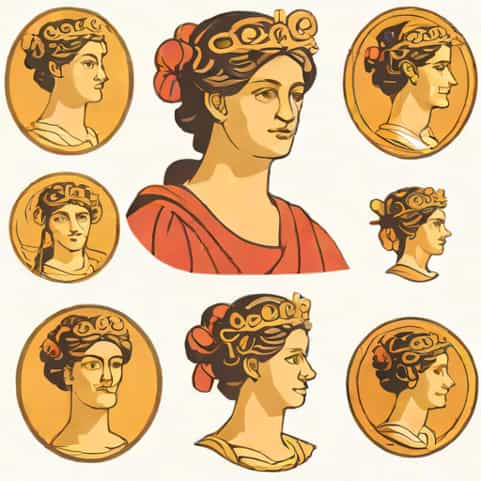
Pictures of Agrippina the Younger offer a fascinating glimpse into the life of one of ancient Rome’s most influential women. Known for her intelligence, political ambition, and connection to the Julio-Claudian dynasty, Agrippina has been immortalized in coins, statues, and paintings that reflect her power and status. Viewing these images allows historians, scholars, and enthusiasts to explore the visual representation of a woman who shaped Roman politics, motherhood, and imperial influence. Each portrait tells a story not only of her appearance but also of her role in Roman society, her relationships with emperors, and the way she used imagery to assert authority and legacy.
Historical Background of Agrippina the Younger
Agrippina the Younger was born in 15 AD as the daughter of Germanicus and Agrippina the Elder, making her a member of the prominent Julio-Claudian family. She was the sister of Emperor Caligula and later the mother of Emperor Nero. Pictures of Agrippina the Younger, whether through coins or statues, often reflect her imperial lineage and noble stature. These images are not just artistic creations; they were used politically to communicate her legitimacy, influence, and familial connections. Studying these visual representations provides insight into how Roman women of power were depicted and perceived by society.
Depictions on Coins
One of the most common sources of pictures of Agrippina the Younger is Roman coins. Coins featuring her portrait were often minted during her time as a member of the imperial family and as the mother of Nero. These images emphasize her facial features, hairstyles, and sometimes symbols of power. Coins served as a way to convey her presence and authority throughout the empire. Observing these coin images helps modern audiences understand the aesthetic standards, political messaging, and symbolism associated with Agrippina during her lifetime.
Statues and Busts
In addition to coins, statues and busts of Agrippina the Younger provide a more detailed visual representation. Many of these sculptures depict her with carefully styled hair, elaborate clothing, and a composed expression, signifying dignity and control. Statues were often placed in public spaces or imperial residences to assert her prominence. By examining these images, historians can infer not only physical characteristics but also the cultural and social values of the time. The sculptures reflect how Agrippina wanted to be seen and remembered by her contemporaries and posterity.
Artistic Elements in Portraits
- Hairstyles – Often intricate, representing fashion and status.
- Facial expressions – Calm and authoritative, showing intelligence and confidence.
- Clothing – Draped garments reflecting wealth and imperial rank.
- Symbols – Sometimes accompanied by motifs indicating power, motherhood, or divine favor.
Political Significance of Images
Pictures of Agrippina the Younger were not purely decorative; they had deep political significance. As a powerful woman in the Roman Empire, she needed to assert her position through visual representations. Portraits reinforced her legitimacy as the mother of an emperor and a member of the imperial family. Images on coins and public sculptures communicated her influence to the people and the Senate. The careful construction of these images demonstrates how visual media was an essential tool for propaganda and political strategy in ancient Rome.
Influence on Roman Society
Through her images, Agrippina the Younger influenced how women in the elite classes were perceived. Coins and statues displayed her authority in public life while also emphasizing traditional roles such as motherhood. By combining these aspects, her portraits served to normalize her political power and make it acceptable within the patriarchal structure of Roman society. Modern viewers studying these pictures gain insight into the balance of gender, power, and imagery in ancient Rome, highlighting Agrippina’s ability to navigate and shape social norms.
Legacy Through Visual Representation
Pictures of Agrippina the Younger continue to be valuable sources for historians and art enthusiasts. They provide a tangible connection to the past, allowing people to visualize a figure who played a critical role in Roman history. Whether through coinage, busts, or later artistic interpretations, her images have survived centuries, preserving her likeness and influence. These visual representations help in understanding not only her personal appearance but also the cultural, political, and historical context of her time.
Modern Interpretations
- Museum exhibitions – Coins, busts, and sculptures are displayed to educate the public about Agrippina’s life and role.
- Academic studies – Images are analyzed for historical accuracy, artistic style, and political messaging.
- Popular media – Films, books, and documentaries often use reconstructions of her appearance based on historical portraits.
- Artistic inspiration – Modern artists recreate her images, blending historical knowledge with contemporary interpretation.
Pictures of Agrippina the Younger offer a compelling window into the life and legacy of one of Rome’s most influential women. From coins to statues, each image captures her authority, elegance, and political acumen. These portraits not only preserve her physical likeness but also convey her social and familial significance. By studying these images, historians and enthusiasts gain valuable insights into the politics, culture, and artistry of ancient Rome. Agrippina the Younger’s visual representations remain a testament to her enduring impact, allowing modern audiences to appreciate her role in history and the strategic use of imagery to secure power and legacy.