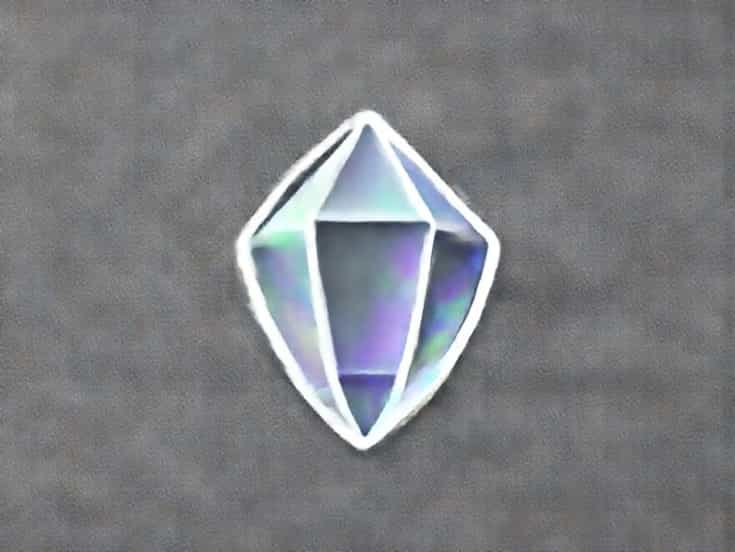
Positively birefringent rhomboid crystals are a fascinating topic within the fields of mineralogy, chemistry, and materials science. These crystals exhibit unique optical properties that make them valuable in both research and industrial applications. Birefringence refers to the phenomenon where a crystal splits a beam of light into two rays, each traveling at a different speed and creating distinct refractive indices. When a crystal is described as positively birefringent, it indicates that the extraordinary ray has a higher refractive index than the ordinary ray. Rhomboid crystals, with their characteristic geometric shape resembling a distorted cube, further contribute to the optical behavior observed under polarized light. Understanding these crystals requires exploring their formation, structure, properties, and applications in various scientific and technological domains.
Formation of Rhomboid Crystals
Rhomboid crystals typically form through natural or synthetic processes that involve the slow cooling or precipitation of a substance. In natural settings, minerals such as calcite, dolomite, and certain salts can develop rhomboid crystal structures under conditions of appropriate temperature, pressure, and chemical composition. Synthetic production, on the other hand, allows scientists to control crystal growth in laboratories, producing uniform rhomboid crystals for experimental or industrial purposes. The crystal lattice arrangement within rhomboid crystals directly influences their birefringent properties, making the formation process crucial for both appearance and function.
Crystal Lattice and Structure
The internal lattice structure of rhomboid crystals is essential for understanding their optical behavior. In positively birefringent rhomboid crystals, the arrangement of atoms or molecules within the lattice results in two distinct refractive indices. This anisotropic property means that light traveling along different axes experiences different optical densities, which causes the splitting of the light beam into an ordinary and extraordinary ray. The rhomboid shape, a parallelogram-based geometry with oblique angles, supports these anisotropic optical effects and contributes to the overall clarity and orientation-dependent properties of the crystal.
Optical Properties
Birefringence is a key optical property of rhomboid crystals. In positively birefringent crystals, the extraordinary ray, which experiences the higher refractive index, travels more slowly than the ordinary ray. This difference in speed creates a phase shift between the two rays, which can be observed using polarized light microscopy. When viewed under cross-polarized light, these crystals display characteristic interference colors, which can vary depending on thickness and orientation. The positive nature of the birefringence helps scientists identify and classify minerals and other crystalline substances with precision.
Measurement and Analysis
Measuring the birefringence of rhomboid crystals involves specialized instruments such as polarizing microscopes and refractometers. These tools allow researchers to determine the difference between the ordinary and extraordinary refractive indices and to calculate optical properties such as retardation and optical orientation. Accurate measurement is essential in mineral identification, pharmaceutical applications, and material characterization. Understanding the exact birefringent behavior provides insights into crystal quality, purity, and potential utility in various applications.
Applications of Positively Birefringent Rhomboid Crystals
Positively birefringent rhomboid crystals have a wide range of applications in science, industry, and technology due to their unique optical properties. Their ability to manipulate light makes them useful in optical devices, sensors, and imaging technologies. Additionally, their crystalline structure can influence chemical reactivity, making them important in research related to crystallography and materials engineering.
Scientific Research
In mineralogy and crystallography, positively birefringent rhomboid crystals are used to study crystal formation, lattice defects, and optical anisotropy. They provide valuable models for understanding how molecular arrangements affect physical properties. Researchers can manipulate synthetic rhomboid crystals to study light interaction, phase transitions, and other material behaviors, contributing to advancements in both theoretical and applied science.
Industrial Applications
Industrially, these crystals find use in optical components such as polarizers, waveplates, and lenses. Their ability to split light into distinct rays allows engineers to design precise optical systems for cameras, microscopes, and other imaging equipment. In addition, rhomboid crystals can be utilized in the pharmaceutical industry for characterizing drugs, ensuring purity, and studying crystallization processes, which are critical for drug stability and efficacy.
Technological Uses
Technological applications include sensors and photonic devices, where the birefringent properties enable the detection of stress, strain, or environmental changes in materials. The manipulation of light through these crystals allows for advanced signal processing, data transmission, and imaging techniques. Their stability and predictable optical behavior make positively birefringent rhomboid crystals a valuable component in both experimental setups and commercial devices.
Identifying Positively Birefringent Rhomboid Crystals
Identification of these crystals involves a combination of visual inspection, optical analysis, and chemical characterization. Under polarized light, positively birefringent rhomboid crystals exhibit interference patterns that are distinct from negatively birefringent or isotropic crystals. The rhomboid geometry provides additional confirmation, as the angles and faces follow specific crystallographic rules. Chemical tests or X-ray diffraction can further confirm the crystal’s composition and lattice structure.
Visual Indicators
Key visual indicators include the crystal’s shape, clarity, and behavior under polarized light. The rhomboid shape is characterized by its oblique angles and parallelogram-like faces. When rotated under cross-polarized light, the crystals display characteristic changes in color and intensity, helping researchers differentiate them from other birefringent crystals.
Chemical and Physical Tests
Chemical analysis may involve solubility tests, reactions with acids or bases, and elemental composition determination. Physical tests include hardness measurements, density calculations, and refractive index determination. Together, these tests allow for precise identification and classification, ensuring that the crystals are correctly recognized and utilized in scientific and industrial applications.
Positively birefringent rhomboid crystals are remarkable for their optical properties, unique geometric shape, and versatile applications. Their ability to split light into two distinct rays with varying refractive indices provides valuable insights in mineralogy, materials science, and optical engineering. Understanding their formation, lattice structure, and behavior under polarized light is crucial for accurate identification and utilization. Applications range from scientific research and industrial processes to advanced technological devices, highlighting their importance across multiple domains. By studying these crystals, scientists and engineers can harness their unique properties to advance knowledge, improve materials, and develop innovative optical systems. The combination of structural elegance and functional utility makes positively birefringent rhomboid crystals a subject of enduring interest and ongoing research.