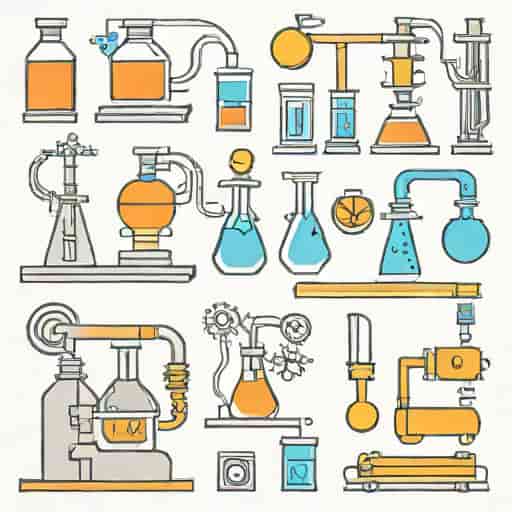
Process intensification is increasingly recognized as a breakthrough concept reshaping modern chemical engineering. Rather than simply expanding equipment or adding more units to meet rising production demands, process intensification focuses on creating smarter, more compact, and energy-efficient systems. It offers a new way of thinking about how chemical processes are designed, optimized, and scaled, making industrial operations cleaner, safer, and more profitable. Many industries now see this approach as a way to remain competitive while reducing environmental impact and operational costs. Because global industries continue moving toward sustainability and efficiency, understanding how process intensification works can help researchers, engineers, and manufacturers prepare for the future of chemical technology.
Understanding the Essence of Process Intensification
At its core, process intensification aims to make chemical processes perform better using smaller, more efficient equipment. Instead of relying on large-scale plants with traditional unit operations, process intensification encourages the integration of functions, such as reaction and separation, into a single step. This approach leads to significant improvements in heat transfer, mass transfer, and reaction rates.
The goal is not only to increase output but to reduce resource consumption. By shrinking equipment size and improving performance, companies minimize waste, lower energy usage, and improve overall plant economics. In many cases, process intensification can even make processes that were previously unfeasible now possible due to enhanced efficiency.
How Process Intensification Is Transforming Chemical Engineering
Chemical engineering has long relied on traditional equipment like reactors, distillation columns, and heat exchangers. While these units work well, they often require large space and high energy. Process intensification challenges this model by introducing innovative equipment and new operating principles that improve productivity while simplifying process flows.
The transformation comes from combining tasks that previously needed multiple units, redesigning equipment geometries, or using unconventional methods such as microreactors or membrane separators. This shift is particularly valuable in industries facing energy constraints, resource shortages, and environmental regulations.
Key Objectives of Process Intensification
- Increase production efficiency
- Reduce energy consumption
- Minimize equipment size and space requirements
- Reduce waste and emissions
- Improve safety and reliability
- Enable new processes and manufacturing routes
By targeting these objectives, process intensification aligns with global trends toward sustainability and innovation. As demand for cleaner production rises, industries adopt intensified processes to maintain operational excellence.
Technologies Driving Process Intensification
Several emerging technologies make process intensification achievable. Each technology aims to improve efficiency while reducing complexity. Engineers may adopt one or combine several depending on the process requirements.
Microreactors and Small-Scale Systems
Microreactors are miniature reaction systems offering remarkable heat and mass transfer due to high surface-area-to-volume ratios. These reactors achieve rapid mixing and precise temperature control, often providing faster reactions and higher product yield. They are especially useful in pharmaceutical and fine chemical production where precision matters.
Reactive Distillation
Reactive distillation combines reaction and distillation into one column. Instead of running a reaction in a separate reactor and then purifying it through distillation, both steps occur simultaneously. This approach reduces equipment count, lowers energy demand, and can produce high-purity products more efficiently.
Membrane Separation Technology
Membranes streamline separation processes without heavy energy use. In many cases, they replace traditional distillation, which is energy-intensive. Membranes are useful for gas separation, wastewater treatment, and solvent recovery. Their ability to operate at lower temperatures makes them an attractive option for sensitive materials.
Intensified Heat Exchangers
Advanced heat exchanger designs, such as compact plate exchangers and microchannel devices, improve thermal transfer efficiency. They reduce the overall footprint and increase process response time. Such exchangers are especially valuable in processes requiring rapid temperature changes or tight control.
Benefits of Process Intensification for Industry
The advantages of process intensification can be seen in operational savings, environmental impact reduction, and process innovation. As chemical plants become more compact and energy-efficient, companies experience financial and performance benefits.
Economic Benefits
Smaller equipment means reduced capital investment, lower installation costs, and decreased operational expenses. With shorter start-up times and streamlined systems, production efficiency increases significantly. Enhanced reactor design also leads to improved product quality and higher throughput.
Environmental Impact Reduction
Energy consumption often represents a major share of operational cost. Process intensification significantly reduces energy use, contributing to lower greenhouse gas emissions. Waste generation also decreases because reactions become more complete and efficient. This makes it a key strategy for sustainable manufacturing.
Safety and Reliability
Smaller process volumes lower risk in case of malfunction. With better control of temperature and reaction conditions, hazards such as runaway reactions or equipment failure are minimized. Compact systems also simplify maintenance and monitoring.
Challenges in Implementing Process Intensification
Despite its potential, adopting process intensification is not without challenges. The transition from conventional large-scale plants to compact systems may require investment in research, new equipment, and workforce training.
Design Complexity
Developing intensified systems requires careful analysis of reaction kinetics, flow behavior, and heat transfer. Engineers must understand how multiple operations interact when combined into one unit.
Scalability Concerns
While laboratory-scale intensified processes show promising results, scaling them up to industrial level can be difficult. Ensuring that small-scale performance translates to high-volume systems requires rigorous testing.
Adoption Resistance
Industries accustomed to traditional methods may hesitate to adopt unfamiliar technologies. Risk of capital loss and integration issues may slow implementation, but increasing global focus on efficiency is gradually overcoming these barriers.
Future Outlook A New Era in Chemical Manufacturing
Process intensification will continue driving innovation in chemical engineering as industries seek smarter ways to produce essential materials. With increasing demand for cleaner technology, intensified systems will likely become standard in new plant designs. Continuous development of microreactor technology, hybrid processes, and membrane systems will make operations more flexible and automated.
Research institutions and companies are also exploring digital support tools like process simulations and AI-based optimization to enhance intensified systems even further. As automation and data analytics merge with process intensification, chemical plants of the future may become compact, autonomous, and energy-self-sufficient.
Process intensification is transforming chemical engineering by challenging traditional design principles and introducing innovative methods to improve efficiency, sustainability, and profitability. By focusing on smaller, smarter, and more integrated systems, industries gain numerous advantages, from reduced energy consumption to enhanced safety. Although challenges exist, the long-term rewards are significant for companies willing to adopt modern technologies.
As the world moves toward cleaner manufacturing and resource optimization, process intensification stands out as a key driver shaping the future of chemical production. Through continuous research and development, engineers will unlock even more potential, creating efficient processes that support industrial growth and environmental responsibility for generations to come.