Understanding the structure of an atom is fundamental to the study of chemistry and physics, and central to this understanding are protons, neutrons, and electrons. These subatomic ptopics form the building blocks of all matter, and their respective charges play a critical role in determining the chemical and physical properties of elements. Knowing the differences between these ptopics, their charges, and their interactions allows scientists and students alike to explain phenomena ranging from chemical bonding to electricity and magnetism. In this topic, we will explore the characteristics of protons, neutrons, and electrons, focusing on their charges, mass, and behavior within the atom.
Protons Positive Charge Carriers
Protons are subatomic ptopics found in the nucleus of an atom. Each proton carries a positive electrical charge, denoted as +1 elementary charge. This positive charge is fundamental to the atom’s identity and chemical behavior. The number of protons in the nucleus determines the atomic number of an element, which defines the element itself. For example, hydrogen has one proton, while carbon has six.
Characteristics of Protons
-
Charge +1 (positive)
-
Location Nucleus
-
Mass Approximately 1 atomic mass unit (amu)
-
Role Determines the element’s identity and contributes to atomic mass
Protons interact with electrons through electrostatic forces. The positive charge of protons attracts negatively charged electrons, keeping them in orbit around the nucleus. Additionally, the number of protons defines an element’s position on the periodic table and influences its chemical properties, such as reactivity and bonding behavior.
Neutrons Neutral Ptopics
Neutrons are also located in the nucleus alongside protons but carry no electrical charge, hence they are electrically neutral. Their primary role is to provide stability to the nucleus by offsetting the repulsive forces between positively charged protons. Without neutrons, many atomic nuclei would be unstable and prone to radioactive decay.
Characteristics of Neutrons
-
Charge 0 (neutral)
-
Location Nucleus
-
Mass Approximately 1 atomic mass unit (slightly more than a proton)
-
Role Stabilizes the nucleus and contributes to atomic mass
The number of neutrons in an atom can vary even among atoms of the same element, leading to the formation of isotopes. For instance, carbon-12 has six neutrons, whereas carbon-14 has eight neutrons. While the number of protons determines the element’s identity, variations in neutron number influence atomic mass and nuclear stability.
Electrons Negative Charge Carriers
Electrons are subatomic ptopics that orbit the nucleus at various energy levels or electron shells. Each electron carries a negative charge, denoted as -1 elementary charge. The negative charge of electrons balances the positive charge of protons in a neutral atom, maintaining overall electrical neutrality.
Characteristics of Electrons
-
Charge -1 (negative)
-
Location Electron cloud surrounding the nucleus
-
Mass Approximately 1/1836 of a proton or neutron (very small)
-
Role Participates in chemical bonding, electricity, and chemical reactions
Electrons are responsible for chemical reactivity, as their arrangement in electron shells determines how atoms interact and form molecules. They can be gained, lost, or shared during chemical reactions, leading to the formation of ions and covalent bonds. Additionally, electrons play a key role in electrical conductivity and the generation of electromagnetic fields.
Interactions Between Protons, Neutrons, and Electrons
The interplay between protons, neutrons, and electrons defines the structure and behavior of atoms. Protons and neutrons reside in the nucleus, bound together by the strong nuclear force, which overcomes the electrostatic repulsion between positively charged protons. Electrons are held in their orbits by the attraction to protons, forming an atom’s electron cloud.
Electrostatic Forces
Protons and electrons interact via electrostatic forces, also known as Coulomb forces. The attraction between the positive charge of protons and the negative charge of electrons keeps electrons near the nucleus. This force is central to atomic stability and chemical bonding.
Atomic Mass and Identity
Protons and neutrons contribute almost all the mass of an atom, while electrons contribute very little. The sum of protons and neutrons gives the atomic mass, which is often approximated in atomic mass units. The number of protons defines the element, while variations in neutrons create isotopes, affecting nuclear stability without changing the element’s chemical properties.
Importance of Charges in Chemical Behavior
The respective charges of protons, neutrons, and electrons are crucial in determining how atoms behave chemically. The balance between positive protons and negative electrons dictates whether an atom is neutral, positively charged (cation), or negatively charged (anion). Chemical reactions often involve the transfer or sharing of electrons, influenced by these charges.
- Cations form when atoms lose electrons, resulting in a net positive charge.
- Anions form when atoms gain electrons, resulting in a net negative charge.
- Neutral atoms have an equal number of protons and electrons, balancing the charges.
- Electron arrangement and charge distribution influence chemical bonding and molecular shape.
Visualizing the Atom
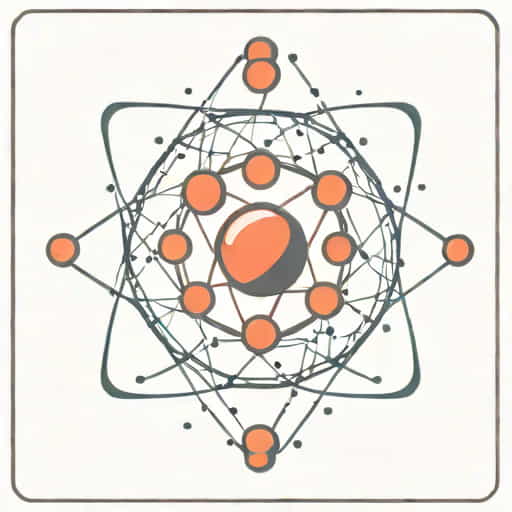
Understanding protons, neutrons, and electrons is easier when visualized as a miniature solar system. The nucleus, containing protons and neutrons, is at the center, analogous to the sun, while electrons orbit in shells like planets. This model helps explain how charges interact and why the arrangement of electrons determines an atom’s chemical properties.
Protons, neutrons, and electrons form the foundation of atomic structure, and their respective charges are essential to understanding chemistry and physics. Protons carry a positive charge and define the element’s identity, neutrons are neutral and stabilize the nucleus, and electrons carry a negative charge and determine chemical behavior. The interactions between these ptopics explain atomic stability, chemical bonding, and the properties of matter. By understanding the roles and charges of these subatomic ptopics, students and scientists can predict how elements interact, form molecules, and participate in chemical reactions, providing a critical framework for exploring the material world.