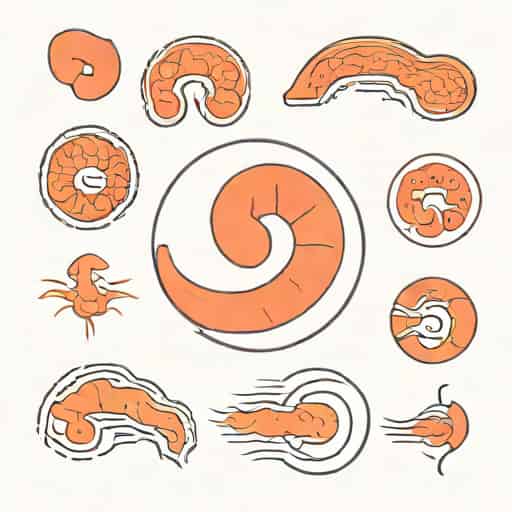
The rotation of the stomach during embryological development is one of the most fascinating processes in early human growth. Although it happens long before birth, this rotation lays the foundation for how the digestive system is arranged in the body. Understanding this process helps clarify why the stomach sits at an angle, why the esophagus enters at a certain spot, and why the intestines occupy specific regions of the abdomen. Learning about embryological rotation gives insight into both normal anatomy and potential congenital variations that may occur.
Overview of Early Stomach Development
In the earliest stages of development, the stomach begins as a simple tube-like structure derived from the foregut. At this time, it has no distinct curvature, orientation, or recognizable shape. As the embryo grows, changes occur rapidly, and the stomach transforms from a straight tube into an asymmetrical organ with a clear greater curvature and lesser curvature.
Formation of the Primitive Foregut
Before rotation begins, the stomach forms within the foregut region, surrounded by early mesenteries. These mesenteries later become important structures such as the lesser omentum and greater omentum. During this early period, the dorsal side of the stomach grows faster than the ventral side, creating the first visible curvature.
- Initially shaped like a fusiform tube
- Attached by ventral and dorsal mesenteries
- Begins to widen due to uneven growth
- Sets the stage for future rotation
These early changes create the conditions necessary for the stomach to rotate properly, establishing the final orientation of the digestive system.
The First Rotation Longitudinal Axis
The first major rotation of the stomach occurs around the fourth to sixth week of development. This rotation happens along the stomach’s longitudinal axis, which runs from the esophagus to the duodenum. During this movement, the stomach rotates approximately 90 degrees clockwise.
Effects of the First Rotation
This rotation is responsible for shifting important anatomical landmarks into their familiar adult positions. As the stomach rotates clockwise, the left side moves anteriorly, and the right side moves posteriorly. This explains why the left vagus nerve becomes the anterior vagal trunk and the right vagus nerve becomes the posterior vagal trunk.
- Left surface of the stomach moves forward
- Right surface moves backward
- Greater curvature shifts left and inferiorly
- Lesser curvature moves right and superiorly
These movements give the stomach its first major asymmetry, shaping its eventual position in the abdominal cavity.
The Second Rotation Anteroposterior Axis
After the longitudinal rotation finishes, the stomach undergoes a secondary rotation along its anteroposterior axis. This rotation tilts the pyloric end upward and the cardiac end downward, giving the stomach its final slanted orientation.
Purpose of the Second Rotation
The second rotation helps establish the stomach’s natural tilt, which plays a role in how food moves from the esophagus into the stomach and eventually into the duodenum. The pylorus becomes positioned to the right and superiorly, while the cardiac region lies more to the left.
- Pyloric region rises upward and to the right
- Cardiac region shifts slightly downward
- Completes the stomach’s adult orientation
- Influences the arrangement of surrounding organs
This rotation is essential for the proper alignment of the duodenum and esophagus, helping ensure efficient digestive flow.
Changes in Mesenteries and Surrounding Structures
As the stomach rotates, its mesenteries undergo dramatic changes. These shifts help form well-known anatomical structures within the abdomen, shaping the layout of the peritoneal cavity.
Dorsal Mesogastrium and the Greater Omentum
The dorsal mesogastrium grows significantly during development. As the stomach rotates, it expands and forms the large, apron-like greater omentum, which drapes over the intestines.
- Dorsal mesentery expands downward
- Creates the greater omentum
- Forms the omental bursa (lesser sac)
- Defines spaces within the peritoneal cavity
This structure plays an important role in protecting abdominal organs and supporting immune function later in life.
Ventral Mesogastrium and the Lesser Omentum
The ventral mesogastrium forms structures such as the lesser omentum and the falciform ligament. As rotation occurs, these mesenteries shift to new positions, helping define the anatomy of the upper abdomen.
This process is significant because it determines the pathway of nerves, blood vessels and ducts connected to the liver, stomach, and duodenum.
Impact on the Esophagus and Duodenum
The rotation of the stomach does not occur in isolation. The esophagus and duodenum also experience changes that ensure proper alignment within the digestive tract.
Esophageal Adjustments
As the stomach rotates, the esophagus elongates due to the descent of the developing heart and lungs. The rotational movement helps define its final angle and connection to the stomach.
This elongation supports proper swallowing and prevents reflux by ensuring the esophagogastric junction sits at an appropriate angle.
Duodenal Shaping and Positioning
The duodenum is pulled into a C-shape as the stomach rotates. It moves to the right side of the abdomen and becomes retroperitoneal as it fuses with the posterior abdominal wall.
- Forms characteristic C-curve
- Shifts to the right side
- Becomes fixed in place
- Ensures proper digestive flow
This anchoring helps support efficient digestion and establishes the duodenum’s stable position for life.
Clinical Relevance of Stomach Rotation
Understanding how the stomach rotates during embryological development has important clinical implications. Certain congenital conditions arise when these rotations do not occur correctly, leading to anatomical abnormalities.
Possible Developmental Issues
Abnormal rotation may contribute to unusual stomach positioning, malrotation of the intestines, or issues such as volvulus. These conditions can cause digestive difficulty and may require medical intervention.
- Incomplete rotation
- Reversed rotation
- Hiatal hernia development
- Malrotation of the bowel
Recognizing these possibilities helps in diagnosing and treating conditions that arise early in development but present symptoms later in life.
Why This Knowledge Matters
Studying the rotation of the stomach during embryological development provides a deeper understanding of human anatomy. It explains why digestive organs sit where they do, how they connect, and why certain structural variations occur. This knowledge is essential for medical students, healthcare professionals, and anyone interested in human development.
Connecting Embryology to Adult Anatomy
Embryology serves as the foundation for understanding the adult body. Many seemingly complex anatomical features become clear when viewed through the lens of developmental rotation and growth.
The stomach’s shape, curvature, blood supply, nerve connections, and surrounding membranes all trace back to these early rotations.
The rotation of the stomach during embryological development is an elegant and coordinated process that shapes the entire upper digestive system. From the initial tube-like structure to the mature, fully formed organ, the stomach undergoes two key rotations that determine its final orientation. These movements influence the esophagus, duodenum, mesenteries, and peritoneal spaces, creating the complex yet efficient anatomy seen in adults. Understanding these developmental steps offers clarity, deepens anatomical knowledge, and highlights the intricate design of human growth.