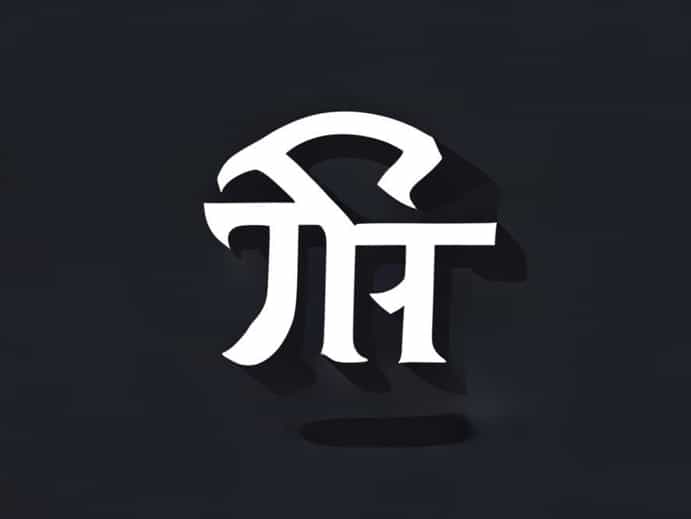
Translating words, phrases, and texts accurately between languages is an essential skill in today’s globalized world, and understanding how to translate the letter T into Hindi involves more than a simple character substitution. Hindi, a widely spoken language in India and recognized as one of the official languages, uses the Devanagari script, which differs significantly from the Roman alphabet. Translating T in Hindi requires knowledge of pronunciation, context, and script representation. This topic explores the translation of T into Hindi, the nuances of Devanagari script, pronunciation guides, and practical applications in language learning, digital tools, and everyday communication.
Understanding the Letter T
The letter T in English is a consonant with a specific phonetic sound. It can appear in different positions within words, producing sounds that are sometimes aspirated, unaspirated, hard, or soft depending on its usage. Translating T into Hindi requires careful attention to these sounds, as Hindi contains multiple consonants that correspond to variations of the English T. Unlike English, which uses a single character, Hindi differentiates between dental and retroflex pronunciations, which are distinct sounds in spoken language.
Devanagari Script Representation
Hindi uses the Devanagari script, which is syllabic and phonetic. In this script, the English T can be represented by two primary consonants
- त (ta)This represents the dental T sound, similar to the t in tap. It is pronounced with the tongue touching the upper teeth.
- ठ(á¹a)This represents the retroflex T sound, which is pronounced with the tongue curled back toward the roof of the mouth. It is slightly heavier and more emphatic than the dental sound.
Choosing between त and ठdepends on the word, regional pronunciation, and context in which the T is used.
Pronunciation and Phonetic Differences
Proper pronunciation is crucial when translating T into Hindi. While English speakers may consider all T sounds similar, Hindi distinguishes them in a way that affects meaning and clarity
- Dental तUsed in words like तल (tal, meaning surface) or तन (tan, meaning body). The tongue lightly touches the teeth.
- Retroflex à¤Used in words like à¤à¤®à¤¾à¤à¤° (á¹amÄá¹ar, meaning tomato) or à¤à¤¿à¤à¤ (á¹ikaá¹, meaning ticket). The tongue curls back, creating a stronger articulation.
Learning these subtle distinctions helps ensure accurate pronunciation and prevents confusion when reading or speaking Hindi.
Contextual Translation in Words
Translating T into Hindi is rarely done in isolation. It is usually part of a word or phrase. Context determines which Devanagari character is appropriate. For example
- Tableà¤à¥à¤¬à¤² (á¹Äbal) – Here, ठis used because the English T is closer to the retroflex sound in this word.
- Timeà¤à¤¾à¤à¤® (á¹Ä’im) – Again, ठrepresents the initial T sound with retroflex articulation.
- Tigerबाठ(bÄgh) – In this case, there is no T in Hindi, showing that transliteration is influenced by phonetic adaptation rather than letter-for-letter mapping.
These examples demonstrate that translating letters requires both phonetic understanding and consideration of cultural and linguistic conventions.
Digital Tools for Translating T into Hindi
With technology, translating letters and words into Hindi has become more accessible. Digital tools, such as online translators, mobile apps, and virtual keyboards, allow users to type in English and receive accurate Devanagari script outputs. For instance, typing T in transliteration mode often suggests त or ठbased on common word usage. However, human knowledge of pronunciation and context remains essential, as automated tools may not always distinguish subtle differences between dental and retroflex sounds.
Transliteration vs. Translation
It is important to differentiate between transliteration and translation. Transliteration involves converting letters from one script to another while preserving pronunciation, whereas translation conveys meaning from one language to another. For the letter T, transliteration maps it to त or à¤, whereas translation considers the word’s meaning. For example, Time becomes à¤à¤¾à¤à¤® (á¹Ä’im) in transliteration, while the meaning समठ(samay) represents translation. Understanding this distinction is crucial for accurate language learning and communication.
Practical Applications
Knowing how to translate T into Hindi has several practical applications. Language learners, translators, writers, and educators benefit from understanding these phonetic and script nuances. It aids in reading Hindi texts accurately, pronouncing words correctly, and maintaining clarity in communication. Additionally, in professional contexts such as document translation, subtitles, and language education, precise letter mapping ensures linguistic accuracy and cultural relevance.
Language Learning Tips
For those learning Hindi, mastering the translation of English letters like T involves practice, listening, and repetition. Tips include
- Practice pronouncing त and ठdistinctly to develop correct articulation.
- Use transliteration tools to familiarize yourself with script representation.
- Read Hindi texts aloud to recognize patterns in pronunciation and usage.
- Engage with native speakers for feedback on pronunciation accuracy.
Challenges in Translating Letters
Despite tools and guides, translating letters between English and Hindi presents challenges. The English alphabet does not have a direct one-to-one correspondence with Devanagari letters, leading to potential ambiguity. Regional dialects and pronunciation differences further complicate translation, as the same English T might correspond to different Hindi consonants depending on context. Careful attention to phonetic rules, word origins, and usage patterns is necessary to ensure accurate representation.
Importance of Context
Context plays a crucial role in determining which Hindi letter represents an English T. Transliteration alone may not capture the nuances of meaning or pronunciation. For example, technical terms, proper nouns, and borrowed words may use one form over another. Understanding the surrounding letters, vowel sounds, and word structure allows for precise and effective translation.
Translating the letter T into Hindi involves more than a simple substitution; it requires understanding phonetics, script, and context. The Devanagari script differentiates between dental त and retroflex à¤, reflecting subtle but important pronunciation differences. Accurate translation ensures clarity in communication, aids language learners, and preserves the linguistic integrity of words. Digital tools and transliteration apps provide valuable support, but human understanding of context and pronunciation remains indispensable. By mastering the translation of letters like T into Hindi, learners and communicators can navigate the rich and complex world of the Hindi language with confidence, precision, and cultural awareness.