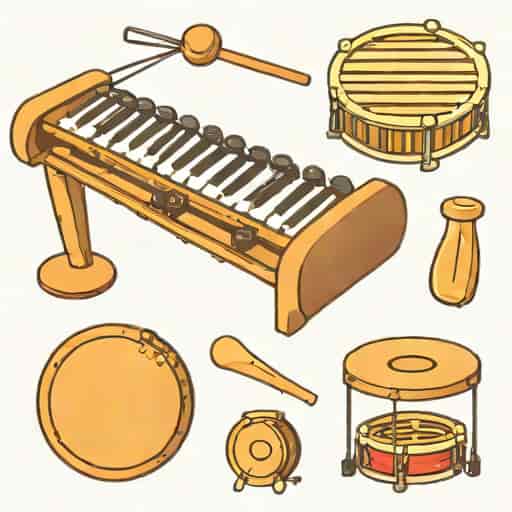
Many people encounter musical instruments like the tambourine and xylophone early in life, whether in school music classes, community performances, or simple rhythm activities at home. This often leads to the common question tambourine and xylophone are examples of what instruments? While the answer may seem simple at first, exploring it more deeply reveals how instruments are classified, how sound is produced, and why these instruments play such an important role in music education and performance around the world.
Understanding Musical Instrument Classification
Musical instruments are grouped into families based on how they produce sound. This system helps musicians, educators, and students understand similarities between instruments and how they function within musical arrangements.
The most widely accepted classification system divides instruments into categories such as string, wind, brass, keyboard, and percussion. Tambourines and xylophones fall into one of these major groups.
The Percussion Instrument Family
Tambourine and xylophone are examples of percussion instruments. Percussion instruments create sound when they are struck, shaken, or scraped. This category is one of the oldest and most diverse families in music.
Percussion instruments are essential for rhythm, timing, and texture in music. They are found in nearly every musical tradition across cultures.
What Makes an Instrument Percussion?
An instrument is classified as percussion if sound is produced by physical contact, usually through striking with hands, mallets, or other objects. Unlike string or wind instruments, percussion instruments do not rely on vibrating strings or air columns.
This broad definition includes instruments with many shapes, materials, and playing techniques.
Tuned and Untuned Percussion Instruments
Percussion instruments are often divided into two main subcategories tuned and untuned. Understanding this distinction helps explain the difference between a tambourine and a xylophone.
Tuned Percussion Instruments
Tuned percussion instruments produce specific musical pitches. They can play melodies and harmonies, not just rhythm.
The xylophone is a tuned percussion instrument. It consists of wooden bars arranged by pitch, which are struck with mallets to create clear, definite notes.
Untuned Percussion Instruments
Untuned percussion instruments produce sounds without a definite pitch. They are mainly used for rhythm and texture.
The tambourine falls into this category. It creates sound through shaking, striking, or tapping, producing rhythmic effects rather than melodies.
The Tambourine as a Percussion Instrument
The tambourine is a handheld percussion instrument made of a circular frame with metal jingles. Some tambourines also have a drumhead, while others are open.
It is commonly used in folk music, classical orchestras, marching bands, and religious ceremonies.
How the Tambourine Produces Sound
Sound is created when the tambourine is shaken or struck. The jingles vibrate, producing a bright, rhythmic sound.
This makes the tambourine ideal for adding energy and movement to music.
The Xylophone as a Percussion Instrument
The xylophone is a percussion instrument with wooden bars arranged like a keyboard. Each bar produces a specific pitch when struck with a mallet.
Xylophones are used in orchestras, school music programs, and traditional music in many cultures.
Why the Xylophone Is Tuned
The bars of a xylophone are carefully cut and arranged so each one vibrates at a precise frequency. This allows musicians to play melodies and complex musical lines.
Because of this, the xylophone often takes on a melodic role within percussion sections.
Shared Characteristics of Tambourine and Xylophone
Although they serve different musical purposes, tambourine and xylophone share key characteristics that place them in the same instrument family.
- They produce sound through physical contact
- They do not rely on strings or air
- They are commonly played by striking or shaking
- They contribute rhythm and texture to music
These shared traits clearly identify them as percussion instruments.
The Role of Percussion Instruments in Music
Percussion instruments provide the rhythmic foundation of music. They help maintain tempo and create dynamic contrast.
In many musical traditions, percussion instruments are also used for communication, ceremony, and storytelling.
Educational Importance of Tambourine and Xylophone
Tamboourines and xylophones are widely used in music education. Their simplicity and accessibility make them ideal for teaching rhythm, pitch, and coordination.
Children often learn basic musical concepts through these instruments before moving on to more complex ones.
Developing Musical Skills
Playing percussion instruments helps develop timing, listening skills, and motor coordination. The xylophone, in particular, helps students understand melody and harmony.
The tambourine encourages rhythmic awareness and group participation.
Percussion Instruments Across Cultures
Percussion instruments are universal. Variations of the tambourine and xylophone exist in many cultures under different names and designs.
This global presence highlights the fundamental role of rhythm in human expression.
Modern Uses in Different Music Genres
Today, tambourines and xylophones appear in many genres, including pop, rock, classical, jazz, and traditional music.
They are used both for live performance and studio recording, adding color and depth to musical arrangements.
Why the Question Is Common
The question tambourine and xylophone are examples of what instruments is often asked by students, parents, and music beginners. It reflects a natural curiosity about how music works.
Understanding instrument classification makes learning music more approachable and enjoyable.
Tambourine and xylophone are examples of percussion instruments, a diverse and essential family in the world of music. While the tambourine is an untuned percussion instrument focused on rhythm, the xylophone is a tuned percussion instrument capable of playing melodies.
Together, they demonstrate the wide range of sounds and functions percussion instruments offer. From classrooms to concert halls, these instruments continue to shape musical experiences, making rhythm and sound accessible to people of all ages and backgrounds.