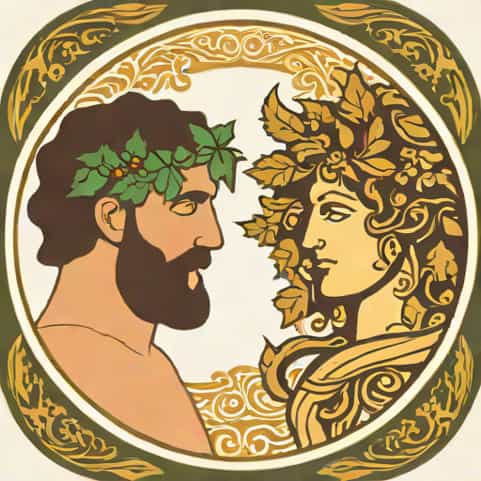
The concepts of the Apollonian and the Dionysian are central to understanding human creativity, culture, and the duality of existence. Introduced by the German philosopher Friedrich Nietzsche in his work The Birth of Tragedy, these two opposing forces represent contrasting aspects of human experience and artistic expression. The Apollonian embodies order, reason, and structure, while the Dionysian symbolizes chaos, emotion, and instinct. Together, they illustrate the tension between rationality and passion, highlighting how balance between these forces can lead to profound artistic, philosophical, and cultural insights. Exploring these concepts offers a deeper understanding of literature, music, and art as reflections of the human condition.
Defining the Apollonian
The Apollonian, named after the Greek god Apollo, represents clarity, harmony, and form. It is associated with logic, intellect, and disciplined creativity. In art and culture, the Apollonian manifests as structured compositions, controlled expression, and emphasis on balance and symmetry. This principle encourages reflection, careful planning, and the pursuit of aesthetic perfection. In human behavior, it corresponds to self-control, rational thinking, and the ability to navigate complex situations with clarity.
Characteristics of the Apollonian
- Emphasis on order and structure
- Rational and analytical thinking
- Focus on form, beauty, and clarity
- Calm and measured emotional expression
- Preference for harmony and predictability
Understanding the Dionysian
In contrast, the Dionysian is named after Dionysus, the Greek god of wine, ecstasy, and revelry. It embodies passion, instinct, and the surrender to emotion and chaos. The Dionysian represents the primal and often uncontrollable aspects of human nature, including desire, creativity, and the expression of raw feelings. In art, it is evident in works that embrace spontaneity, intensity, and emotional depth, often breaking traditional rules to convey profound truths. Human behavior influenced by the Dionysian is driven by instinct, emotion, and a desire for transcendence or liberation.
Characteristics of the Dionysian
- Focus on emotion, passion, and intensity
- Spontaneity and improvisation in creative expression
- Embrace of chaos and unpredictability
- Connection to instinct and primal desires
- Exploration of ecstasy, transformation, and transcendence
The Interaction Between the Apollonian and Dionysian
Nietzsche argued that great art, especially Greek tragedy, emerges from the interplay between the Apollonian and Dionysian forces. The Apollonian provides structure and form, giving the artwork coherence and aesthetic appeal, while the Dionysian infuses it with emotional depth, energy, and a connection to the human subconscious. This dynamic tension allows for a more complete representation of human experience, capturing both rational thought and emotional intensity. Without this balance, art may become either overly rigid or chaotically unrestrained, losing its ability to resonate deeply with audiences.
Examples in Art and Literature
In literature, Apollonian qualities can be seen in carefully structured novels, clear narratives, and precise use of language, whereas Dionysian qualities emerge in poetic intensity, emotional depth, and exploration of irrational or taboo subjects. Music provides a vivid example classical compositions often blend Apollonian order with Dionysian emotional expression, creating works that are both technically skilled and deeply moving. Paintings that adhere to geometric balance while simultaneously capturing dramatic emotion illustrate this fusion, highlighting the enduring relevance of Nietzsche’s concepts in diverse artistic forms.
Philosophical Implications
The tension between the Apollonian and Dionysian extends beyond art into philosophy and human understanding. The Apollonian encourages rational inquiry, discipline, and the search for objective truth, while the Dionysian invites exploration of subjectivity, emotional insight, and experiential knowledge. Recognizing these dual aspects can help individuals understand their own motivations, behaviors, and creative impulses. Nietzsche suggested that embracing both forces allows people to achieve a more complete understanding of life, acknowledging its beauty, chaos, suffering, and ecstasy.
Impact on Culture
Throughout history, societies have reflected the balance between Apollonian and Dionysian tendencies. Rituals, festivals, and cultural expressions often oscillate between order and chaos, structured ceremonies and spontaneous celebration. Literature, theater, and music frequently explore themes of restraint versus indulgence, reason versus passion, and stability versus transformation. Understanding this duality offers insight into cultural evolution, artistic innovation, and human psychology, revealing why some works endure as masterpieces while others fail to resonate.
Modern Interpretations
In contemporary contexts, the Apollonian and Dionysian framework continues to influence thinking in art, psychology, and social theory. Psychologists may interpret Apollonian traits as reflecting cognitive control, self-regulation, and planning, whereas Dionysian traits align with emotional expressiveness, risk-taking, and creativity. In popular culture, films, music, and literature often depict characters or narratives that embody this duality, emphasizing conflict, transformation, and the complexity of human nature. Recognizing these patterns helps individuals and creators understand the interplay between reason and emotion in both personal development and creative endeavors.
Practical Applications
- Enhancing artistic creation by balancing structure and spontaneity
- Understanding personal decision-making through the lens of rationality and emotion
- Analyzing literature, film, and music for thematic depth and human insight
- Encouraging self-awareness and personal growth by acknowledging internal dualities
- Promoting cultural appreciation by recognizing historical and contemporary expressions of the dual forces
The concepts of the Apollonian and Dionysian offer a profound framework for understanding human creativity, behavior, and culture. By representing the tension between order and chaos, reason and passion, these forces highlight the complexity of human existence and artistic expression. From ancient Greek tragedy to modern literature, music, and visual art, the interplay between these forces continues to shape creative endeavors and philosophical thought. Embracing both the Apollonian and Dionysian aspects within ourselves and our cultural expressions provides a richer, more nuanced appreciation of life, art, and the endless potential of human creativity.