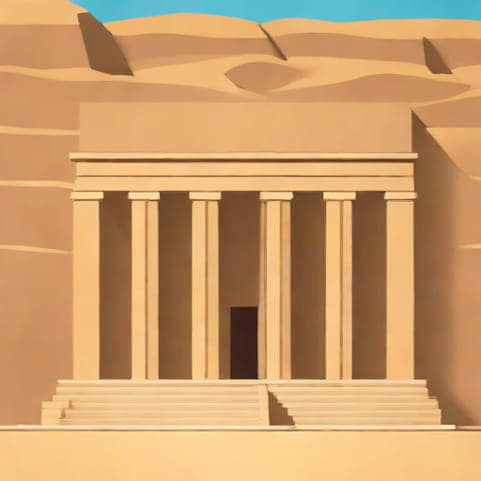
The funerary temple of Queen Hatshepsut, located in Deir el-Bahari near the Valley of the Kings in Egypt, is one of the most remarkable architectural achievements of the ancient world. Built during the 18th dynasty, this temple not only reflects the grandeur of Egyptian royal architecture but also tells a story of power, ambition, and divine association. Hatshepsut, one of the few female pharaohs in ancient Egyptian history, commissioned this temple as a testament to her reign, blending religious significance with political propaganda. The structure demonstrates her vision, ingenuity, and the sophistication of ancient Egyptian construction techniques.
Architectural Design of the Temple
The design of Hatshepsut’s funerary temple is unique compared to other mortuary temples of its time. It is built into the cliffs of Deir el-Bahari, which provides a natural backdrop that enhances the grandeur of the site. The temple consists of three terraces connected by long ramps, creating a visual effect that leads the visitor’s gaze upward toward the cliffs. The terraces are lined with colonnades, and the walls are decorated with intricate reliefs and inscriptions. These features not only demonstrate advanced architectural planning but also highlight the integration of the temple with the surrounding landscape, reflecting the Egyptian belief in harmony between human construction and nature.
Use of Colonnades and Terraces
The colonnades are a defining feature of the temple, demonstrating both artistic skill and structural ingenuity. Each terrace has rows of columns that support the structure while creating a rhythm and symmetry that is visually striking. The terraces themselves serve multiple purposes they provide space for religious rituals, display Hatshepsut’s achievements, and offer areas for visitors to move through the temple in a ceremonial procession. This layered design shows a sophisticated understanding of spatial organization and ceremonial function, revealing how the temple was meant to guide worshippers and dignitaries through a spiritual and political narrative.
Reliefs and Inscriptions
The walls of the temple are covered with reliefs that depict Hatshepsut’s divine birth, her expedition to Punt, and other significant events of her reign. These images demonstrate the temple’s role as both a religious site and a piece of political propaganda. The reliefs show Hatshepsut receiving favor from the gods, legitimizing her unusual position as a female pharaoh. Through these artistic representations, the temple communicates messages about divine support, royal power, and the prosperity brought by her rule. The inscriptions often include hieroglyphic text that complements the visual narrative, making the temple a fully integrated storytelling medium.
The Expedition to Punt
One of the most famous reliefs depicts the expedition to Punt, a trading mission that brought wealth and exotic goods to Egypt. This scene demonstrates not only Hatshepsut’s political acumen but also her ability to project power and influence beyond the borders of Egypt. The detailed carvings of ships, crew members, and exotic animals showcase Egyptian artistry while reinforcing Hatshepsut’s image as a successful and divinely guided ruler. These depictions are a prime example of how funerary temples served as both religious and political statements in ancient Egypt.
Religious and Cultural Significance
The funerary temple was designed to honor Hatshepsut’s life and ensure her continued presence in the afterlife. It served as a site for offerings to the gods and for rituals that supported the king’s divine status. The temple demonstrates the Egyptian belief in the connection between the pharaoh, the gods, and the natural world. By situating the temple within the cliffs, Hatshepsut’s architects reinforced the sacred nature of the location, blending earthly and divine realms. The temple also contains chapels dedicated to the god Amun, emphasizing the pharaoh’s close association with the deity.
Integration with the Surrounding Landscape
The choice of location at Deir el-Bahari is particularly significant. The cliffs create a natural amphitheater, framing the temple and giving it a sense of permanence and majesty. This integration of architecture with the natural environment demonstrates a sophisticated understanding of aesthetics and symbolism. The terraces appear to rise naturally from the cliff, emphasizing Hatshepsut’s divine connection and the harmony between the temple and the surrounding desert landscape. This careful planning shows how funerary temples were more than buildings-they were experiences designed to convey meaning to visitors and future generations.
Legacy of Hatshepsut’s Funerary Temple
The funerary temple of Queen Hatshepsut remains one of the best-preserved monuments of ancient Egypt and serves as a lasting testament to her reign. Its architectural innovations influenced subsequent mortuary temples, and its reliefs provide valuable insights into the art, religion, and politics of the New Kingdom. The temple demonstrates the power of architecture to communicate authority, legitimacy, and divine favor. Even today, it continues to attract scholars and tourists, who admire its combination of elegance, historical significance, and spiritual resonance. Hatshepsut’s vision and ambition are immortalized in stone, offering a unique window into the world of ancient Egyptian civilization.
The funerary temple of Queen Hatshepsut demonstrates the remarkable capabilities of ancient Egyptian architects, artists, and rulers. Through its terraces, colonnades, reliefs, and strategic location, the temple communicates a story of divine kingship, political power, and artistic achievement. It reflects the integration of religion, landscape, and authority, making it one of the most significant monuments in the study of ancient Egypt. Beyond its function as a funerary site, the temple stands as a symbol of Hatshepsut’s enduring legacy, illustrating how architecture can serve as both a spiritual and historical record. Visitors today can still appreciate the sophistication and beauty of this iconic temple, a true testament to one of Egypt’s most remarkable pharaohs.