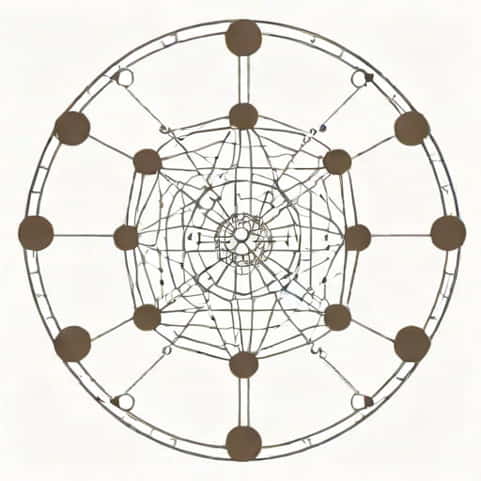
The general axiomatic structure of a mathematical system provides a foundation for how mathematical ideas are defined, developed, and understood. Instead of relying on intuition or physical observation, mathematics builds its knowledge through carefully chosen assumptions called axioms. From these axioms, definitions, theorems, and proofs emerge in a logical sequence. Understanding this structure helps readers appreciate how mathematics achieves clarity, consistency, and reliability across many different fields.
What Is an Axiomatic System?
An axiomatic system is a formal framework in which a mathematical theory is constructed. It begins with a set of basic concepts that are not defined in terms of simpler ideas. These concepts are connected by axioms, which are statements accepted without proof.
The Purpose of Axioms
Axioms serve as starting points for reasoning. They are chosen not because they are proven true, but because they provide a consistent and useful basis for developing a theory.
- Axioms define the scope of the system
- They eliminate ambiguity
- They support logical deduction
In this way, axioms shape the entire mathematical system that follows.
Primitive Terms and Undefined Concepts
Every axiomatic system begins with primitive terms. These are basic ideas that are intentionally left undefined to avoid circular explanations.
Why Some Concepts Remain Undefined
Instead of defining everything, mathematicians rely on intuitive understanding of certain terms. For example, in geometry, terms like point and line are not formally defined but are described through axioms.
These undefined concepts gain meaning through their relationships with each other.
Axioms as Fundamental Assumptions
Axioms are statements about primitive terms that establish the rules of the system. They are not proven within the system itself.
Characteristics of Good Axioms
In the general axiomatic structure of a mathematical system, axioms are chosen carefully to ensure clarity and usefulness.
- Consistency axioms should not contradict each other
- Independence no axiom should be derivable from others
- Completeness axioms should allow meaningful development
These properties help maintain the logical strength of the system.
Definitions Built from Axioms
Once axioms are established, new concepts can be defined. Definitions explain terms using previously introduced ideas.
The Role of Definitions
Definitions add precision and efficiency to mathematical language. They do not introduce new facts but clarify how terms are used.
For example, a geometric shape or algebraic structure is defined using axioms and primitive terms.
Logical Rules and Inference
To move from axioms to meaningful results, mathematical systems rely on logical rules of inference. These rules dictate how conclusions can be drawn from given statements.
Formal Logic in Mathematics
Logical reasoning ensures that each step in a proof follows from previous steps. This prevents errors and supports mathematical rigor.
- Deductive reasoning
- Use of implication and equivalence
- Structured argumentation
Logic acts as the bridge between axioms and theorems.
Theorems and Proofs
Theorems are statements that are proven using axioms, definitions, and logical rules. Proofs demonstrate why a theorem must be true within the system.
Why Proofs Matter
Proofs provide certainty. In the general axiomatic structure of a mathematical system, a theorem is only accepted once it has been logically derived from the axioms.
This process distinguishes mathematics from empirical sciences.
Consistency and Soundness
A key concern in any axiomatic system is consistency. A system is consistent if it is impossible to derive contradictory statements.
Ensuring Reliability
If contradictions exist, the entire system becomes unreliable. Mathematicians often study consistency to ensure that a theory is logically safe.
- Consistency prevents logical collapse
- Soundness links axioms to intended interpretation
- Reliability supports long-term use
These qualities are essential for trust in mathematical results.
Completeness and Limitations
Completeness refers to whether every true statement in a system can be proven using its axioms. While desirable, completeness is not always achievable.
Understanding the Limits of Axiomatic Systems
Some mathematical systems contain statements that are true but cannot be proven within the system itself. This insight changed how mathematicians view formal systems.
Recognizing limitations does not weaken mathematics but deepens understanding of its structure.
Examples of Axiomatic Systems
Many areas of mathematics are built on axiomatic foundations.
Common Mathematical Systems
- Euclidean geometry
- Set theory
- Group theory
- Number systems
Each system begins with its own axioms and develops unique theorems based on them.
Why Axiomatic Structure Is Important
The general axiomatic structure of a mathematical system provides clarity and precision. It allows mathematicians to explore abstract ideas without ambiguity.
Impact on Mathematical Thinking
This structure encourages careful reasoning, critical thinking, and logical consistency. It also makes mathematics adaptable, as new systems can be created by changing axioms.
Different axioms can lead to entirely different mathematical worlds.
Axiomatic Systems Beyond Mathematics
The axiomatic approach has influenced fields beyond mathematics, including logic, computer science, and philosophy.
Broader Applications
- Formal verification in computing
- Logical analysis in philosophy
- Model building in science
These applications show the wide-reaching value of axiomatic thinking.
The general axiomatic structure of a mathematical system forms the backbone of mathematical reasoning. By starting with undefined concepts and carefully chosen axioms, mathematics builds a logical framework where definitions, theorems, and proofs emerge with clarity and precision. This structure ensures consistency, encourages rigorous thinking, and allows for deep exploration of abstract ideas. Understanding axiomatic systems helps readers appreciate not only how mathematics works, but why it remains one of the most reliable and powerful tools for understanding the world.