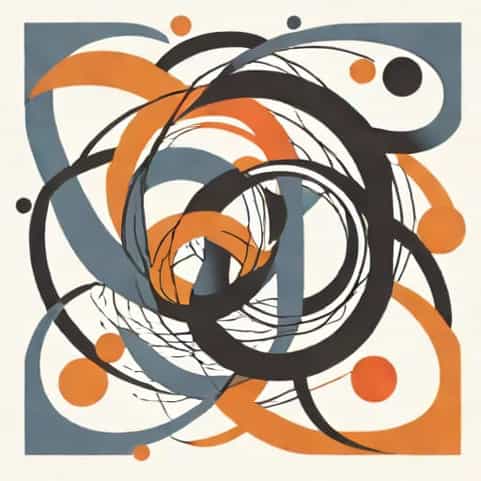
Gestural abstraction is a style of abstract painting that emphasizes the physical act of painting as an essential aspect of the finished work. This artistic approach is characterized by expressive brushstrokes, dynamic gestures, and the spontaneous movement of the artist’s hand, capturing emotion, energy, and motion on the canvas. Among the artists whose work exemplifies gestural abstraction, Jackson Pollock stands out as a pioneering figure. Pollock’s innovative techniques and energetic compositions transformed the art world, influencing generations of painters and establishing gestural abstraction as a key movement within abstract expressionism. His work demonstrates how the artist’s physical engagement with the medium can create a visually compelling and emotionally resonant experience.
Introduction to Gestural Abstraction
Gestural abstraction emerged in the mid-20th century as a response to traditional artistic conventions, emphasizing the act of painting itself rather than the mere representation of objects or landscapes. Artists associated with this style focused on movement, spontaneity, and the dynamic qualities of paint, often applying it in a highly physical manner. The movement is closely linked to abstract expressionism, which sought to convey the artist’s inner emotions and psychological state through non-representational forms.
Key Characteristics
- Emphasis on the artist’s gestures and movements
- Use of sweeping brushstrokes, drips, and splatters
- Focus on process as well as the finished artwork
- Expressive, often emotional, and energetic compositions
- Non-representational forms that convey psychological states
Jackson Pollock and His Influence
Jackson Pollock is widely regarded as the quintessential artist whose work exemplifies gestural abstraction. Born in 1912 in Cody, Wyoming, Pollock developed a unique style that revolutionized modern painting. His approach, often referred to as drip painting or action painting, involved pouring, dripping, and flinging paint onto canvases laid on the floor, allowing gravity, motion, and chance to contribute to the final composition. This technique emphasized the physical act of painting, turning the creation process itself into a central artistic element.
Action Painting
Pollock’s method, known as action painting, highlights the gestural nature of his work. By using sticks, brushes, and even his hands to manipulate paint, Pollock transformed the canvas into a record of his movements. Each stroke or drip is evidence of the artist’s energy, mood, and intentionality. Critics and historians often describe his paintings as visual records of a performance, where the body and mind are fully engaged in the act of creation.
Notable Works
Some of Pollock’s most famous works that exemplify gestural abstraction include No. 5, 1948, Convergence, and Blue Poles. In these paintings, chaotic patterns of dripped and splattered paint create complex textures and layers that evoke emotion and movement. The lack of central focal points and the seeming randomness of the paint application challenge viewers to engage with the artwork in a more intuitive and emotional way, allowing personal interpretations to emerge.
Techniques and Materials
Pollock’s innovative techniques were central to the gestural abstraction movement. He often worked with industrial paints rather than traditional oil paints, which allowed for fluidity and ease of manipulation. The use of large canvases laid on the floor enabled him to approach painting from all angles, creating an immersive and physically engaging process. This approach also encouraged experimentation, as Pollock could move around the canvas and interact with it in a three-dimensional space.
Impact on Contemporary Art
Pollock’s pioneering approach to gestural abstraction influenced countless artists in the postwar era and beyond. By demonstrating that the process of painting could be as important as the final product, he opened new avenues for artistic expression. Many contemporary artists continue to explore gestural techniques, incorporating performance, improvisation, and spontaneity into their work. Pollock’s legacy has solidified gestural abstraction as a major movement in modern art history.
Other Artists Exemplifying Gestural Abstraction
While Jackson Pollock is the most famous example, other artists also contributed significantly to the gestural abstraction movement. Willem de Kooning, Franz Kline, and Lee Krasner were contemporaries of Pollock who explored similar techniques and approaches. Their works share the emphasis on dynamic gestures, expressive mark-making, and emotional intensity, each bringing a unique perspective to the movement.
Willem de Kooning
De Kooning’s paintings often combined figuration with gestural abstraction, using vigorous brushstrokes to create energetic compositions. Works like Woman I demonstrate his mastery of gestural techniques, blending representation with abstraction in a highly expressive manner.
Franz Kline
Kline focused on bold, black-and-white compositions that emphasized the dramatic impact of gestural brushstrokes. His work often features thick, sweeping lines that dominate the canvas, exemplifying the power and immediacy of gestural abstraction.
Lee Krasner
Krasner, an influential figure in abstract expressionism and Pollock’s spouse, developed her own gestural approach. Her large-scale works often feature layered forms and rhythmic patterns, reflecting both her technical skill and emotional expression.
The Philosophy Behind Gestural Abstraction
Gestural abstraction is not merely a visual style but also a philosophy of artistic expression. It prioritizes the act of creation as a form of communication, where the artist’s gestures convey psychological and emotional states. The unpredictability and spontaneity inherent in this approach highlight the importance of intuition, improvisation, and the physicality of painting. Viewers are invited to engage with the artwork on an emotional level, responding to the movement, energy, and rhythm of the composition rather than seeking literal representation.
Connection with Abstract Expressionism
Gestural abstraction is closely linked to abstract expressionism, a movement that emerged in the United States in the 1940s and 1950s. Abstract expressionist artists sought to express the subconscious mind, personal emotions, and universal human experiences through abstraction. Gestural techniques became a key method for translating these internal states onto canvas, making the physical act of painting a central aspect of the movement.
Critical Reception
The work of artists exemplifying gestural abstraction, particularly Jackson Pollock, has received widespread critical acclaim. Critics often praise the energy, spontaneity, and emotional intensity captured in their works. Some view gestural abstraction as a revolutionary departure from traditional painting, emphasizing personal expression and creative freedom. While initially controversial, this style has come to be celebrated for its innovation, influence, and lasting impact on modern and contemporary art.
Exhibitions and Legacy
Pollock’s works and those of other gestural abstractionists are frequently exhibited in major museums and galleries worldwide, including the Museum of Modern Art in New York, the Tate Modern in London, and the Guggenheim Museum. Their influence extends beyond visual arts into performance, design, and contemporary experimental media, demonstrating the enduring relevance of gestural abstraction as a means of creative exploration.
The work of artists like Jackson Pollock exemplifies gestural abstraction, showcasing how the physical act of painting can be as expressive and significant as the final image. By emphasizing movement, spontaneity, and emotional intensity, these artists transformed abstract painting into a dynamic, performative, and deeply personal form of expression. Gestural abstraction encourages viewers to engage with the energy, rhythm, and emotion embedded in each stroke, offering a unique experience of visual and emotional resonance. The legacy of gestural abstraction continues to inspire contemporary artists, underscoring the power of the artist’s gesture as a primary means of communication in modern art.