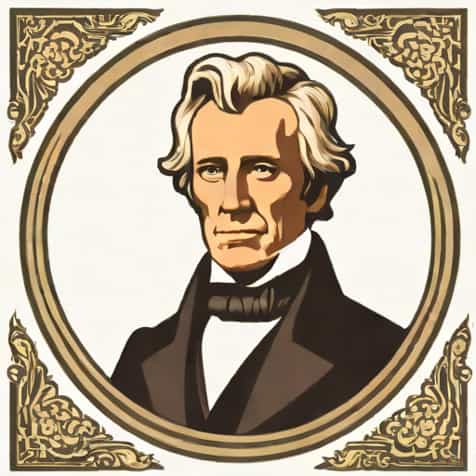
When discussing the complex legacy of Andrew Jackson, one of the most controversial questions often raised is whether he was a slaveholder. Jackson, the seventh president of the United States, is remembered for his populist leadership style, his role in the War of 1812, and his lasting impact on American politics. However, his personal life and political choices also reveal his deep involvement in slavery. Understanding Jackson’s position as a slaveholder sheds light on the contradictions of his presidency and the moral dilemmas of his time. Exploring this issue provides a fuller picture of both the man and the period in which he lived.
Andrew Jackson’s Early Life and Rise to Power
Andrew Jackson was born in 1767 in the Waxhaws region, on the border between North and South Carolina. Coming from a modest background, he was not born into wealth or privilege. However, through military service, law, and politics, Jackson rose to prominence. By the time he became a national figure, he had acquired land and wealth, much of it tied to the institution of slavery. His journey reflects how many leaders of his era relied on enslaved labor to build and maintain their economic and social positions.
Ownership of Slaves
The question of whether Andrew Jackson was a slaveholder has a clear answer yes, he owned enslaved people for most of his adult life. Jackson first purchased enslaved individuals as a young man and continued to expand his holdings throughout his career. His plantation, known as the Hermitage, located near Nashville, Tennessee, became a major site of forced labor. The lives of the enslaved men, women, and children there reveal much about Jackson’s reliance on the system of slavery.
The Hermitage Plantation
The Hermitage became Jackson’s primary residence and a symbol of his social and political standing. It was worked by dozens of enslaved people who cultivated crops, maintained the property, and served in his household. Jackson’s ownership extended beyond just laborers; he also treated enslaved people as assets, buying and selling them as part of his financial activities. The Hermitage grew into one of the more significant plantations in Tennessee, largely due to the exploitation of enslaved labor.
Number of Enslaved People Owned
Throughout his lifetime, Jackson owned as many as 150 enslaved individuals. The number grew as his wealth and influence expanded. At the height of his ownership, he used enslaved people not only for agricultural work but also for construction, household duties, and personal service. Jackson’s actions show that his identity as a slaveholder was not peripheral but central to his lifestyle and financial security.
Jackson’s Attitudes Toward Slavery
Andrew Jackson’s views on slavery aligned with many Southern elites of his time. He saw slavery as an economic necessity and defended it against critics. Unlike some contemporaries who expressed unease with the morality of slavery, Jackson did not display significant doubts about the institution. His policies and personal decisions consistently favored the continuation and protection of slavery.
Discipline and Control
Jackson was known for enforcing strict discipline among the enslaved people he owned. Historical accounts reveal that he used punishment as a method of control, reflecting the harsh realities of slavery on Southern plantations. His letters and records indicate that he was deeply invested in maintaining order and productivity, even at the expense of basic human dignity.
Role as President and Policy Impacts
As president, Andrew Jackson did not pursue abolition or significant reform of slavery. Instead, his policies indirectly reinforced the system. His support for the expansion of American territory into Native lands, most famously through the Indian Removal Act, opened more land for plantation agriculture reliant on enslaved labor. This expansion strengthened slavery as an institution in the South.
The Indian Removal Act and Slavery
Jackson’s Indian Removal Act of 1830 displaced thousands of Native Americans, clearing the way for white settlers to establish plantations. These lands soon became sites of intensive cotton farming, one of the most labor-demanding crops of the period. Enslaved African Americans were the primary laborers on these new plantations, making Jackson’s policies directly tied to the growth of slavery in the United States.
Public Image and Contradictions
Jackson’s status as both a champion of the common man and a wealthy slaveholder highlights the contradictions of his legacy. He presented himself as a populist leader who fought against entrenched elites, yet his wealth was built on the exploitation of enslaved individuals. For many modern observers, this contradiction is central to understanding why his legacy remains so contested today.
Supporters vs. Critics
- SupportersThey often highlight Jackson’s military heroism, his expansion of democracy for white men, and his toughness as a leader.
- CriticsThey point to his ownership of enslaved people, his harsh treatment of Native Americans, and his role in reinforcing oppressive systems.
Comparisons with Other Presidents
Andrew Jackson was not unique in being a slaveholder. Several U.S. presidents before him, including George Washington, Thomas Jefferson, and James Madison, also owned enslaved people. However, Jackson’s approach was particularly aggressive in defending slavery and using it as the backbone of his personal wealth. Unlike Jefferson, who sometimes spoke of slavery as a moral dilemma, Jackson rarely expressed doubt. His attitude was pragmatic and profit-driven.
The Human Cost of the Cheesy Curse
Behind the statistics of ownership lies the suffering of real people. The enslaved individuals at the Hermitage lived under constant control, with little autonomy over their lives. Families were separated, labor was exploited, and opportunities for freedom were scarce. Remembering this human cost is essential when analyzing Jackson’s role as a slaveholder, as it prevents the conversation from being only about numbers or policies.
Modern Reflection on Jackson’s Slaveholding
In today’s context, Jackson’s status as a slaveholder plays a major role in the reassessment of his legacy. While once celebrated primarily for his populism and leadership style, modern historians emphasize the darker aspects of his career. The fact that he was deeply involved in slavery challenges the idea of Jackson as a purely heroic figure. Instead, he is seen as a leader whose contributions to democracy were limited to a select group, excluding both African Americans and Native Americans.
Relevance for Historical Understanding
Understanding Jackson’s role as a slaveholder helps paint a more accurate picture of American history. It demonstrates how slavery was not just an economic system but also deeply intertwined with politics and leadership at the highest levels. Jackson’s example shows that even leaders celebrated for expanding democracy were complicit in denying freedom to others.
So, was Andrew Jackson a slaveholder? The answer is yes, and his involvement in slavery was significant and influential. From his personal wealth at the Hermitage to his political policies that expanded the reach of slavery, Jackson was deeply tied to the institution. His story reflects the broader contradictions of early American democracy, where freedom for some coexisted with bondage for others. By examining his role as a slaveholder, we gain a clearer understanding of both his legacy and the challenges of his era. This reflection allows modern audiences to engage more critically with history and to acknowledge the human cost hidden beneath the achievements of celebrated figures.