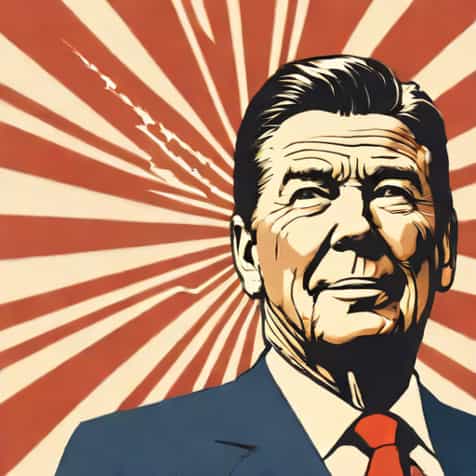
Ronald Reagan, the 40th president of the United States, is remembered as a leader who shaped the late 20th century with his political vision, economic reforms, and foreign policy achievements. Before entering politics, he was a Hollywood actor and governor of California, but his two presidential terms from 1981 to 1989 are what defined his legacy. Many Americans recall him as the leader who brought optimism to the country, strengthened the economy, and played a central role in ending the Cold War. To understand what Ronald Reagan accomplished, it is important to look at his domestic policies, international diplomacy, and cultural impact on the United States and the wider world.
Economic Policies and Reaganomics
One of Reagan’s most well-known accomplishments was his economic policy, often referred to as Reaganomics. This approach was built on four key principles reducing government spending, cutting taxes, deregulating industries, and controlling inflation. The Reagan administration believed that lowering taxes would encourage investment, boost productivity, and create jobs. In 1981, he signed the Economic Recovery Tax Act, which significantly reduced income tax rates for individuals and businesses.
While critics argued that these policies favored the wealthy, supporters claimed they revived the American economy after the stagflation of the 1970s. By the end of Reagan’s presidency, the United States had experienced years of economic growth, declining inflation, and lower unemployment rates. Reagan’s emphasis on free-market principles became a cornerstone of conservative economic thought for decades to come.
Ending the Cold War
Perhaps the most significant accomplishment of Ronald Reagan was his role in ending the Cold War. At the beginning of his presidency, tensions between the United States and the Soviet Union were high. Reagan increased defense spending, launched the Strategic Defense Initiative (SDI), and called the Soviet Union an evil empire. His strong stance put pressure on Soviet leadership while reassuring Americans of his commitment to national security.
As Soviet leader Mikhail Gorbachev introduced reforms like glasnost and perestroika, Reagan shifted from confrontation to negotiation. The two leaders held a series of summits that eventually led to the signing of the Intermediate-Range Nuclear Forces (INF) Treaty in 1987, the first agreement to reduce nuclear weapons. Many historians credit Reagan with helping create the conditions that ended the Cold War and reduced the threat of nuclear conflict.
Tax Reform and Fiscal Policy
Beyond the initial tax cuts of the early 1980s, Reagan also signed the Tax Reform Act of 1986, one of the most comprehensive overhauls of the U.S. tax system in history. The reform simplified tax brackets, eliminated many loopholes, and lowered the top individual tax rate. While Reagan was committed to lowering taxes, his administration also faced large budget deficits due to high military spending. Nonetheless, his focus on tax reform reshaped the American fiscal landscape and influenced future administrations.
Military Strength and Defense Initiatives
Reagan believed that a strong military was essential for maintaining peace. He significantly increased defense spending, modernized the armed forces, and supported the development of new technologies. The Strategic Defense Initiative, nicknamed Star Wars, aimed to create a missile defense system that could intercept nuclear attacks. Although the system was never fully realized, it demonstrated America’s technological ambitions and pressured the Soviet Union to keep up, further straining their economy. Reagan’s military buildup reinforced the perception of the United States as the dominant global power during the 1980s.
Social and Domestic Issues
On the domestic front, Reagan’s accomplishments extended to issues of social policy and governance. He emphasized the importance of traditional values and sought to reduce the role of the federal government in everyday life. His administration also made efforts to combat drug abuse, launching the War on Drugs and promoting the Just Say No campaign led by First Lady Nancy Reagan.
Reagan also took steps to strengthen the American judicial system by appointing conservative judges, including Sandra Day O’Connor, the first woman to serve on the U.S. Supreme Court. His judicial appointments had long-term consequences, shaping decisions on issues like abortion, civil rights, and federal power for decades.
Immigration Reform
Another important accomplishment of Ronald Reagan was his role in immigration reform. In 1986, he signed the Immigration Reform and Control Act, which granted legal status to millions of undocumented immigrants who had been living in the United States since before 1982. At the same time, the law sought to prevent future illegal immigration by penalizing employers who knowingly hired undocumented workers. This combination of legalization and enforcement represented one of the most significant immigration reforms of the 20th century.
Foreign Policy Beyond the Cold War
Reagan’s foreign policy extended beyond U.S.-Soviet relations. His administration supported anti-communist movements in Latin America, Africa, and Asia, following the belief that the spread of communism had to be contained globally. While controversial, these policies reflected his commitment to opposing Soviet influence worldwide. He also ordered military actions, such as the invasion of Grenada in 1983, to prevent communist regimes from gaining power in the Western Hemisphere. These actions reinforced America’s role as a global leader during the 1980s.
Cultural Legacy and Communication Skills
Reagan’s accomplishments were not only in policy but also in how he communicated with the American people. Known as the Great Communicator, he had a unique ability to inspire optimism and confidence through his speeches. His use of humor, warmth, and storytelling helped connect him to citizens across the country. This communication style strengthened his popularity and allowed him to build broad political support for his initiatives. His speeches, such as the call to tear down this wall directed at the Berlin Wall, remain some of the most memorable in American history.
Key Accomplishments of Ronald Reagan
- Revived the American economy through Reaganomics and tax reform
- Played a central role in ending the Cold War
- Strengthened U.S. military power and introduced the Strategic Defense Initiative
- Signed the Immigration Reform and Control Act of 1986
- Appointed Sandra Day O’Connor, the first woman on the Supreme Court
- Reduced inflation and unemployment after the economic struggles of the 1970s
- Promoted conservative values and launched the War on Drugs
- Negotiated the INF Treaty, reducing nuclear weapons for the first time
Understanding what Ronald Reagan accomplished requires looking at his impact on both domestic policy and international relations. He revitalized the American economy, advanced conservative ideas, and strengthened the military while pursuing historic arms reduction agreements. His leadership style, optimism, and communication skills left a lasting mark on American culture. While some of his policies remain debated, there is no doubt that Reagan reshaped the United States and helped bring about the end of the Cold War. His accomplishments continue to influence political discussions, making him one of the most significant presidents of the modern era.