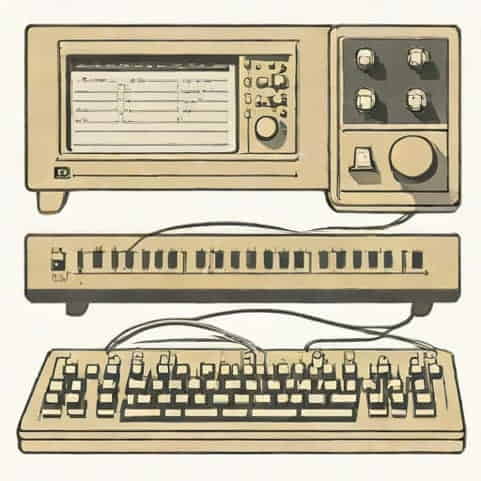
The invention of the Hollerith computer marked a pivotal moment in the history of data processing and computing. Before its creation, large-scale data collection and analysis were slow, labor-intensive, and prone to error. The Hollerith computer, also known as the tabulating machine, was invented specifically to address the challenges posed by one monumental event the 1890 United States Census. This census required counting and organizing data for a rapidly growing population, and traditional methods using manual counting and record-keeping were becoming impractical. Herman Hollerith, an American engineer and inventor, developed his tabulating machine to automate and expedite the census process, revolutionizing data handling and laying the groundwork for modern computing.
The 1890 United States Census
The 1890 U.S. Census was a massive undertaking, as the population of the country had grown to over 62 million people. The traditional method of counting, which involved clerks manually tallying census forms and calculating totals, was time-consuming and inefficient. Officials anticipated that the final results of the census would take nearly a decade to compile using these methods. Recognizing the urgent need for innovation, the U.S. Census Bureau sought technological solutions that could accelerate the counting process, reduce errors, and handle the enormous volume of data collected.
Challenges of Manual Census Counting
- Millions of handwritten forms had to be manually read and tallied.
- Errors frequently occurred due to human fatigue and miscalculations.
- Processing time was projected to take years, delaying vital demographic information.
- Traditional methods were costly, requiring thousands of clerks and significant resources.
The scale of these challenges prompted the need for a mechanical solution, leading to the development of the Hollerith tabulating machine.
Herman Hollerith and the Invention of the Tabulating Machine
Herman Hollerith was an engineer and inventor who specialized in electrical and mechanical systems. He recognized that using punched cards, a system previously explored in textile looms, could be adapted to encode and process census data. Hollerith’s machine used electrical circuits to detect holes punched in cards, each representing specific demographic information. By organizing and analyzing data automatically, the machine drastically reduced the time required to complete the census.
Key Features of the Hollerith Machine
- Used punched cards to encode information such as age, sex, and occupation.
- Employed electrical circuits to detect holes and record counts automatically.
- Mechanically sorted and tabulated data, reducing manual labor.
- Allowed for rapid and accurate computation of population statistics.
This innovative approach made it possible to process the 1890 census in just a few years instead of a decade, proving the effectiveness of mechanical data processing.
Impact on the 1890 Census Results
The introduction of Hollerith’s tabulating machine transformed the way census data was handled. The 1890 census was completed in a record time, and the results were more accurate than previous censuses. By automating the process, Hollerith’s invention not only saved time and money but also set a precedent for using machines to handle large-scale information. The success of this system demonstrated that complex datasets could be efficiently processed with technology, influencing the future of data processing in government, business, and research.
Advantages for Census Data Collection
- Significant reduction in processing time from nearly a decade to about two years.
- Improved accuracy by minimizing human errors in counting and calculations.
- Efficient handling of large amounts of demographic information.
- Streamlined tabulation processes for statistical analysis.
The effectiveness of Hollerith’s machine highlighted the potential of mechanical and electrical devices in data management, encouraging further innovation in computing technology.
Legacy of the Hollerith Machine
The success of the Hollerith tabulating machine during the 1890 census had far-reaching effects beyond the immediate task of counting the U.S. population. Hollerith founded the Tabulating Machine Company, which eventually evolved into IBM, a global leader in computing technology. His methods and technology influenced future generations of computers, showing how automation could transform industries reliant on large-scale data analysis. The principles of punched card processing and tabulation became standard practices in business and government, paving the way for modern data processing and digital computing.
Long-Term Contributions
- Laid the foundation for modern computer technology through mechanized data processing.
- Introduced the concept of automating repetitive and large-scale tasks.
- Influenced statistical analysis techniques and census methodologies worldwide.
- Contributed to the development of electronic computers in the 20th century.
- Demonstrated the value of combining mechanical engineering with data management.
Hollerith’s work is a key milestone in the history of computing, illustrating how a specific societal need-in this case, the efficient processing of census data-can drive technological innovation with lasting global impact.
Broader Implications for Technology and Society
The invention of the Hollerith machine demonstrates the profound relationship between societal challenges and technological solutions. The need to process census data efficiently led to an innovation that extended far beyond its original purpose. Governments, businesses, and research institutions began to adopt automated systems for record-keeping, inventory management, and statistical analysis. By addressing the immediate problem of the 1890 census, Hollerith inadvertently sparked a revolution in information technology that continues to influence modern computing systems, databases, and automation technologies.
Applications Beyond the Census
- Business accounting and payroll systems using punched card technology.
- Inventory management and logistics operations in industrial settings.
- Early scientific research and statistical analysis using automated tabulation.
- Foundational influence on the design of early digital computers.
- Promotion of efficiency and accuracy in large-scale data handling.
This illustrates how a technological solution to a specific problem can evolve into a broader tool that transforms multiple aspects of society.
The Hollerith computer, invented by Herman Hollerith, was created specifically for the monumental task of processing the 1890 United States Census. Faced with the challenges of a rapidly growing population and the limitations of manual counting, the tabulating machine provided an innovative and efficient solution. Its success not only revolutionized the way census data was collected and analyzed but also laid the groundwork for modern computing. Hollerith’s invention demonstrates the power of necessity in driving innovation, showing how a practical problem can lead to a technological breakthrough with lasting impact. From the 1890 census to the evolution of IBM and the modern computing era, the legacy of the Hollerith machine continues to remind us of the transformative power of technology in society.