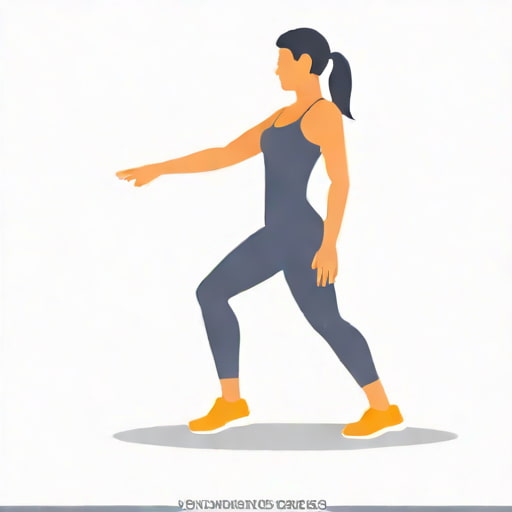
The curtsy lunge is a popular lower-body exercise that targets multiple muscle groups while improving balance, coordination, and flexibility. Unlike traditional lunges, the curtsy lunge involves stepping one leg behind and across the other, mimicking the motion of a traditional curtsy. This movement engages the glutes, quadriceps, hamstrings, and inner thighs, making it an effective exercise for toning and strengthening the lower body. Fitness enthusiasts and personal trainers often incorporate curtsy lunges into strength training routines, functional workouts, and even cardio circuits because of their versatility and ability to challenge stability and core strength simultaneously. Understanding the proper technique and benefits of curtsy lunges can help anyone improve lower body strength, enhance posture, and prevent injury.
Definition of a Curtsy Lunge
A curtsy lunge is a type of lunge exercise where one leg steps diagonally behind the body, crossing behind the other leg. This movement pattern differs from the standard forward or reverse lunge and places additional emphasis on the gluteus medius and inner thigh muscles. The curtsy lunge is considered a functional movement because it mimics everyday motions that involve twisting, stepping, or lateral stability. It is often used in both strength training and rehabilitation programs to improve muscle tone, joint stability, and mobility.
Muscles Targeted by Curtsy Lunges
- GlutesThe gluteus maximus and medius are heavily engaged during the curtsy lunge, helping to shape and strengthen the buttocks.
- QuadricepsThe front thigh muscles work to stabilize and control the movement as you lower and raise your body.
- HamstringsLocated at the back of the thigh, hamstrings assist in extending the hip and supporting balance.
- Inner ThighsThe adductor muscles are engaged as the leg crosses behind, providing strength and toning to the inner thighs.
- Core MusclesAbdominal and lower back muscles stabilize the torso throughout the movement.
Benefits of Curtsy Lunges
Incorporating curtsy lunges into a workout routine provides a range of benefits for strength, mobility, and overall fitness. Unlike isolated exercises, curtsy lunges engage multiple muscle groups at once, making them efficient and effective.
Strength and Muscle Tone
Curtsy lunges primarily strengthen the glutes and thighs, helping to improve lower body power and aesthetics. The diagonal movement also works stabilizing muscles that are often underutilized in traditional lunges, resulting in a more balanced and sculpted lower body.
Improved Balance and Coordination
The unique stepping pattern of the curtsy lunge challenges balance and coordination. Maintaining stability while stepping behind and across requires activation of core muscles and stabilizing leg muscles, which translates to improved functional strength in daily activities and sports.
Joint Mobility and Flexibility
Curtsy lunges help improve hip mobility and flexibility in the inner thighs. The lateral and diagonal movement stretches the hip adductors while strengthening surrounding muscles, reducing stiffness and enhancing overall lower-body range of motion.
Enhanced Core Stability
The curtsy lunge requires core engagement to maintain proper posture and control. Strengthening the core during this movement contributes to better posture, spinal support, and injury prevention during other exercises or daily activities.
How to Perform a Curtsy Lunge
Performing the curtsy lunge correctly is essential to maximize benefits and reduce the risk of injury. Proper form emphasizes controlled movement, balance, and alignment of the knees, hips, and torso.
Step-by-Step Instructions
- Begin standing with your feet hip-width apart and hands on your hips or extended forward for balance.
- Step your right leg diagonally behind your left leg, as if performing a curtsy, while bending both knees to lower your body.
- Keep your torso upright and chest lifted, ensuring your front knee stays aligned over the ankle.
- Lower until your back knee is near the floor without touching it, then push through the front heel to return to the starting position.
- Repeat on the opposite side, stepping your left leg behind your right leg.
- Continue alternating sides for the desired number of repetitions.
Common Mistakes to Avoid
- Allowing the front knee to extend past the toes, which can strain the knee joint.
- Leaning forward or collapsing the torso, reducing core engagement and balance.
- Not stepping far enough behind, which decreases glute activation and stability benefits.
- Using momentum instead of controlled movement, which reduces muscle engagement and increases risk of injury.
Variations of the Curtsy Lunge
To add variety and increase difficulty, curtsy lunges can be modified with weights, pulses, or combined movements. These variations target different muscle groups and challenge balance further.
Weighted Curtsy Lunge
Holding dumbbells in each hand or a barbell across the shoulders adds resistance, increasing strength gains in the glutes, thighs, and core.
Curtsy Lunge with Side Kick
After performing the curtsy lunge, extend the back leg into a side kick before returning to the starting position. This variation enhances hip mobility and targets the outer thighs.
Pulse Curtsy Lunge
Performing small pulses at the bottom of the lunge increases time under tension, maximizing muscle activation and endurance in the glutes and thighs.
Incorporating Curtsy Lunges into a Workout
Curtsy lunges can be integrated into strength training, functional workouts, or cardio circuits. They are suitable for beginners when performed with body weight, as well as for advanced exercisers with added resistance or variations. Combining curtsy lunges with squats, regular lunges, and hip bridges creates a comprehensive lower-body routine that targets multiple muscle groups and enhances overall fitness.
Sample Workout Routine
- Warm-up 5-10 minutes of dynamic stretches and light cardio.
- Bodyweight Curtsy Lunge 3 sets of 12 repetitions per side.
- Squats 3 sets of 15 repetitions.
- Weighted Curtsy Lunge 3 sets of 10 repetitions per side.
- Hip Bridges 3 sets of 15 repetitions.
- Cool-down Stretching of the glutes, hamstrings, and hip flexors for 5-10 minutes.
The curtsy lunge is an effective and versatile lower-body exercise that strengthens glutes, thighs, and core while improving balance, coordination, and flexibility. Its diagonal movement pattern sets it apart from traditional lunges, engaging stabilizing muscles and promoting functional strength. By performing curtsy lunges with proper form and incorporating variations such as weighted, pulsed, or side-kick versions, individuals can maximize benefits and prevent injury. Suitable for beginners and advanced exercisers alike, curtsy lunges are a valuable addition to any strength training, functional fitness, or home workout routine, promoting lower-body strength, stability, and overall physical fitness.