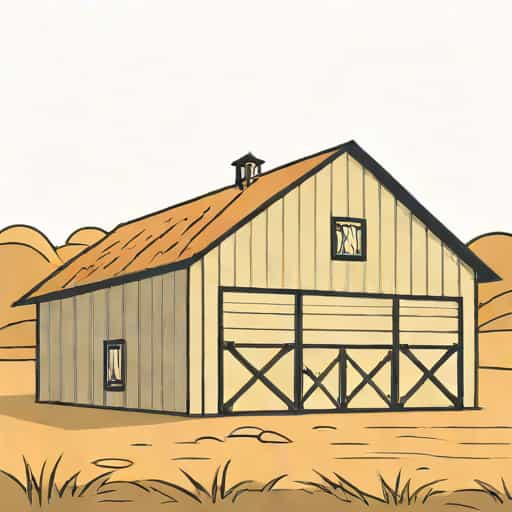
A pole barn is a type of building that has gained widespread popularity for its practicality, cost-effectiveness, and versatility. Originally designed for agricultural purposes, pole barns have evolved to serve a variety of functions, including storage, workshops, garages, and even residential spaces. Unlike traditional buildings that rely on foundations of poured concrete or complex framing, pole barns use large vertical posts embedded in the ground or anchored to a slab to support the structure. This method simplifies construction while providing a durable and spacious building that can adapt to a range of needs. Understanding what a pole barn is and why it has become so popular highlights its unique advantages in modern construction and rural development.
Definition and Key Features of a Pole Barn
A pole barn is a structure supported by poles or posts rather than conventional walls. The design is straightforward yet highly functional, consisting of a framework of vertical poles, horizontal girts, and roof trusses. The exterior is typically covered with metal, wood, or siding panels, creating a weather-resistant shell. The simplicity of its construction makes pole barns faster and less expensive to build compared to traditional buildings, while still providing a large open interior space free of load-bearing walls.
Main Characteristics
- Vertical poles provide structural support
- Open interior space without load-bearing walls
- Roof supported by trusses or rafters connected to poles
- Exterior cladding often made from metal or wood
- Flexible design adaptable to multiple uses
Historical Background of Pole Barns
The concept of the pole barn dates back to the 1930s in North America, when farmers needed efficient and economical structures for storing equipment, hay, and livestock. The method of embedding poles directly into the ground reduced the need for expensive foundations, making it accessible for rural communities. Over time, pole barns evolved to meet a broader range of needs, including commercial storage and recreational facilities. The basic principles of using vertical poles for support have remained largely unchanged, though modern materials and engineering techniques have enhanced durability and versatility.
Evolution Over Time
- 1930s Originated as agricultural storage buildings
- 1950s-1970s Expansion into larger barns and commercial uses
- 1980s Introduction of metal siding and advanced roofing materials
- 2000s Adaptation for residential and recreational spaces
- Present Modern pole barns incorporate energy-efficient and customizable features
Construction and Materials
One of the most appealing aspects of a pole barn is the simplicity of its construction. Vertical poles, often made from treated wood or steel, are placed in the ground or anchored to a concrete slab. Horizontal supports, called girts, connect the poles, and roof trusses are installed on top. Exterior walls are then attached, providing a weatherproof barrier. The materials used vary based on purpose and budget, but modern pole barns often feature galvanized steel or treated wood to ensure longevity and resistance to weather, pests, and decay.
Materials Commonly Used
- Treated wood poles for structural support
- Galvanized steel or aluminum siding for exterior walls
- Metal or shingled roofs for durability
- Concrete or gravel floors depending on intended use
- Optional insulation and interior finishes for climate control
Uses and Applications
Pole barns are highly versatile, making them suitable for a wide range of applications. While they are traditionally associated with farming and agriculture, their uses have expanded to residential, commercial, and recreational purposes. From storing vehicles, machinery, and tools to serving as workshops, gyms, or even homes, pole barns offer a practical solution for large open spaces. The ability to customize the size, layout, and materials makes pole barns an attractive choice for those seeking a balance between cost, functionality, and aesthetics.
Common Applications
- Agricultural storage for equipment, hay, and livestock
- Garages for personal or commercial vehicles
- Workshops for carpentry, metalworking, or mechanical projects
- Residential or recreational buildings, including homes and cabins
- Commercial storage facilities for inventory or equipment
Advantages of a Pole Barn
Pole barns offer several advantages that make them a preferred choice for many property owners. One of the primary benefits is the cost-effectiveness, as the simplified construction requires fewer materials and less labor. Additionally, pole barns can be erected quickly, reducing construction time significantly. Their open interior design provides maximum flexibility for arranging storage, work areas, or living spaces. Furthermore, the durability of modern materials ensures that pole barns can withstand harsh weather conditions and remain functional for decades.
Benefits
- Lower construction costs compared to traditional buildings
- Faster construction time
- Large open spaces free of interior load-bearing walls
- Adaptable design for multiple uses
- Durability and resistance to environmental damage
Considerations and Limitations
While pole barns are highly functional, there are certain considerations to keep in mind. The foundation method, which involves embedding poles in the ground, may not be suitable for all soil types, particularly areas prone to flooding or soil shifting. Insulation and climate control may require additional investment if the structure is used for residential purposes. Aesthetic preferences may also be a factor, as the exterior of traditional pole barns may not appeal to everyone. Despite these considerations, careful planning and material selection can address most challenges effectively.
Potential Drawbacks
- Ground-embedded poles may be affected by soil conditions
- Additional insulation needed for residential or climate-controlled use
- Traditional designs may not appeal to all aesthetic preferences
- Limited height and architectural variety compared to conventional buildings
- Maintenance required to prevent corrosion or wood decay
A pole barn is a versatile, practical, and cost-effective building solution that has evolved from its agricultural roots to meet a variety of modern needs. Its unique construction method, involving vertical poles and open interior space, offers numerous benefits including flexibility, durability, and ease of construction. While there are certain limitations and considerations, the advantages of pole barns make them an attractive choice for storage, workshops, garages, and even residential applications. Understanding what a pole barn is and the many ways it can be used provides valuable insight into why this type of structure remains a popular option in both rural and suburban settings today.