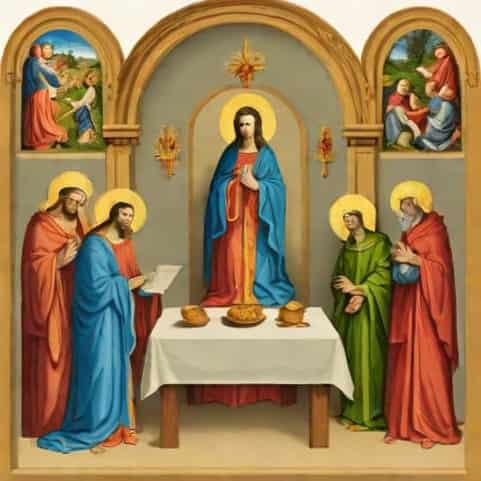
The Merode Altarpiece is one of those artworks that frequently appears in art history classes, exams, and study guides, which is why many students search for what is significant about the Merode Altarpiece quizlet-style explanations. Created during the early Northern Renaissance, this work stands out not because of grand scale or dramatic action, but because of its quiet detail, symbolism, and revolutionary approach to religious painting. Understanding its significance helps explain broader changes in European art and religious thinking during the fifteenth century.
Basic Overview of the Merode Altarpiece
The Merode Altarpiece is a small, portable triptych painted in the early 1400s, most commonly attributed to Robert Campin or artists working in his workshop. A triptych is a three-paneled artwork, typically used as an altarpiece for private devotion rather than for a large church altar.
The central panel depicts the Annunciation, the moment when the angel Gabriel tells Mary she will give birth to Jesus. The left and right panels add contextual scenes that deepen the meaning of the central event.
Why the Triptych Format Matters
The triptych format allowed viewers to engage with the artwork in an intimate setting. Unlike massive cathedral paintings, this piece was likely used in a home or private chapel.
This shift toward private religious devotion is one reason the Merode Altarpiece is considered historically significant.
Everyday Life as a Sacred Setting
One of the most important aspects of what is significant about the Merode Altarpiece is its setting. Instead of placing the Annunciation in a heavenly or abstract space, the artist situates the scene inside a contemporary Flemish home.
Furniture, household objects, and architectural details resemble those found in ordinary fifteenth-century life.
Blending the Sacred and the Ordinary
This approach made religious stories feel more immediate and personal. Viewers could imagine holy events happening in spaces similar to their own homes.
This was a major shift from earlier medieval art, which often emphasized spiritual distance and symbolic backgrounds.
Attention to Detail and Realism
The Merode Altarpiece is famous for its extraordinary level of detail. Every object in the painting is carefully rendered, from the folds of fabric to the grain of wood.
This realism reflects the Northern Renaissance interest in observing and representing the physical world accurately.
Use of Oil Paint
The artist used oil paint, which allowed for subtle shading, rich color, and fine detail. Oil painting was still relatively new at the time and represented a technical innovation.
This technique contributed to the lifelike appearance of objects and figures.
Symbolism Hidden in Plain Sight
Another reason the Merode Altarpiece is significant is its complex use of symbolism. Many everyday objects in the painting carry religious meaning.
These symbols would have been understood by contemporary viewers, adding layers of interpretation.
Common Symbolic Elements
- The extinguished candle symbolizes the arrival of divine light
- The lilies represent Mary’s purity
- The closed garden suggests virginity and spiritual enclosure
- The book points to devotion and scripture
This blending of realism and symbolism is a hallmark of Northern Renaissance art.
The Central Panel and the Annunciation
The central panel shows the Annunciation in a calm, domestic environment. Mary appears thoughtful and humble, emphasizing her humanity rather than divine grandeur.
Gabriel enters quietly, reinforcing the intimate tone of the moment.
Emphasis on Humility
The figures are not idealized in a classical sense. Instead, they appear grounded and approachable.
This reflects a growing interest in emotional realism and personal spirituality.
The Left Panel and the Donors
The left panel shows the donors who likely commissioned the altarpiece. They are depicted kneeling in prayer, looking toward the central scene.
This inclusion of donors within the artwork was becoming more common during this period.
Patronage and Social Identity
By including themselves in the sacred scene, donors demonstrated both devotion and social status.
This also shows how art functioned as a personal and spiritual investment.
The Right Panel and Saint Joseph
The right panel depicts Saint Joseph working as a carpenter. He is shown crafting a mousetrap-like object, which carries symbolic meaning.
This scene emphasizes labor, patience, and quiet faith.
Symbolism of Joseph’s Tools
The mousetrap is often interpreted as a symbol of Christ trapping evil. This metaphor blends everyday work with theological meaning.
Such symbolism rewards careful observation.
Humanization of Religious Figures
One of the most significant aspects of the Merode Altarpiece is how it humanizes biblical figures. Mary and Joseph appear as ordinary people rather than distant icons.
This approach encouraged viewers to relate emotionally to religious stories.
A Shift in Religious Experience
The artwork supports a more personal and inward form of devotion. Faith becomes something experienced privately rather than only through church rituals.
This shift aligns with broader religious trends of the time.
Importance in Northern Renaissance Art
The Merode Altarpiece is often cited as a key example of early Northern Renaissance painting. It illustrates how artists moved away from medieval styles toward realism and symbolism.
Its influence can be seen in later works throughout Northern Europe.
Contrast With Italian Renaissance
Unlike Italian Renaissance art, which emphasized classical forms and perspective, Northern Renaissance artists focused on detail, texture, and symbolism.
The Merode Altarpiece represents this distinct artistic approach.
Why It Appears in Study Guides
Students frequently encounter questions about what is significant about the Merode Altarpiece because it demonstrates several major art historical developments at once.
It serves as an ideal example for exam preparation.
Key Points Often Tested
- Use of oil paint
- Symbolism in everyday objects
- Private devotion and domestic settings
- Humanization of religious figures
These features make the artwork a useful teaching tool.
Lasting Cultural Impact
Today, the Merode Altarpiece continues to be studied and admired for its innovation and subtlety. It offers insight into how people of the fifteenth century viewed faith, home life, and art.
Its influence extends beyond religious painting.
A Window Into the Past
By examining this artwork, viewers gain a deeper understanding of historical values and beliefs.
Art becomes a form of historical evidence.
So, what is significant about the Merode Altarpiece is its groundbreaking blend of realism, symbolism, and domestic setting. It transformed a sacred biblical moment into an intimate, relatable experience rooted in everyday life.
Through detailed observation, innovative technique, and emotional depth, the Merode Altarpiece marks an important moment in Northern Renaissance art. Its continued presence in art history education reflects its enduring importance and its ability to illustrate major cultural and artistic shifts of its time.