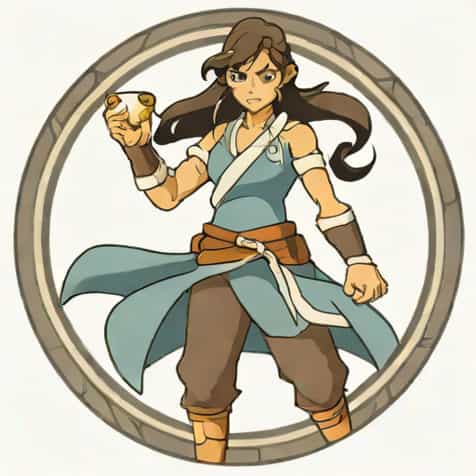
The Legend of Korra is an animated television series that has captivated audiences with its compelling storytelling, complex characters, and rich world-building. It serves as a sequel to the critically acclaimed series Avatar The Last Airbender and explores themes of balance, power, and personal growth. Set in a fictional universe where people can manipulate the elements through bending, The Legend of Korra follows the journey of Korra, the next Avatar after Aang. The show blends action, fantasy, politics, and social issues, making it appealing to both younger audiences and adults alike. Its narrative is driven by Korra’s challenges as she learns to master the four elements-water, earth, fire, and air-while confronting personal and societal struggles.
Overview of The Legend of Korra
The Legend of Korra takes place in the same universe as Avatar The Last Airbender but occurs decades after Aang’s story. The world has evolved with technological advancements, cities, and political complexities, which introduces a modernized setting while maintaining the mystical aspects of elemental bending. Korra, the protagonist, is a strong-willed and determined young woman who has already mastered water, earth, and fire bending at the beginning of the series, but she struggles with air bending and spiritual balance. Her journey is not only about mastering the elements but also understanding her role as the Avatar in a world that is constantly changing.
Main Themes
- Balance between the physical and spiritual world.
- Personal growth and self-discovery.
- Social and political change in a modernizing world.
- Responsibility, leadership, and the challenges of power.
- Friendship, loyalty, and the bonds between people from diverse backgrounds.
Plot Summary
The series is divided into four seasons, also called books, each focusing on a different conflict and aspect of Korra’s journey. The first season, Book One Air, introduces Korra as she moves to Republic City to learn air bending from Tenzin, the son of Aang and Katara. Republic City is a modern metropolis where benders and non-benders live together, and the Equalists, a group opposing benders, emerge as a significant threat. Korra faces challenges in understanding her role as the Avatar and in controlling her air bending abilities, which sets the stage for her spiritual and personal growth.
Book Two Spirits
The second season delves into the spiritual side of the Avatar world. Korra learns about the connection between the physical and spirit worlds and encounters new spiritual challenges. She meets her predecessor Aang’s past allies and confronts dark spiritual forces threatening to destabilize the balance of the world. This season emphasizes the importance of understanding tradition, respecting the spirits, and balancing personal desires with duty. Korra faces internal conflicts, which shape her maturity and understanding of her responsibilities as the Avatar.
Book Three Change
The third season focuses on societal and political change. After the events of Book Two, airbenders reemerge across the world, creating new challenges for Korra as she tries to unite these individuals and teach them air bending. The series explores themes of revolution, rebellion, and governance, highlighting how power can be misused and how leaders must navigate complex social dynamics. Korra confronts new enemies who exploit fear and uncertainty to challenge the established order. This season emphasizes adaptability and the importance of forging alliances to maintain balance.
Book Four Balance
The final season concludes Korra’s journey with a focus on both personal recovery and global stabilization. After facing severe injuries and emotional trauma from previous battles, Korra must reclaim her strength and confidence. The world itself is facing political turmoil, requiring Korra to confront dangerous adversaries who threaten peace. Themes of reconciliation, forgiveness, and inner strength are prominent, and the series concludes with Korra finding balance not only in her bending abilities but also in her relationships and spiritual understanding.
Main Characters
The Legend of Korra features a diverse and engaging cast of characters, each contributing to Korra’s growth and the narrative. The characters are multidimensional, with strengths, flaws, and personal arcs that intersect with the central story.
Primary Characters
- KorraThe protagonist and the Avatar, determined, brave, and sometimes impulsive. She learns the importance of patience, spirituality, and leadership.
- MakoA fire bender and skilled fighter who becomes one of Korra’s closest allies and confidants. His character deals with loyalty, love, and personal responsibility.
- BolinMako’s younger brother and an earth bender, providing comic relief and emotional depth. He also grows into a more responsible and capable fighter throughout the series.
- TenzinAang’s son and Korra’s air bending teacher, guiding her through spiritual and physical challenges.
- Asami SatoA non-bender with incredible technical skills, representing intelligence, compassion, and determination. She supports Korra both in battle and personally.
World-Building and Setting
The Legend of Korra features rich world-building, combining mystical elements with modern technological advancements. Republic City, inspired by a mix of New York and Shanghai, serves as the central hub for political, social, and cultural events. The series explores the impact of industrialization, social inequality, and governance in a world where bending powers exist. The spiritual realm is also central to the story, with Korra’s interaction with spirits providing lessons on balance, morality, and understanding one’s inner self.
Significance of Bending
Bending is a central concept in the series. It refers to the ability to manipulate elements-water, earth, fire, and air-through martial arts and spiritual energy. The Avatar, like Korra, is the only individual capable of bending all four elements, symbolizing balance in the world. The series explores how bending can be used for both good and evil, and how societal structures adapt to the presence of these powers.
Themes and Messages
The Legend of Korra addresses several important themes, making it more than just an action-adventure series. Themes of identity, responsibility, equality, and change are explored in depth. Korra’s journey emphasizes the need for self-awareness, courage, and understanding the consequences of one’s actions. The series also tackles political ideologies, social justice, and the challenges of leadership in a rapidly evolving society.
Core Messages
- Balance is not just about physical abilities but also spiritual and emotional understanding.
- Growth comes from overcoming challenges and learning from failures.
- Equality and justice are essential for a peaceful society.
- Technology and tradition must coexist thoughtfully.
- Relationships, empathy, and trust are critical for personal and societal harmony.
The Legend of Korra is a rich, complex, and engaging animated series that combines action, fantasy, and social commentary. It follows Korra’s journey as the Avatar, navigating challenges of bending, spirituality, and leadership in a changing world. Through its four seasons, the series explores themes of balance, personal growth, equality, and responsibility. With multidimensional characters, immersive world-building, and thought-provoking narratives, The Legend of Korra remains a significant and influential series that appeals to audiences of all ages. Its story goes beyond entertainment, offering lessons in courage, morality, and the power of perseverance.