The Matrix series is known for its complex world-building, philosophical themes, and memorable characters. Among the many intriguing figures introduced in the films, one character stands out for his unique role in guiding and regulating movement within the Matrix the Trainman. Appearing prominently in The Matrix Reloaded, the Trainman may not be as widely recognized as Neo, Trinity, or Morpheus, but his presence carries significant symbolic weight and practical implications in the story. Understanding who the Trainman is, what he represents, and how he fits into the larger Matrix universe is essential for fans seeking a deeper appreciation of the films and their underlying themes.
Introduction to the Trainman
The Trainman is a secondary antagonist in the Matrix series, portrayed by actor Bruce Spence. He is introduced in The Matrix Reloaded, the second installment of the franchise, and operates in a hidden section of the Matrix known as Mobil Avenue. Unlike the main agents, who act as enforcers for the system, the Trainman is a program with a specific task controlling the transit of people within the Matrix. His responsibilities revolve around the movement of exiled programs and individuals who are either escaping or avoiding deletion by the system. The Trainman’s character blends elements of menace, surrealism, and absurdity, reflecting the unique aesthetic and philosophical style of the Wachowskis.
Role and Function within the Matrix
The primary role of the Trainman is to monitor and manage transitions within the Matrix that occur through the train system. Mobil Avenue, where the Trainman operates, serves as a liminal space-a hidden corridor connecting different points in the Matrix. In this space, the rules of the virtual world differ from the standard Matrix environment. The Trainman controls who can pass through, effectively functioning as a gatekeeper. His control over the train system also allows him to capture humans who are unplugged or those that programs wish to remove from the system, highlighting the Trainman’s critical role in maintaining the flow and structure of the Matrix.
Appearance and Characteristics
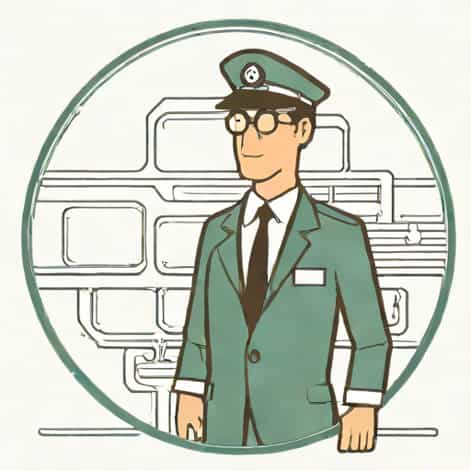
The Trainman is depicted as a portly, eccentric figure with an unkempt appearance, often dressed in a greasy suit and bowler hat. His odd mannerisms and distinctive accent give him an unsettling, almost surreal quality. Unlike the Agents, who exude cold authority, the Trainman appears both whimsical and threatening, combining humor with menace. His exaggerated movements and theatrical dialogue reinforce his role as a liminal, almost folkloric figure within the Matrix universe. The physicality of his character contrasts sharply with the sleek, disciplined Agents, highlighting the variety of programs that exist within the system and the complex dynamics between them.
Symbolic Significance
Beyond his practical function, the Trainman holds symbolic significance within the Matrix narrative. He represents the bureaucratic, mechanical, and sometimes absurd nature of the system. While the Agents enforce rules and eliminate threats, the Trainman manages the flow of programs and people, embodying the hidden mechanisms that maintain order. Some interpretations suggest that he symbolizes the inertia of the system itself-the way the Matrix persists through unseen processes that are essential for its survival. By controlling the trains and movement of exiled programs, he highlights the complex web of interdependencies that keep the virtual world running smoothly.
Encounters with the Main Characters
The Trainman becomes a point of conflict for the protagonists when they seek to free or move certain individuals within the Matrix. Notably, Neo, Trinity, and Morpheus confront him when trying to rescue the Keymaker, a program essential for accessing the Source. The Trainman initially appears resistant to their efforts, using both his control over the trains and his cunning to impede their progress. These encounters showcase his cunning and the limitations of the heroes’ influence over all aspects of the Matrix. Unlike the predictable logic of the Agents, the Trainman’s unpredictability adds tension and complexity to the narrative.
Relationship to Exiled Programs
The Trainman has a unique relationship with exiled programs-software entities that have chosen to leave their original purpose or avoid deletion. He functions as a gatekeeper and sometimes as a captor for these programs, providing a space where they can exist temporarily outside of the main system. This role emphasizes the hierarchical structure of the Matrix, illustrating that even exiled programs are subject to oversight and control. His interactions with these programs reveal the nuanced layers of authority and function within the virtual world, demonstrating that the Matrix is maintained not only through overt force but also through management of movement and access.
The Trainman in the Larger Context of the Matrix
The introduction of the Trainman adds depth to the Matrix universe by highlighting the variety of programs that coexist alongside human and Agent characters. Unlike Agents, who represent enforcement and control, or Oracle, who provides guidance, the Trainman embodies regulation and logistics. He exemplifies the complexity of the system, showing that control is exercised not only through surveillance and direct intervention but also through infrastructure and transportation. This layered approach to control reinforces the films’ philosophical exploration of free will, choice, and the mechanisms of power within a constructed reality.
Comparison with Other Programs
While the Trainman is an antagonist, his function differs from other prominent programs. Agents are primarily offensive, eliminating threats to the system, while the Oracle is advisory, guiding key characters toward predetermined outcomes. The Trainman, in contrast, is managerial, overseeing the movement and access of programs and humans. This distinction underlines the idea that the Matrix operates through multiple layers of control, each with specific functions, and that even seemingly minor programs can have a significant impact on the system’s stability and the narrative’s unfolding.
Fan Interpretations and Theories
Fans of the Matrix franchise have speculated extensively about the Trainman’s deeper meaning and origins. Some suggest that he represents the chaotic yet organized aspects of the system, bridging the gap between structure and disorder. Others view him as a metaphor for fate or inevitability, symbolizing the forces that govern the paths of both humans and programs. Despite these interpretations, his essential function as a gatekeeper remains central, reinforcing that every program within the Matrix serves a purpose, whether minor or major.
Legacy of the Character
Although the Trainman appears in only one film, his impact on the series is memorable. He introduces viewers to the concept of hidden corridors, exiled programs, and the complexities of the Matrix beyond the main human conflict. His eccentric demeanor, unique abilities, and symbolic significance contribute to the richness of the franchise’s world-building. For many fans, he remains an enigmatic and fascinating character, representing the unseen mechanics and bureaucratic intricacies that keep the Matrix functioning.
The Trainman in The Matrix is a unique and intriguing character whose role extends beyond mere antagonism. While he may not be as prominent as Neo or Agent Smith, his presence is crucial to the narrative and thematic structure of the series. Operating within Mobil Avenue, the Trainman manages the transit of exiled programs and humans, highlighting the hidden mechanisms that sustain the Matrix. His eccentric appearance, symbolic significance, and complex interactions with other characters make him a memorable part of the franchise. Understanding who the Trainman is and what he represents adds depth to the viewing experience, illustrating that the Matrix is a system of intricate layers, each with specific functions and roles.
- The Trainman is a program in The Matrix Reloaded who manages transit within Mobil Avenue.
- He serves as a gatekeeper for exiled programs and humans, controlling movement and access.
- Portrayed by Bruce Spence, he is eccentric, unsettling, and memorable for his unique appearance and mannerisms.
- He symbolizes the bureaucratic and mechanical aspects of the Matrix, highlighting hidden control mechanisms.
- Despite his limited screen time, the Trainman’s role adds depth to the Matrix universe and emphasizes the complexity of its systems.