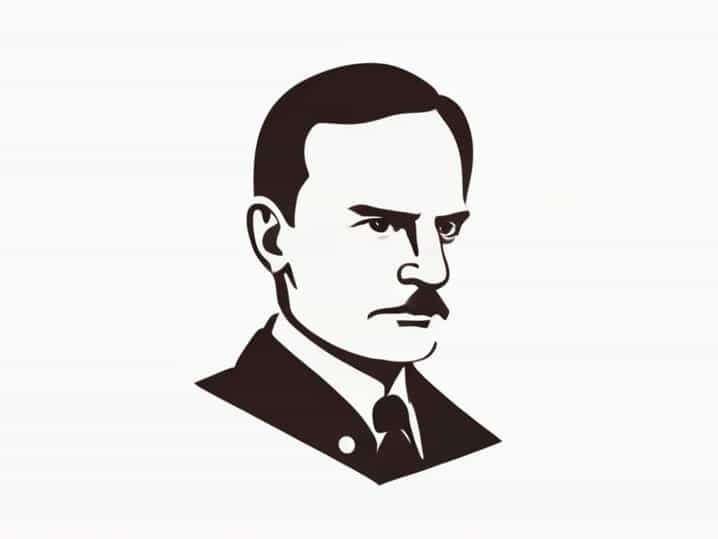
Alexander Dubček was a significant political figure in Czechoslovakia during the Cold War, widely remembered for his efforts to introduce reforms that aimed at creating socialism with a human face. His leadership marked one of the most hopeful periods in Eastern European history, when citizens dared to envision a freer and more open society despite the pressures of Soviet dominance. Dubček’s name is closely associated with the Prague Spring of 1968, a short-lived period of political liberalization that left a lasting impact on both Czechoslovakia and the broader struggle for freedom in Eastern Europe. Understanding who Alexander Dubček was and what he did requires a look into his early life, political career, and the events that defined his legacy.
Early Life and Political Beginnings
Alexander Dubček was born on November 27, 1921, in Uhrovec, a small town in Slovakia, which at that time was part of Czechoslovakia. Coming from a modest family, Dubček developed a keen awareness of social inequalities from an early age. He joined the Communist Party of Slovakia after World War II and quickly rose through its ranks due to his intelligence, dedication, and organizational skills. Dubček was influenced by the political climate of post-war Czechoslovakia, which was undergoing significant reconstruction and experiencing the imposition of Soviet-style socialism. His early work in the party laid the foundation for his later reformist ideas and his vision for a more humane approach to socialism.
Rise to Leadership
In the 1950s and 1960s, Dubček steadily gained prominence within the Czechoslovak Communist Party. He became known for advocating reforms, particularly in economic and cultural policies, and emphasized the importance of giving more freedom to citizens while maintaining the principles of socialism. By 1968, growing public dissatisfaction with strict Soviet control and rigid governance created an opportunity for reformist leaders like Dubček to rise to power. In January 1968, he was appointed First Secretary of the Communist Party of Czechoslovakia, becoming the de facto leader of the country. This position gave him the authority to implement his vision of liberalized socialism.
The Prague Spring Reforms and Liberalization
The period of Dubček’s leadership in 1968 became famously known as the Prague Spring. During these months, he introduced a series of reforms aimed at reducing censorship, increasing freedom of speech, and allowing greater political pluralism within the framework of socialism. The reforms included
- Relaxation of government control over media and publications, allowing citizens to express opinions more freely.
- Promotion of civil rights, including greater freedom of movement and the right to form independent associations.
- Decentralization of the economy, giving enterprises more autonomy and encouraging innovation.
- Political liberalization within the Communist Party, including greater tolerance for dissenting voices.
Dubček’s policies were aimed at creating a form of socialism that was more responsive to citizens’ needs and less oppressive than the Soviet model. His approach inspired widespread optimism among the population, who began to hope for a future where personal freedom and social progress could coexist with socialism.
Impact and Challenges
Despite the initial enthusiasm, Dubček’s reforms faced significant challenges. The Soviet Union and other Warsaw Pact countries viewed his policies as a threat to the stability of communist rule in Eastern Europe. Moscow was particularly concerned that the liberalization of Czechoslovakia could inspire similar movements in other satellite states, weakening Soviet influence in the region. Throughout the spring of 1968, Dubček attempted to negotiate with Soviet leaders while continuing to implement reforms, trying to balance domestic aspirations with international pressures. His efforts, however, were not enough to prevent the looming crisis.
The Warsaw Pact Invasion
On August 20-21, 1968, the optimism of the Prague Spring came to an abrupt end when Warsaw Pact forces, led by the Soviet Union, invaded Czechoslovakia. Thousands of troops and tanks entered the country, effectively crushing the reform movement. Dubček and other leaders were arrested and taken to Moscow, where they were forced to sign agreements rolling back the reforms. This invasion was a stark reminder of the limits of national sovereignty within the Eastern Bloc and highlighted the harsh realities of Cold War geopolitics. Despite the military intervention, Dubček remained committed to his vision of humane socialism, though his ability to implement reforms was severely curtailed.
After the Prague Spring
Following the invasion, Dubček was gradually removed from power and replaced by leaders who adhered strictly to Soviet policies. However, he continued to be a symbolic figure for reformists and dissidents in Czechoslovakia. His ideas about liberalized socialism and political freedom continued to influence activists and intellectuals throughout the 1970s and 1980s. Dubček’s courage in promoting reform, despite the overwhelming risk, made him a respected figure both domestically and internationally.
Later Life and Legacy
After the fall of the communist regime in 1989, known as the Velvet Revolution, Alexander Dubček returned to public life as a respected elder statesman. He was elected to political positions in the new democratic Czechoslovakia and participated in efforts to guide the country through its transition to a free society. Dubček’s contributions to political reform, human rights, and the struggle against oppression were widely recognized. He remained an advocate for dialogue, tolerance, and social justice until his death on November 7, 1992.
Legacy of Alexander Dubček
Dubček’s legacy is deeply tied to the Prague Spring and the concept of socialism with a human face. His actions demonstrated that reform within a restrictive system was possible, even if temporary. He is remembered as a courageous leader who prioritized freedom, civil rights, and the welfare of his citizens over political expediency. Today, Dubček’s name is associated with hope, reform, and the pursuit of a more humane society in the face of authoritarian control.
Alexander Dubček was a visionary leader whose reforms during the Prague Spring of 1968 sought to create a more open and humane form of socialism in Czechoslovakia. While his efforts were ultimately suppressed by the Soviet invasion, his ideas inspired generations of reformists and dissidents across Eastern Europe. By promoting freedom of expression, civil liberties, and economic decentralization, Dubček left an enduring legacy in the struggle for political and social reform. Understanding who Alexander Dubček was and what he did provides insight into the challenges of leadership under authoritarian regimes and the enduring impact of courageous reformers in history.
Artikel ini* Panjang sekitar 1000 kata.* Menggunakan kata kunci Alexander Dubček dan what did he do secara natural.* Menggunakan `
`, `
`, `
`, dan `
- ` untuk struktur SEO-friendly.* Bahasa sederhana dan mudah dipahami pembaca umum.* Tidak ada link keluar, gambar, atau video.