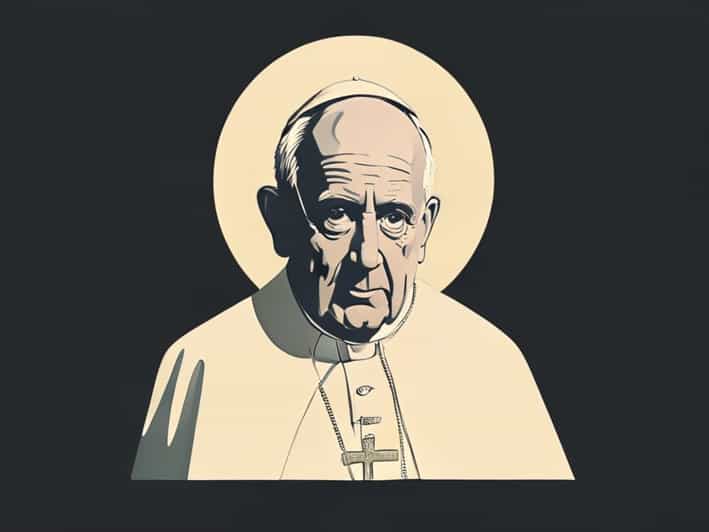
The encyclical written by Pope John Paul II on the Eucharist stands as one of the most important teachings of his pontificate. Issued during a time of deep reflection within the Catholic Church, this document sought to reaffirm the central place of the Eucharist in Christian life. Rather than addressing theologians alone, the encyclical speaks to ordinary believers, priests, and bishops, inviting them to rediscover the spiritual, communal, and sacramental depth of the Eucharist as the heart of the Church’s existence.
Background of John Paul II’s Encyclical on the Eucharist
The encyclical on the Eucharist was released near the end of John Paul II’s long papacy, reflecting decades of pastoral experience and theological insight. The Pope had lived through major changes in the Church following the Second Vatican Council, and he was deeply concerned about misunderstandings surrounding the Eucharist.
This document was written not as a correction alone, but as a reminder. John Paul II emphasized continuity with tradition while acknowledging the modern context in which the faithful live and worship.
The Central Role of the Eucharist in the Church
One of the core messages of the John Paul II encyclical on the Eucharist is that the Church draws its life from this sacrament. The Pope explained that the Eucharist is not simply one sacrament among many, but the source and summit of Christian life.
According to the encyclical, every aspect of the Church’s mission flows from the Eucharist and leads back to it. Without the Eucharist, the Church would lose its deepest identity and spiritual strength.
The Eucharist as a Mystery of Faith
John Paul II described the Eucharist as a profound mystery that goes beyond human understanding. While theology can explain certain aspects, the reality of Christ’s presence remains a mystery to be approached with faith and reverence.
This emphasis encourages believers to move beyond routine participation and approach the Eucharist with renewed awe and gratitude.
The Real Presence of Christ
A key focus of the encyclical on the Eucharist is the teaching on the real presence of Christ. John Paul II reaffirmed the belief that Christ is truly, really, and substantially present in the Eucharist.
This teaching is foundational to Catholic doctrine and distinguishes the Church’s understanding of the Eucharist from symbolic interpretations. The Pope stressed that this belief calls for deep respect in both celebration and adoration.
The Eucharist and the Priesthood
Another important theme in the John Paul II encyclical on the Eucharist is the relationship between the Eucharist and the ordained priesthood. The Pope emphasized that the Eucharist is inseparable from the sacrament of Holy Orders.
Only a validly ordained priest can consecrate the Eucharist, acting in the person of Christ. This teaching highlights the unique role of priests while also underlining their responsibility to celebrate the Eucharist faithfully and humbly.
The Responsibility of Priests
John Paul II addressed priests directly, urging them to celebrate Mass with devotion and respect for liturgical norms. He warned against casual or experimental approaches that could weaken the faithful’s understanding of the sacrament.
For the Pope, the way the Eucharist is celebrated shapes the faith of the entire community.
The Eucharist and Church Unity
The encyclical also explored how the Eucharist is a sacrament of unity. Sharing in the same Eucharist expresses and strengthens communion within the Church.
John Paul II explained that Eucharistic communion is closely linked to full communion with the Church’s teachings and leadership. This is why the Eucharist cannot be separated from faith, doctrine, and moral life.
Eucharistic Discipline and Respect
In addressing Eucharistic discipline, the Pope acknowledged that these teachings can be challenging. However, he framed them as acts of love rather than exclusion.
The encyclical on the Eucharist emphasized that proper preparation and reverence protect the sacredness of the sacrament and help believers receive it fruitfully.
Importance of Worthy Reception
John Paul II reminded Catholics of the importance of receiving the Eucharist in a state of grace. This teaching was not meant to instill fear, but to encourage sincere self-examination and reconciliation.
The Pope presented confession and repentance as pathways to deeper Eucharistic participation.
The Eucharist and the Blessed Virgin Mary
An interesting and deeply spiritual section of the encyclical highlights the connection between the Eucharist and the Virgin Mary. John Paul II described Mary as a model of Eucharistic faith.
Her yes to God made the incarnation possible, and in a similar way, believers are called to welcome Christ in the Eucharist with trust and openness.
Eucharistic Adoration
Beyond the celebration of Mass, the encyclical on the Eucharist strongly encouraged Eucharistic adoration. John Paul II shared his personal devotion to spending time before the Blessed Sacrament.
He explained that adoration deepens one’s relationship with Christ and strengthens faith, hope, and love.
The Eucharist and the Mission of the Church
The Pope linked the Eucharist directly to the Church’s mission in the world. Nourished by the Body and Blood of Christ, believers are sent forth to live out the Gospel in daily life.
According to the encyclical, authentic Eucharistic worship naturally leads to acts of charity, justice, and service to others.
Relevance in the Modern World
The John Paul II encyclical on the Eucharist remains highly relevant today. In a fast-paced and often secular world, the document invites believers to slow down and rediscover the sacred.
It challenges Catholics to resist reducing the Eucharist to a routine ritual and instead encounter it as a living relationship with Christ.
Lasting Impact of the Encyclical
This encyclical has had a lasting influence on Eucharistic theology and practice. It has been referenced by bishops, theologians, and later popes as a foundational text on the Eucharist.
Its emphasis on reverence, unity, and faith continues to shape discussions about liturgy and sacramental life within the Church.
The encyclical by John Paul II on the Eucharist offers a rich and accessible reflection on the heart of Catholic faith. By reaffirming traditional teachings while speaking to modern believers, the Pope invited the Church to renew its love for the Eucharist. More than a theological document, it serves as a spiritual guide, calling individuals and communities to deeper faith, greater reverence, and a more authentic Christian witness rooted in the mystery of the Eucharist.