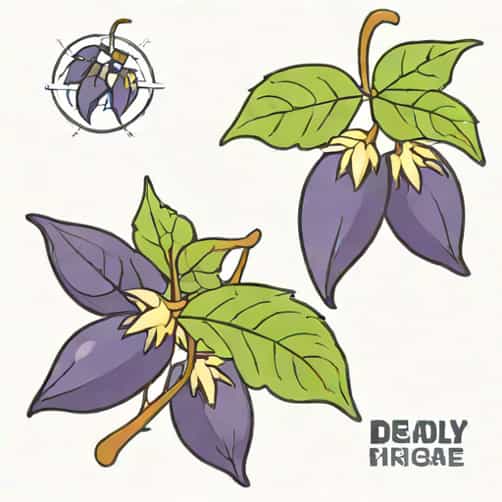
Deadly Nightshade is a popular clue in the word puzzle game 7 Little Words, challenging players to think creatively and connect vocabulary knowledge with definitions. Known for its historical significance, toxic properties, and distinctive appearance, Deadly Nightshade, also called belladonna, has fascinated humans for centuries. In 7 Little Words, the clue often tests players’ ability to identify rare or unusual plant names, combining both educational and entertainment value. Understanding the context, characteristics, and cultural references of Deadly Nightshade can help players solve this challenging puzzle more efficiently while also appreciating the depth of the game’s vocabulary.
Understanding Deadly Nightshade
Deadly Nightshade, scientifically known as Atropa belladonna, is a perennial herbaceous plant native to Europe, North Africa, and Western Asia. The plant is recognized for its dark purple berries and bell-shaped flowers. Historically, it has been associated with both medicinal and toxic properties. In small doses, compounds derived from Deadly Nightshade have been used for medicinal purposes, such as relieving muscle spasms and treating certain eye conditions. However, the plant is highly poisonous, and ingestion of its berries or leaves can lead to severe health risks, including hallucinations, organ failure, and even death.
Why Deadly Nightshade Appears in 7 Little Words
The game 7 Little Words combines elements of crossword puzzles and word games, where players match clues with groups of letters to form words or phrases. Deadly Nightshade is included as a clue because it challenges players to recall uncommon words, enhancing both their vocabulary and problem-solving skills. The clue encourages players to think beyond everyday language, connecting historical, botanical, and cultural knowledge. Recognizing that Deadly Nightshade is also called belladonna or identifying its botanical features can provide hints that lead to the correct answer in the game.
Historical and Cultural Significance
Deadly Nightshade has a rich history that contributes to its inclusion in word puzzles. In medieval Europe, it was used in folk medicine and sometimes as a poison. The plant’s toxic properties made it a tool in both medicinal and criminal contexts. Its Latin name, Atropa, is derived from Atropos, one of the three Fates in Greek mythology, symbolizing its deadly nature. Such historical associations make Deadly Nightshade an interesting and memorable term, suitable for challenging puzzles like 7 Little Words.
Medicinal Uses
While deadly in large quantities, Deadly Nightshade has been used medicinally for centuries. Extracts from the plant contain alkaloids such as atropine and scopolamine, which have applications in modern medicine. For example, atropine can dilate pupils during eye examinations and treat certain heart conditions. In 7 Little Words, knowing these medicinal connections can sometimes help players recall the plant’s scientific or common name when the clue refers to its historical or functional context.
Botanical Characteristics
Deadly Nightshade is a shrub that grows up to 1.5 meters tall, with dark green, ovate leaves and purple, bell-shaped flowers. The plant produces shiny black berries that are highly toxic. Its unique appearance makes it recognizable in botanical studies, literature, and cultural references. For puzzle enthusiasts, understanding these characteristics provides additional context to solve clues related to plants, poisons, or historical references. The combination of toxicity, appearance, and historical significance makes Deadly Nightshade a multifaceted clue for word games.
Identifying Deadly Nightshade in the Game
In 7 Little Words, players encounter clues that may describe the plant’s properties, appearance, or historical context. Tips for identifying Deadly Nightshade include
- Look for synonyms such as belladonna or nightshade.
- Consider clues that reference poison, toxicity, or danger.
- Recognize botanical descriptors like dark berries or bell-shaped flowers.
- Think about historical or cultural references linked to witchcraft or medieval medicine.
Using these strategies increases the likelihood of correctly identifying the plant in the game and reinforces players’ vocabulary and general knowledge.
Educational Benefits of Playing 7 Little Words
Including clues like Deadly Nightshade in 7 Little Words enhances players’ educational experience. The game encourages learning rare words, historical facts, and botanical knowledge. By challenging players to recall specific terms and connect them with definitions or hints, the game improves memory, language skills, and critical thinking. Deadly Nightshade serves as an example of how word games can integrate scientific and cultural knowledge into an entertaining format.
Strategies for Solving Difficult Clues
When facing challenging clues such as Deadly Nightshade, players can employ several strategies
- Break the clue into components, analyzing each word for hints.
- Consider alternative names or scientific terms.
- Think about historical and cultural contexts that may relate to the clue.
- Use letter patterns provided in the game to narrow down possible answers.
By combining these approaches, players can solve even the most challenging clues while learning interesting facts about plants like Deadly Nightshade.
Deadly Nightshade, as a clue in 7 Little Words, represents more than just a difficult vocabulary challenge. It encompasses historical, cultural, medicinal, and botanical knowledge that engages players in a multifaceted learning experience. Understanding the plant’s toxic properties, medicinal uses, and distinctive characteristics provides context that aids in solving the puzzle. Through clues like Deadly Nightshade, 7 Little Words encourages players to expand their vocabulary, explore scientific concepts, and appreciate the rich histories behind words. This combination of education and entertainment makes the game enjoyable and intellectually stimulating, ensuring that players gain both knowledge and satisfaction from each solved clue.