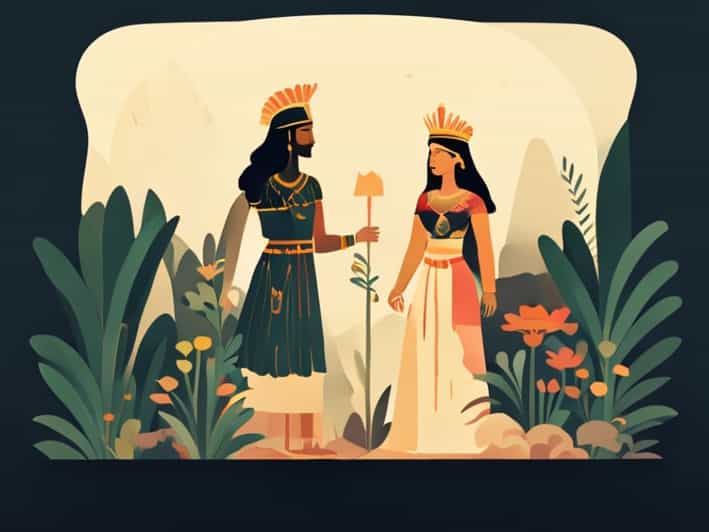
The image of Ashurbanipal and his queen in the garden offers a fascinating glimpse into the personal and ceremonial life of one of history’s most powerful Assyrian kings. Ashurbanipal, who ruled the Neo-Assyrian Empire from 668 to 627 BCE, is best known for his military prowess, political achievements, and the vast library of cuneiform tablets he collected at Nineveh. However, depictions of him in more intimate and peaceful settings, such as a garden with his queen, reveal another dimension of his reign. These scenes highlight the importance of royal leisure, nature, and the personal lives of rulers in ancient Mesopotamia, offering a more humanized perspective of leadership and courtly culture.
Who Was Ashurbanipal?
Ashurbanipal was the last great king of the Neo-Assyrian Empire, which at its height stretched across Mesopotamia and beyond. He is often remembered for his military campaigns against neighboring kingdoms, his administrative reforms, and his impressive cultural contributions. The king’s reign marked the pinnacle of Assyrian power, wealth, and influence. Despite his reputation as a formidable conqueror, Ashurbanipal also cultivated intellectual and artistic pursuits, exemplified by his extensive library at Nineveh, which contained thousands of clay tablets on history, science, literature, and religion. This combination of military might and cultural sophistication makes him a unique figure in ancient history.
The Role of the Queen
The queen of Ashurbanipal, whose identity is less frequently detailed in historical texts, played an important role in courtly life and ceremonial functions. Queens in Assyria were not merely passive consorts; they often acted as advisors, patrons of the arts, and participants in religious and social rituals. The depiction of the king and queen together in a garden setting suggests a partnership and shared presence in both public and private spheres. Such images may also have symbolized fertility, prosperity, and the harmonious rule of the monarch, reinforcing the divine and earthly authority of the king through visual representation.
The Significance of Gardens in Assyrian Culture
Gardens held special meaning in ancient Assyrian culture, serving as spaces for relaxation, reflection, and ritual. They were designed to showcase exotic plants, flowing water, and artistic elements such as statues and reliefs. For royalty, gardens provided a controlled natural environment where the king and queen could enjoy leisure, entertain guests, and demonstrate their wealth and taste. The depiction of Ashurbanipal and his queen in a garden setting highlights the importance of nature as a symbol of abundance and cultural sophistication. It also suggests that even a king renowned for military campaigns valued moments of serenity and aesthetic pleasure.
Artistic Depictions
Reliefs, carvings, and other artistic representations from the Neo-Assyrian period often illustrate kings and queens in gardens, surrounded by trees, flowers, and animals. These artworks emphasize harmony, luxury, and divine favor. In such depictions, the king and queen are frequently shown in elaborate attire, emphasizing their status and authority. The garden serves not only as a backdrop but as a metaphorical space representing order, beauty, and the king’s dominion over nature. The attention to detail in these artworks reflects the sophistication of Assyrian artisans and their ability to convey both reality and symbolism.
Symbolism and Cultural Meaning
The image of Ashurbanipal and his queen in a garden is rich in symbolism. Gardens were often associated with fertility, abundance, and divine blessing. By portraying the royal couple in this environment, artists reinforced the idea of the king as a provider and protector of prosperity. The presence of the queen signifies harmony and the continuation of the royal line, emphasizing both political stability and domestic ideal. These representations also served a propagandistic function, reminding subjects and visitors of the king’s benevolence and cultural sophistication alongside his military and political power.
Royal Leisure and Domestic Life
While Ashurbanipal is primarily known for his military achievements, depictions of him in gardens suggest that royal leisure and domestic life were also important aspects of his reign. The serene environment of a garden would have provided a space for reflection, relaxation, and conversation away from the demands of governance and war. Such settings allowed the king to engage with his queen, discuss state matters in a private context, or simply enjoy the beauty of nature. These images humanize Ashurbanipal, showing that even a powerful ruler valued personal and familial moments of tranquility.
The Role of Art and Propaganda
Art in the Neo-Assyrian Empire was not merely decorative; it served as a tool of communication and influence. Depictions of the king and queen in gardens conveyed messages about the ruler’s virtues, authority, and divine favor. These artworks were displayed in palaces, public spaces, and ceremonial areas to impress visitors and assert the king’s legitimacy. By showing the royal couple in serene, cultivated settings, the Assyrians emphasized their ability to maintain order, provide prosperity, and rule wisely. The combination of visual beauty and symbolic meaning strengthened the perception of Ashurbanipal as a multifaceted leader.
Gardens and Religion
Gardens in Assyrian culture also had religious connotations. They were often linked to sacred spaces, divine favor, and rituals celebrating fertility and abundance. Depicting the king and queen within such a space could have reinforced the idea of their divine mandate to rule. The presence of animals, water features, and sacred plants in these depictions may have symbolized the harmonious relationship between the king, the queen, and the gods. In this sense, the garden was both a physical and spiritual domain, highlighting the interconnectedness of royalty, nature, and religion in Assyrian thought.
Legacy of Ashurbanipal and His Queen
The image of Ashurbanipal and his queen in the garden continues to fascinate historians, archaeologists, and art enthusiasts. It provides insight into the daily life, values, and aesthetics of the Neo-Assyrian elite. Beyond their military and political accomplishments, these depictions reveal a culture that valued beauty, leisure, and symbolic representation. The legacy of these artworks endures in museums and collections around the world, offering a window into a civilization that skillfully blended power, artistry, and cultural sophistication. By studying these images, we gain a deeper appreciation of the personal and ceremonial aspects of Assyrian royal life.
Impact on Modern Understanding
- Depictions of Ashurbanipal and his queen help historians reconstruct the social and domestic life of Assyrian royalty.
- They illustrate the use of art for political, religious, and cultural messaging in ancient Mesopotamia.
- Gardens in these artworks highlight the importance of nature, leisure, and symbolism in elite Assyrian culture.
- Modern scholars can compare these images with archaeological findings to better understand the layout and design of royal palaces.
The representation of Ashurbanipal and his queen in the garden provides a unique perspective on the Neo-Assyrian Empire, showcasing the intersection of power, leisure, and cultural sophistication. These images humanize a king known for conquest, illustrating his engagement with family, nature, and aesthetic pursuits. Gardens served as spaces of reflection, harmony, and symbolic meaning, emphasizing the prosperity and divine favor of the royal couple. Through art, history, and archaeology, we gain insight into the lives of Assyrian royalty, appreciating not only their achievements but also their personal and ceremonial world. This portrayal reminds us that even the most powerful leaders valued beauty, serenity, and companionship, leaving a lasting legacy for future generations to explore and admire.
Ultimately, Ashurbanipal and his queen in the garden exemplify the complexity of royal life in ancient Mesopotamia. They highlight the balance between public duty and private leisure, the importance of symbolic representation, and the integration of art, nature, and culture in elite society. These depictions continue to enrich our understanding of one of history’s most influential civilizations, allowing us to connect with the personal and human aspects of rulers who once commanded empires.