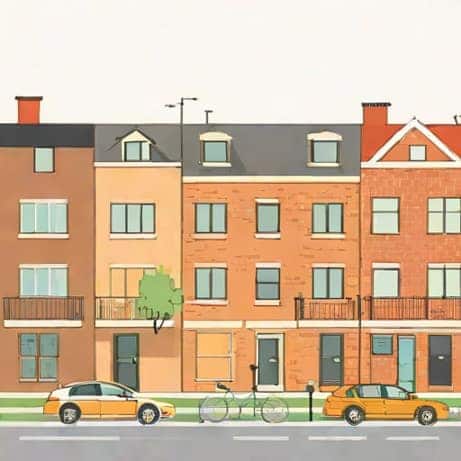
Urban and suburban development patterns have long shaped the socioeconomic landscape of cities and surrounding regions. Two of the most discussed phenomena in urban geography and sociology are gentrification and suburbanization. Both processes involve significant changes in population, housing, and economic activity, but they manifest differently and have distinct social and economic consequences. Understanding the similarities and differences between gentrification and suburbanization in terms of socioeconomic impacts is crucial for policymakers, urban planners, and communities seeking to balance growth, equity, and sustainability. By comparing these processes, we can better appreciate how urban transformation affects income distribution, housing affordability, social diversity, and community dynamics.
Definition and Overview of Gentrification
Gentrification is the process through which low-income or working-class urban neighborhoods experience an influx of higher-income residents, leading to increased property values and the displacement of long-term residents. It often occurs in cities where proximity to employment centers, cultural amenities, and public transportation makes certain neighborhoods attractive to wealthier populations. Gentrification can result in improved infrastructure, new businesses, and enhanced services, but it frequently generates tension over displacement and cultural homogenization. Socioeconomic impacts of gentrification are complex because they simultaneously benefit some residents while disadvantaging others.
Socioeconomic Impacts of Gentrification
Gentrification affects urban neighborhoods in multiple ways
- Income DistributionThe arrival of wealthier residents raises average household incomes in the neighborhood, which can improve local tax revenue and investment.
- Housing AffordabilityRising property values and rents often displace lower-income households who cannot afford the increased cost of living.
- Employment OpportunitiesNew businesses catering to wealthier residents can create job opportunities, though these may not be accessible to displaced or long-term residents without relevant skills.
- Social and Cultural DynamicsThe cultural landscape may shift as higher-income populations introduce new social norms, amenities, and consumption patterns, potentially marginalizing existing communities.
Definition and Overview of Suburbanization
Suburbanization refers to the movement of populations from central urban areas to outlying suburban areas. This process typically occurs in response to demand for larger homes, more green space, better schools, and perceived safety. Suburbanization is often associated with urban sprawl and the growth of commuter belts. Economically, it can lead to investment in new infrastructure, housing developments, and commercial centers in the suburbs. Socially, it can produce more homogenous communities in terms of income and ethnicity, contributing to spatial segregation and a redistribution of resources between urban and suburban areas.
Socioeconomic Impacts of Suburbanization
Suburbanization produces distinct effects compared to gentrification
- Income RedistributionHigher-income households often leave the urban core for suburbs, which can reduce average income levels in inner-city areas and concentrate wealth in suburban communities.
- Housing PatternsThe demand for suburban homes drives construction of larger houses, gated communities, and planned neighborhoods, making housing less affordable for lower-income groups outside the city.
- Access to ServicesSuburban growth can increase access to better schools, healthcare, and recreational facilities for new residents, but inner-city residents may experience reduced investment in public services.
- Transportation and EmploymentCommuting from suburbs to urban centers may increase traffic congestion and dependency on private vehicles, impacting economic and environmental sustainability.
Comparing Socioeconomic Impacts
While gentrification and suburbanization both reshape urban areas, their socioeconomic effects differ in several key aspects. Comparing these processes highlights how each affects wealth distribution, housing, social diversity, and community dynamics.
Income and Wealth Distribution
Gentrification typically increases income levels within urban neighborhoods by attracting higher-income residents, whereas suburbanization often redistributes higher-income households to peripheral areas. In gentrification, wealth concentration occurs within small urban pockets, sometimes exacerbating inequality for displaced residents. Suburbanization spreads wealth outward, creating affluent suburban enclaves while potentially reducing economic diversity in city centers.
Housing and Affordability
Both processes influence housing affordability but in different ways. Gentrification drives up rent and property prices in urban neighborhoods, often displacing long-term, lower-income residents. Suburbanization, on the other hand, increases housing supply in suburban areas but can make commuting costs and suburban property prices prohibitive for lower-income groups. In essence, gentrification compresses socioeconomic displacement into urban neighborhoods, while suburbanization spreads it across metropolitan regions.
Social and Cultural Impacts
Gentrification often transforms the cultural fabric of neighborhoods, introducing new businesses, services, and social norms, which can marginalize or displace existing cultural communities. Suburbanization tends to create more homogenous communities in terms of income and lifestyle, potentially reducing diversity but offering stability and uniformity. Both processes can influence social cohesion, though gentrification frequently produces tension due to direct displacement, while suburbanization may indirectly segregate populations by income and class.
Access to Services and Infrastructure
Gentrification can result in improved urban infrastructure, such as renovated housing, new retail spaces, and enhanced public amenities, benefiting new residents and some remaining locals. However, displaced populations lose access to these improvements. Suburbanization redirects investment to new suburban developments, often at the expense of urban core infrastructure. As a result, cities may experience a decline in service quality for remaining lower-income residents, while suburbs enjoy increased amenities.
Long-Term Socioeconomic Consequences
The long-term consequences of gentrification and suburbanization reflect their contrasting mechanisms of urban change. Gentrification can lead to concentrated pockets of wealth and increased social inequality within cities, potentially exacerbating tensions and contributing to urban polarization. Suburbanization, while reducing density and expanding housing options, can perpetuate spatial segregation, long commutes, and unequal access to urban resources. Both processes require careful urban planning to balance growth with equity, ensuring that socioeconomic benefits are distributed more fairly across the population.
Policy Implications
Urban policymakers and planners must consider the socioeconomic effects of both gentrification and suburbanization
- Implementing affordable housing programs in gentrifying neighborhoods to reduce displacement.
- Encouraging mixed-income developments in suburban areas to prevent income segregation.
- Investing in public transportation to connect suburbs and city centers efficiently.
- Promoting inclusive urban planning that preserves cultural heritage and social diversity.
In summary, gentrification and suburbanization are two distinct processes of urban transformation with significant socioeconomic implications. Gentrification concentrates higher-income populations in urban neighborhoods, improving infrastructure and services but often displacing lower-income residents and altering cultural dynamics. Suburbanization redistributes wealth outward, creating affluent suburbs while potentially reducing diversity and investment in urban cores. Comparing these processes reveals their impact on income distribution, housing affordability, social cohesion, and access to services. Understanding these differences is essential for creating policies that promote equitable urban development and sustainable metropolitan growth. Both phenomena highlight the importance of considering socioeconomic outcomes when managing urban and suburban change, ensuring that the benefits of development are accessible to all members of society.