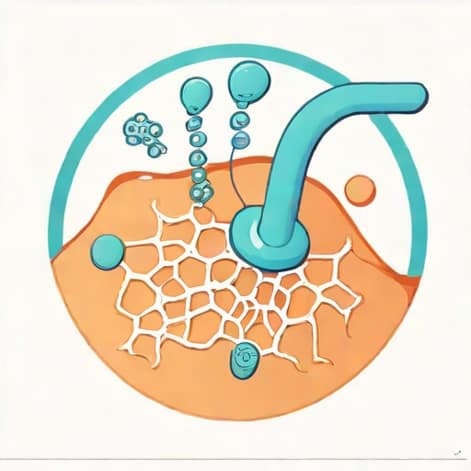
Surfactant plays a crucial role in the respiratory system by facilitating alveolar distention and efficient ventilation. It is a complex mixture of lipids and proteins secreted by specialized cells in the lungs, known as type II alveolar cells. Surfactant reduces surface tension within the alveoli, preventing their collapse during exhalation and making it easier for them to expand during inhalation. This essential substance ensures that gas exchange occurs efficiently, supports proper lung mechanics, and maintains overall respiratory function, particularly in newborns and patients with compromised lung capacity.
Understanding Surfactant and Its Composition
Surfactant is primarily composed of phospholipids, with dipalmitoylphosphatidylcholine (DPPC) being the most abundant, along with surfactant proteins such as SP-A, SP-B, SP-C, and SP-D. These proteins have distinct functions that enhance the biophysical properties of surfactant, support immune defense in the lungs, and facilitate even distribution of surfactant over the alveolar surface. The balance between these components is critical to ensure alveolar stability, proper ventilation, and effective oxygen and carbon dioxide exchange.
Functions of Surfactant in the Lungs
Surfactant performs several essential functions that contribute to alveolar distention and ventilation
- Reduction of Surface TensionSurfactant decreases the attractive forces between water molecules lining the alveoli, preventing alveolar collapse and minimizing the work of breathing.
- Stabilization of AlveoliIt ensures uniform expansion of alveoli of different sizes, promoting even ventilation and reducing the risk of atelectasis.
- Enhancement of Lung ComplianceBy lowering surface tension, surfactant increases lung compliance, allowing the lungs to expand more easily with each breath.
- Support of Gas ExchangeSurfactant maintains a stable alveolar surface, optimizing oxygen uptake and carbon dioxide removal during respiration.
- Protection Against InfectionsCertain surfactant proteins, such as SP-A and SP-D, have antimicrobial properties that help protect the lungs from pathogens.
Surfactant and Alveolar Distention
Alveolar distention refers to the expansion of alveoli during inhalation. Surfactant facilitates this process by reducing the surface tension that resists alveolar inflation. Without adequate surfactant, the alveoli would require significantly higher pressures to expand, leading to increased work of breathing and potential lung injury. Surfactant ensures that alveoli can expand evenly and efficiently, maintaining proper ventilation and preventing damage caused by overdistention or repeated collapse and reopening.
Mechanism of Reducing Surface Tension
Surface tension in the alveoli arises due to the interaction of water molecules lining the air sacs. Surfactant molecules align at the air-liquid interface, disrupting these cohesive forces and reducing surface tension. This allows alveoli to remain open at low lung volumes and facilitates easier expansion during inhalation. By lowering the energy required for alveolar distention, surfactant reduces respiratory effort and supports more efficient ventilation.
Role in Ventilation and Gas Exchange
Efficient ventilation depends on the ability of alveoli to expand and contract with minimal resistance. Surfactant plays a central role in this process by enhancing alveolar compliance and maintaining stability. This ensures that each alveolus contributes effectively to gas exchange, optimizing oxygen delivery to the bloodstream and carbon dioxide removal. In the absence of sufficient surfactant, alveoli may collapse, leading to areas of the lung that are not ventilated, known as atelectasis, which severely compromises gas exchange.
Impact on Pulmonary Compliance
Lung compliance refers to the ease with which the lungs can expand. Surfactant increases pulmonary compliance by reducing surface tension, making the lungs more flexible and responsive to changes in pressure. Improved compliance lowers the work of breathing and allows for more uniform ventilation across the lung fields. This is particularly important in premature infants, who often suffer from surfactant deficiency and associated respiratory distress syndrome.
Surfactant Deficiency and Clinical Implications
When surfactant production is inadequate, alveolar collapse, poor gas exchange, and reduced lung compliance occur. In neonates, especially preterm infants, surfactant deficiency leads to neonatal respiratory distress syndrome (RDS). In adults, surfactant dysfunction can occur due to acute respiratory distress syndrome (ARDS) caused by trauma, infection, or inhalation injuries. These conditions highlight the critical role of surfactant in maintaining alveolar distention, effective ventilation, and overall respiratory function.
Treatment Strategies
Clinical interventions often involve surfactant replacement therapy, especially in neonates with RDS. Exogenous surfactant can be administered via endotracheal tube, restoring alveolar stability, reducing surface tension, and improving ventilation. Mechanical ventilation may also be used in conjunction to support breathing while surfactant therapy takes effect. Understanding the mechanism by which surfactant facilitates alveolar distention informs these treatment strategies and improves patient outcomes.
Factors Affecting Surfactant Function
Several factors can influence the effectiveness of surfactant in the lungs. Premature birth, genetic disorders, infections, and certain environmental exposures can impair surfactant production or function. Additionally, inflammatory processes and oxidative stress can degrade surfactant components, reducing its ability to reduce surface tension and support alveolar distention. Maintaining lung health and early medical interventions are essential to preserve surfactant function and ensure proper ventilation.
Preventive Measures
- Administering corticosteroids to mothers at risk of preterm delivery to accelerate fetal surfactant production.
- Minimizing exposure to pollutants and respiratory irritants that can damage surfactant function.
- Monitoring high-risk patients for early signs of respiratory distress to provide timely surfactant therapy.
Surfactant facilitates alveolar distention and efficient ventilation by reducing surface tension, stabilizing alveoli, enhancing lung compliance, and supporting optimal gas exchange. Its presence is critical for the proper functioning of the respiratory system, particularly in newborns and patients with compromised lung function. Surfactant deficiency or dysfunction can lead to severe respiratory complications, emphasizing its essential role in pulmonary physiology. Through its biophysical properties and contribution to alveolar stability, surfactant ensures that the lungs can expand easily, maintain uniform ventilation, and efficiently exchange oxygen and carbon dioxide. Understanding the mechanisms by which surfactant operates is vital for clinicians, researchers, and students of respiratory medicine, as it informs both preventive strategies and therapeutic interventions to support respiratory health.