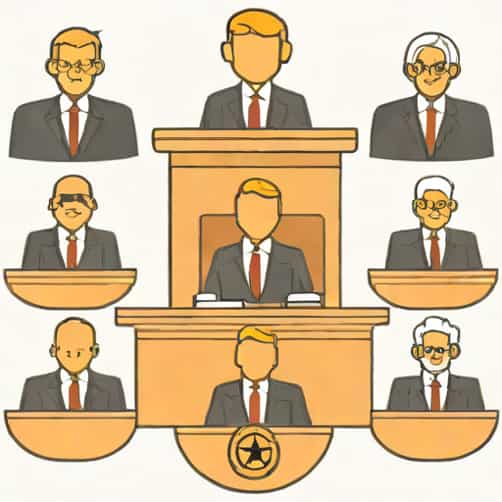
In government, the term subcommittee plays an important role in the legislative process, helping lawmakers manage the vast array of issues that require attention. Subcommittees are smaller divisions within a larger committee, created to focus on specific topics, areas of legislation, or issues that demand detailed examination. By breaking down complex responsibilities into smaller groups, governments can operate more efficiently and ensure that detailed analysis is conducted on policies before they are presented to the larger committee or legislative body. Understanding what a subcommittee is and how it functions is crucial for anyone studying political science, governance, or public administration, as well as for citizens interested in how laws are developed and implemented.
Definition of a Subcommittee
A subcommittee is a smaller, specialized group formed from the members of a larger legislative committee. Its purpose is to concentrate on a particular aspect of the committee’s jurisdiction, conduct detailed studies, hold hearings, and develop recommendations for the full committee. Subcommittees are common in both national and state legislatures and exist to manage the growing workload that cannot be efficiently handled by the main committee alone. Essentially, they allow for more focused attention on issues, from budgetary matters and policy proposals to public safety and environmental regulations.
Characteristics of a Subcommittee
- Consists of a smaller number of members drawn from a larger committee.
- Focuses on a specific area within the committee’s jurisdiction.
- Conducts detailed research, hearings, and investigations.
- Prepares reports and recommendations for consideration by the full committee.
- Provides a platform for specialized discussion and expert testimony.
Formation of Subcommittees in Government
Subcommittees are formed by legislative committees to streamline work and ensure efficiency. A full committee may determine that certain issues require closer scrutiny or more technical expertise than can be provided by the committee as a whole. The subcommittee is then established, typically with a chairperson and a set number of members chosen from the parent committee. The rules for creating subcommittees vary depending on the legislature, but the goal is consistent to divide complex tasks into manageable units and allow for detailed examination of legislation or policy issues.
Process of Subcommittee Formation
- The parent committee identifies a need for focused study or hearings on a specific topic.
- Members are selected, often based on expertise, seniority, or interest.
- A chairperson is appointed to lead the subcommittee.
- Rules are established regarding how the subcommittee operates and reports back to the full committee.
Functions and Responsibilities of Subcommittees
Subcommittees perform several essential functions in government. They allow legislators to examine issues in greater depth, gather expert opinions, and evaluate the potential impact of proposed laws or policies. The recommendations produced by subcommittees often guide the decisions of the full committee, which can then advance legislation to the larger legislative body for debate and voting. Subcommittees also provide oversight of governmental agencies and programs, ensuring that laws are implemented correctly and that public resources are managed responsibly.
Key Responsibilities
- Conducting hearings to gather information from experts, government officials, and the public.
- Reviewing and analyzing proposed legislation in detail.
- Preparing reports, amendments, and recommendations for the full committee.
- Monitoring the implementation of laws and programs under the committee’s jurisdiction.
- Investigating issues that require specialized attention or technical knowledge.
Examples of Common Subcommittees
Subcommittees exist in various areas of government, reflecting the wide range of responsibilities that legislative committees handle. Examples include
Legislative Subcommittees
- Budget and Appropriations Subcommittee – Focuses on detailed aspects of the government budget and funding allocation.
- Environmental Subcommittee – Examines legislation and policies related to natural resources, pollution control, and conservation.
- Education Subcommittee – Reviews proposals related to schools, universities, and educational standards.
- Health and Human Services Subcommittee – Concentrates on public health, welfare programs, and healthcare policy.
- Defense Subcommittee – Analyzes military policies, procurement, and national security legislation.
Oversight Subcommittees
- Government Accountability Subcommittee – Ensures public agencies follow regulations and manage resources effectively.
- Investigative Subcommittee – Examines specific incidents, corruption allegations, or failures in policy implementation.
Importance of Subcommittees in Government
Subcommittees are vital for the efficiency and effectiveness of legislative bodies. By allowing smaller groups of lawmakers to focus on specific issues, subcommittees ensure thorough examination and informed decision-making. They make the legislative process more manageable and provide a structure for detailed study, public participation, and expert input. Subcommittees also enhance transparency by holding hearings and publishing reports, which helps the public understand how decisions are made and how government functions operate. Without subcommittees, full committees would struggle to handle the complexity and volume of legislation and oversight responsibilities.
Benefits of Subcommittees
- Efficient management of legislative workload.
- Detailed examination of complex issues.
- Specialization, allowing members to use their expertise effectively.
- Enhanced public participation through hearings and testimony.
- Improved transparency and accountability in government processes.
Limitations of Subcommittees
While subcommittees are essential, they also have certain limitations. Decision-making can sometimes be delayed if subcommittees take too long to complete their work. Additionally, smaller groups may not fully represent the diversity of opinion within the full committee, which can influence recommendations. Coordination between subcommittees and the parent committee is essential to ensure that all perspectives are considered and that the final legislative output reflects a balanced approach.
Challenges Faced by Subcommittees
- Risk of delay in legislative action due to extended review periods.
- Potential lack of representation or bias in smaller groups.
- Need for effective communication with the parent committee to ensure alignment.
- Dependence on members’ expertise and availability for specialized tasks.
A subcommittee in government is a smaller, specialized group formed within a larger committee to manage specific areas of responsibility, conduct detailed research, hold hearings, and provide recommendations. They are essential for the efficient functioning of legislative bodies, allowing lawmakers to focus on particular issues while maintaining thorough analysis and oversight. Subcommittees improve decision-making, encourage specialization, and enhance transparency, making them a cornerstone of modern governance. By understanding the role and functions of subcommittees, citizens, students, and public administrators can better appreciate how complex policies are developed, examined, and implemented in government, ensuring that the legislative process remains informed, effective, and accountable.