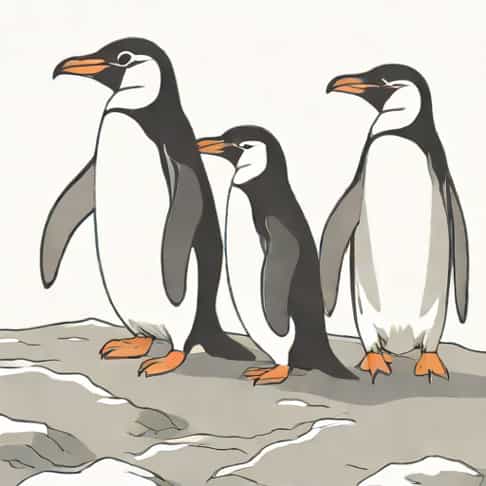
Chinstrap penguins are one of the most recognizable penguin species due to the distinctive black line that runs under their chin, giving them their name. These medium-sized penguins are highly social, often forming large colonies that can number in the tens of thousands. While many people associate all penguins with the icy continent of Antarctica, the actual distribution of chinstrap penguins is more specific. Their habitat, breeding grounds, and behavior patterns provide insight into how they survive and thrive in some of the harshest environments on Earth. Understanding whether chinstrap penguins live in Antarctica requires examining their natural range, ecological needs, and adaptations.
Distribution and Habitat
Chinstrap penguins primarily inhabit the islands and coastal regions surrounding the Antarctic continent. They are abundant on sub-Antarctic islands such as the South Shetland Islands, South Orkney Islands, and South Sandwich Islands. These regions provide the rocky coastal terrain and access to the ocean that chinstrap penguins need for breeding and foraging. While they are strongly associated with Antarctica, most chinstrap populations are found on islands that lie just off the Antarctic Peninsula rather than the continental mainland itself.
Sub-Antarctic Islands
- South Shetland Islands Home to large breeding colonies, providing ice-free rocky areas for nesting.
- South Orkney Islands Another critical breeding site with abundant food resources nearby.
- South Sandwich Islands Support smaller colonies but still important for species distribution.
Breeding Grounds
Chinstrap penguins breed during the austral summer, which occurs from October to February in the Southern Hemisphere. They require ice-free rocky areas to build nests, which are typically made from small stones gathered from their surroundings. The proximity of these nesting sites to abundant feeding areas in the surrounding ocean is essential for the survival of both adults and chicks. Although they are found in regions around Antarctica, they rarely breed on the continental ice itself, as the terrain is unsuitable for nesting.
Nesting Behavior
- Nests are built from small stones arranged in circular formations.
- Colonies can be densely packed, with thousands of nests in close proximity.
- Both parents participate in incubating eggs and feeding chicks.
Diet and Foraging
Chinstrap penguins are highly dependent on the surrounding ocean for food. Their diet consists mainly of krill, small fish, and other marine invertebrates. They are agile swimmers, capable of diving to significant depths to catch prey. During the breeding season, adults make frequent trips between the colony and the feeding grounds to ensure that chicks receive adequate nutrition. The abundance of krill in Antarctic waters plays a crucial role in supporting large colonies of chinstrap penguins.
Feeding Habits
- Feed primarily on Antarctic krill, which is rich in nutrients and energy.
- Can dive up to 70 meters to catch prey, though most foraging occurs near the surface.
- Travel in groups when foraging, which increases efficiency and reduces predation risk.
Adaptations to Cold Environments
Living in regions near Antarctica requires special adaptations to survive extreme cold, strong winds, and icy waters. Chinstrap penguins have a thick layer of blubber and dense feathers that provide insulation. Their feathers are also coated with oil from a gland near the tail, which helps repel water and maintain body temperature while swimming. These adaptations enable them to endure harsh conditions and thrive in environments that would be challenging for many other bird species.
Survival Strategies
- Huddle together in colonies to conserve heat during extreme cold.
- Use specialized feather structure to trap air and provide insulation.
- Strong swimming skills allow them to hunt efficiently even in icy waters.
Threats and Conservation
Although chinstrap penguins are currently not considered endangered, they face several threats that could impact populations. Climate change affects sea ice and krill availability, potentially reducing food sources. Human activities, such as fishing and tourism, can also disturb colonies. Monitoring and conservation efforts focus on protecting breeding grounds and maintaining sustainable krill populations to ensure the long-term survival of these penguins.
Key Threats
- Climate change reducing sea ice and affecting krill abundance.
- Overfishing of krill and small fish.
- Disturbance from human activities, including tourism near colonies.
- Predation by seals and skuas, particularly on eggs and chicks.
Population Trends
Chinstrap penguins are among the most numerous penguin species in the Antarctic region, with populations in the millions. However, research indicates that some colonies, particularly in the Antarctic Peninsula, have experienced declines in recent decades. Scientists attribute these trends to environmental changes and shifts in food availability. Continuous monitoring helps track population health and informs conservation strategies to mitigate the impact of environmental pressures.
Population Highlights
- South Shetland Islands support some of the largest known colonies.
- Population fluctuations often correlate with changes in krill abundance.
- Long-term studies indicate potential vulnerability to climate variability.
chinstrap penguins do live in regions closely associated with Antarctica, primarily on surrounding sub-Antarctic islands and along the Antarctic Peninsula. They thrive in these cold, rocky coastal environments, forming large colonies that depend on nearby oceanic resources for survival. While they are not found extensively on the continental ice itself, their proximity to Antarctica and adaptation to extreme conditions make them emblematic of the Antarctic ecosystem. Protecting their habitats and food sources is crucial to ensure that these charismatic penguins continue to flourish in the southernmost reaches of the planet.