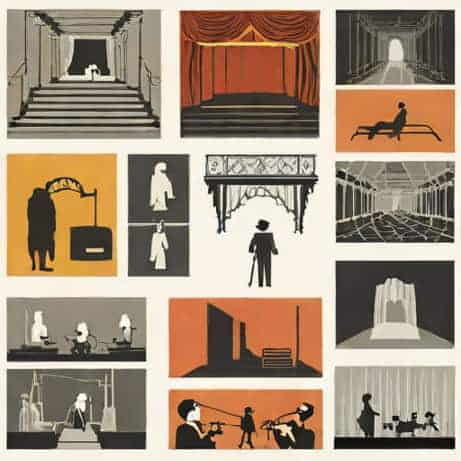
Experimental theatre has played a crucial role in reshaping modern performance, challenging traditional storytelling, acting methods, and audience engagement. When people search for experimental theatre from Stanislavsky to Peter Brook, often with reference to a PDF, they are usually seeking a clear overview of how theatrical experimentation evolved from psychological realism to minimalist and intercultural performance. This journey reflects a continuous search for truth, presence, and meaning on stage, driven by artists who refused to accept theatre as a fixed or static art form.
The Roots of Experimental Theatre
Experimental theatre emerged as a response to rigid theatrical conventions. In the late nineteenth and early twentieth centuries, theatre was often dominated by exaggerated acting, melodrama, and decorative staging. Reformers began to question whether these traditions truly reflected human experience.
The goal of experimental theatre was not simply to entertain but to explore deeper psychological, social, and spiritual realities. This shift laid the groundwork for influential figures such as Konstantin Stanislavsky.
Stanislavsky and the Search for Truth
Konstantin Stanislavsky is often seen as the starting point for modern experimental theatre. His work transformed acting by emphasizing emotional truth and psychological realism.
Rather than relying on artificial gestures, Stanislavsky encouraged actors to understand their characters’ inner lives. His approach asked performers to live truthfully under imaginary circumstances.
The Stanislavsky System
The Stanislavsky system introduced techniques such as emotional memory, given circumstances, and objectives. These tools helped actors connect their own experiences to the roles they played.
Although Stanislavsky aimed for realism, his methods were experimental for their time and challenged traditional stage practices.
From Realism to Experimentation
While Stanislavsky focused on realism, later practitioners expanded his ideas in more radical directions. Experimental theatre began to move away from realistic sets and linear narratives.
Theatre makers started asking new questions about the role of the actor, the audience, and the performance space.
Vsevolod Meyerhold and Physical Expression
Meyerhold, a student of Stanislavsky, rejected psychological realism in favor of physical expressiveness. His biomechanics emphasized the actor’s body as the main instrument of meaning.
This approach represented a major shift in experimental theatre, prioritizing movement, rhythm, and structure over internal emotion.
Antonin Artaud and the Theatre of Cruelty
Antonin Artaud pushed experimentation even further. He believed that theatre should shock audiences and awaken deep, unconscious emotions.
His Theatre of Cruelty rejected traditional scripts and aimed to use sound, gesture, and visual imagery to create intense sensory experiences.
Breaking Language and Logic
Artaud viewed spoken language as limiting. He sought a theatrical language based on symbols, screams, and physical presence.
Although difficult to realize fully, his ideas deeply influenced experimental theatre practitioners.
Bertolt Brecht and Critical Distance
Bertolt Brecht introduced another form of experimentation by challenging emotional immersion. His epic theatre encouraged audiences to think critically rather than emotionally identify with characters.
Brecht used techniques such as direct address, visible lighting, and fragmented narratives.
The Alienation Effect
The alienation effect reminded audiences that they were watching a performance. This approach turned theatre into a space for social and political reflection.
The Shift Toward Minimalism
As experimental theatre developed, some practitioners began stripping theatre down to its essentials. Sets became simpler, and emphasis shifted toward presence and imagination.
This movement paved the way for the work of Peter Brook.
Peter Brook and the Empty Space
Peter Brook is one of the most influential figures in experimental theatre. His famous idea of the empty space argued that theatre could exist anywhere, without elaborate scenery.
Brook believed that what mattered most was the relationship between actor and audience.
Rejection of Excess
Brook rejected decorative theatre and focused on clarity, simplicity, and energy. This approach allowed performances to adapt across cultures and spaces.
Intercultural and Global Influences
Peter Brook expanded experimental theatre by incorporating non-Western performance traditions. He drew inspiration from Asian, African, and Middle Eastern forms.
This intercultural approach challenged Western assumptions about theatre and storytelling.
The Actor’s Role in Brook’s Theatre
For Brook, the actor must be fully present and responsive. Training focused on awareness, listening, and adaptability.
This philosophy echoed Stanislavsky’s search for truth but moved beyond psychological realism.
Audience as Active Participants
Experimental theatre from Stanislavsky to Peter Brook consistently redefined the audience’s role. No longer passive observers, audiences were invited to engage mentally, emotionally, or even physically.
This shift transformed theatre into a shared experience rather than a one-way presentation.
Common Themes in Experimental Theatre
Despite stylistic differences, experimental theatre often shares key themes
- Rejection of rigid theatrical conventions
- Focus on truth and presence
- Exploration of new actor training methods
- Reimagining space and audience relationships
Why Stanislavsky Still Matters
Even in highly experimental forms, Stanislavsky’s influence remains visible. His emphasis on sincerity and inner truth continues to shape actor training worldwide.
Experimental theatre did not abandon his ideas but transformed them.
Why Peter Brook Represents a Turning Point
Brook represents a synthesis of earlier experiments. He combined psychological truth, physical awareness, and cultural openness.
His work demonstrated that experimental theatre could be both accessible and profound.
Academic Interest and Study Materials
The phrase experimental theatre from Stanislavsky to Peter Brook PDF often reflects academic interest. Students and researchers seek structured explanations of this historical progression.
This topic is commonly studied in theatre history, performance studies, and acting theory courses.
Legacy of Experimental Theatre
The legacy of experimental theatre is visible in contemporary performance. Devised theatre, immersive experiences, and physical theatre all draw from these pioneers.
Modern theatre continues to question form, content, and purpose.
Experimental Theatre Today
Today’s experimental theatre builds on the foundations laid by Stanislavsky, Artaud, Brecht, and Brook. Technology, multimedia, and site-specific performance extend experimentation further.
However, the core questions remain the same what is theatre, and why does it matter?
Experimental theatre from Stanislavsky to Peter Brook represents a powerful evolution in performance history. Beginning with psychological realism and moving toward minimalism and intercultural exploration, this journey reflects an ongoing search for authenticity and meaning. Each practitioner challenged existing norms and expanded the possibilities of theatre. Understanding this progression offers valuable insight into how modern theatre continues to evolve, experiment, and connect deeply with human experience.