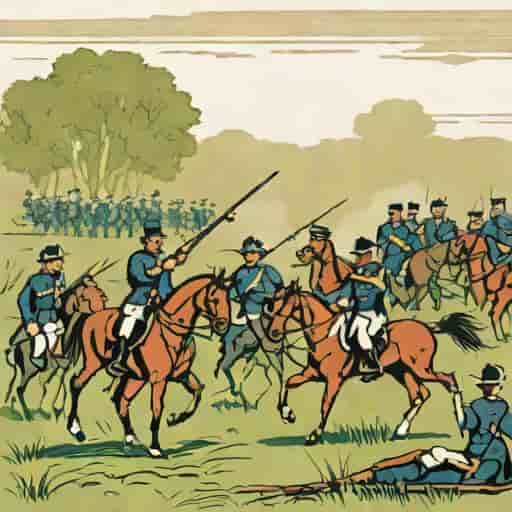
The Battle of Chancellorsville is considered one of the most remarkable and strategically significant battles of the American Civil War. Fought from April 30 to May 6, 1863, in Spotsylvania County, Virginia, this battle showcased both the brilliance and the tragedy of war. It is often remembered for Confederate General Robert E. Lee’s daring tactics against a numerically superior Union force led by Major General Joseph Hooker. Despite being outnumbered, Lee’s leadership and the bold maneuvers of his generals, including Stonewall Jackson, resulted in a Confederate victory that had profound consequences for both sides. Understanding the Battle of Chancellorsville offers insight into military strategy, leadership, and the human cost of conflict during one of the most turbulent periods in American history.
Background of the Battle
By early 1863, the Union Army of the Potomac, under Major General Joseph Hooker, had reorganized and prepared for a major offensive against the Confederate Army of Northern Virginia. Hooker aimed to outmaneuver Lee’s forces and take Richmond, the Confederate capital. The Union army outnumbered Lee’s forces almost two to one, giving them a significant advantage in manpower and resources. However, the terrain, weather conditions, and Lee’s strategic ingenuity set the stage for one of the most famous battles of the war.
Union and Confederate Strategies
Hooker’s strategy focused on flanking Lee’s army and cutting off Confederate supply lines. He intended to use his numerical superiority to encircle and overwhelm the Confederate forces. Meanwhile, Lee understood the risks of being outnumbered but believed that aggressive tactics could compensate for his smaller army. Lee decided to divide his forces, sending Stonewall Jackson on a risky maneuver to strike the Union’s right flank unexpectedly. This decision would prove decisive in the outcome of the battle.
Key Events of the Battle
The Battle of Chancellorsville began with movements and skirmishes on April 30, as both sides sought advantageous positions. Hooker initially positioned his troops near Chancellorsville, believing he had trapped Lee’s army. However, Lee’s decision to divide his forces, despite the numerical disadvantage, caught Hooker by surprise. Jackson led a daring flanking march, moving thousands of Confederate soldiers through dense woods to attack the unsuspecting Union right flank on May 2, 1863.
Stonewall Jackson’s Flank Attack
Jackson’s flanking maneuver is considered one of the most brilliant tactical moves of the Civil War. Arriving unexpectedly on the Union’s right side, the Confederate forces launched a devastating assault, causing panic and disorder among Union troops. This attack disrupted Hooker’s plans and forced the Union army to retreat to defensive positions. Tragically, Stonewall Jackson was mortally wounded by friendly fire later that evening, an event that significantly impacted Confederate morale despite their tactical victory.
Union Response and Retreat
After Jackson’s attack, Hooker attempted to reorganize his forces and counter the Confederate advance, but confusion and miscommunication hindered his efforts. The Union army was forced to adopt defensive positions, suffering heavy casualties in the process. By May 6, Hooker ordered a retreat across the Rappahannock River, acknowledging the effectiveness of Lee’s tactics. The Confederate victory at Chancellorsville demonstrated the importance of leadership, initiative, and audacity in military strategy, even against a numerically superior opponent.
Casualties and Human Cost
The Battle of Chancellorsville was costly for both sides. Estimates indicate that the Union army suffered approximately 17,000 casualties, including killed, wounded, and missing soldiers. The Confederate army, although victorious, lost around 13,000 men. The death of Stonewall Jackson was a significant blow to the Confederate leadership and morale, as he had been one of Lee’s most trusted generals. The human cost of the battle reflects the intensity of the fighting and the high stakes of Civil War engagements.
Impact on Military Strategy
Chancellorsville highlighted the significance of bold tactics, intelligence, and maneuver warfare. Lee’s willingness to divide his smaller army in the face of a larger force is studied in military academies as an example of audacity and calculated risk. The Union’s failure to anticipate Jackson’s flanking movement demonstrates the importance of reconnaissance and flexibility in responding to dynamic battlefield conditions. Overall, the battle serves as a case study in leadership, strategy, and the complexities of command in warfare.
Aftermath and Consequences
The Confederate victory at Chancellorsville had immediate and long-term consequences. While Lee successfully defeated a larger Union force, the loss of Stonewall Jackson weakened the Confederate command structure for future battles. The Union army’s morale was significantly affected, prompting leadership changes and reassessment of strategies. Politically, the battle reinforced the perception of Lee as a brilliant military leader, but it also highlighted the ongoing challenges for the Confederacy in sustaining its forces over a prolonged war.
Connection to Gettysburg
Chancellorsville set the stage for the Battle of Gettysburg, which occurred two months later in July 1863. Lee’s confidence in his army’s capabilities following the victory at Chancellorsville influenced his decision to invade the North. While Chancellorsville was a tactical triumph, the subsequent campaign in Pennsylvania would result in a significant defeat for Lee and the Confederate Army. Understanding Chancellorsville provides critical context for the decisions and strategies employed in the Gettysburg campaign.
Lessons from the Battle
The Battle of Chancellorsville offers several important lessons in military history and leadership. First, it demonstrates the value of audacity and innovation, as Lee’s decision to divide his forces despite numerical inferiority turned the tide of the battle. Second, it emphasizes the importance of communication and coordination, as Union missteps and lack of reconnaissance contributed to their defeat. Third, it illustrates the human cost of war, including the impact of losing key leaders like Stonewall Jackson, which can affect morale and operational effectiveness. Finally, it shows how tactical victories must be evaluated within the larger strategic context, as Chancellorsville’s success did not ultimately lead to long-term Confederate advantage.
Historical Significance
- Demonstrates the effectiveness of unconventional tactics and flanking maneuvers.
- Highlights the importance of leadership and decision-making under pressure.
- Provides insight into Civil War combat, including terrain challenges and troop coordination.
- Serves as a precursor to the Gettysburg Campaign and other major engagements.
- Reflects the human cost of warfare, including casualties and the loss of key leaders.
The Battle of Chancellorsville remains one of the most studied and debated engagements of the American Civil War. Fought in early May 1863, it showcased Confederate General Robert E. Lee’s daring tactics, Stonewall Jackson’s remarkable flanking maneuver, and the challenges faced by the Union Army under Joseph Hooker. Despite being outnumbered, the Confederates achieved a significant victory, demonstrating the importance of leadership, strategy, and initiative in warfare. The battle’s high casualties and the loss of key leaders underscore the human cost of the conflict, while its impact on subsequent campaigns, particularly Gettysburg, highlights its strategic significance. Chancellorsville serves as a vital historical lesson in both military strategy and the complexities of command, making it a pivotal moment in the history of the American Civil War.