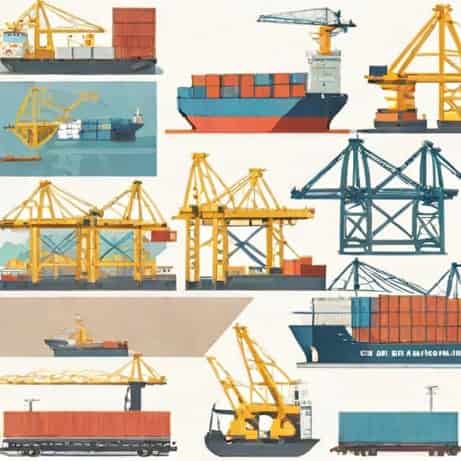
The International Container Transshipment Terminal (ICTT) in Kochi is one of India’s most significant maritime infrastructure projects, designed to handle large volumes of international container traffic efficiently. Located in the state of Kerala, this terminal plays a pivotal role in enhancing India’s shipping capabilities, reducing dependency on foreign ports for transshipment, and strengthening trade links with global markets. The facility’s modern design, advanced equipment, and strategic location make it a critical hub for containerized cargo in the Indian Ocean region. For enthusiasts and researchers, photos of the ICTT in Kochi provide a visual insight into its scale, operations, and technological sophistication, illustrating why it is considered a benchmark for port development in India.
Overview of the International Container Transshipment Terminal
The ICTT, also known as Vallarpadam Terminal, is located on the western coast of India and serves as a major gateway for container traffic entering and leaving the country. Commissioned with the aim of reducing India’s dependence on ports in Sri Lanka and the UAE for transshipment, the terminal has transformed Kochi into a crucial hub for maritime trade. It is operated by the Cochin Port Trust and has been equipped with state-of-the-art facilities capable of handling ultra-large container vessels, which is essential for accommodating increasing global trade volumes.
Design and Infrastructure
The design of the ICTT in Kochi reflects modern port engineering principles, emphasizing efficiency, safety, and scalability. The terminal features multiple berths, deep-water access, and advanced cranes capable of lifting containers swiftly. Its infrastructure is built to handle large container ships, which are increasingly common in global shipping routes. The layout of the terminal ensures smooth cargo movement from ships to storage areas, and then onward to trucks or rail, minimizing delays and congestion.
Technological Advancements
One of the key factors that set the ICTT apart from other Indian ports is its emphasis on technology. The terminal uses automated systems for container handling, tracking, and storage. Gantry cranes, reach stackers, and automated guided vehicles are some of the technologies deployed to enhance operational efficiency. These technologies also improve safety by reducing human error and optimizing container placement and retrieval. Photos of these operations often highlight the scale of the machinery and the meticulous organization required to manage such a busy facility.
Capacity and Operations
The ICTT in Kochi has been designed to handle millions of twenty-foot equivalent units (TEUs) annually, making it one of the largest container terminals in India. Its strategic location allows vessels to dock without extensive delays, facilitating faster turnaround times. Operational efficiency is further improved by integrated logistics systems that coordinate loading, unloading, and transportation seamlessly. Images of the terminal often show the organized stacking of containers, large container cranes in motion, and the bustling activity of trucks and cargo handling equipment, all of which emphasize the operational scale of the facility.
Strategic Importance
Beyond its operational capacity, the ICTT holds immense strategic significance for India. By providing a domestic solution for transshipment, it reduces reliance on ports in Colombo, Dubai, and Singapore, saving time and shipping costs for exporters and importers. Additionally, its location along the major east-west shipping route in the Indian Ocean enhances India’s maritime presence and trade competitiveness. Photos of the terminal often capture its proximity to the sea, illustrating the natural advantages of its location and the depth of water that allows large container ships to dock safely.
Economic Impact
The economic benefits of the ICTT extend beyond maritime operations. The terminal has generated employment opportunities, both directly within port operations and indirectly through logistics, warehousing, and ancillary services. It has also stimulated trade growth in Kerala and across India by facilitating faster and more reliable cargo movement. Photographs showcasing workers, cranes, and cargo movement help depict the human and economic activity associated with the terminal.
Environmental and Sustainability Measures
Given the size and intensity of its operations, the ICTT has implemented various environmental measures to minimize its ecological impact. These include efficient energy use in operations, controlled handling of hazardous materials, and monitoring of marine ecosystems around the terminal. Some images of the facility show green buffer zones and landscaped areas, highlighting efforts to balance industrial activity with environmental stewardship.
Visual Documentation and Photos
Photos of the ICTT in Kochi are not only aesthetically impressive but also serve educational and informational purposes. They provide insights into
- The massive scale of container handling equipment and infrastructure.
- Efficient stacking and organization of containers.
- Docking of ultra-large container vessels at deep-water berths.
- The interaction of various logistics systems, including trucks, rail, and cranes.
- The integration of technology in managing cargo operations.
These images help the public, students, and professionals visualize the complexity of port operations and understand the importance of modern container terminals in global trade.
Global Recognition and Benchmarking
The ICTT in Kochi has gained recognition as a model for modern port infrastructure in India. International shipping companies and maritime experts frequently study its design, technology, and operational strategies to benchmark best practices. Photos documenting the terminal’s layout, cranes, and vessel handling contribute to research, training, and awareness efforts in maritime studies, logistics, and supply chain management.
Tourism and Public Interest
While primarily a commercial facility, the ICTT also attracts public interest due to its scale and modernity. Visitors, including students and maritime enthusiasts, often seek out photos and documentation to better understand port operations. These visuals help bridge the gap between industrial functionality and public education, highlighting the terminal’s role in national infrastructure development.
The International Container Transshipment Terminal in Kochi represents a significant milestone in India’s maritime infrastructure, offering advanced technology, strategic location, and efficient container handling capabilities. Photos of the terminal provide a window into its massive scale, sophisticated operations, and economic impact, offering valuable insights for students, professionals, and the general public. As India continues to expand its maritime trade, the ICTT in Kochi will remain a critical hub, exemplifying the importance of modern port facilities in facilitating global commerce. Through visual documentation, the public can appreciate the intricate workings of this terminal and understand its vital role in enhancing India’s trade and logistics capabilities.