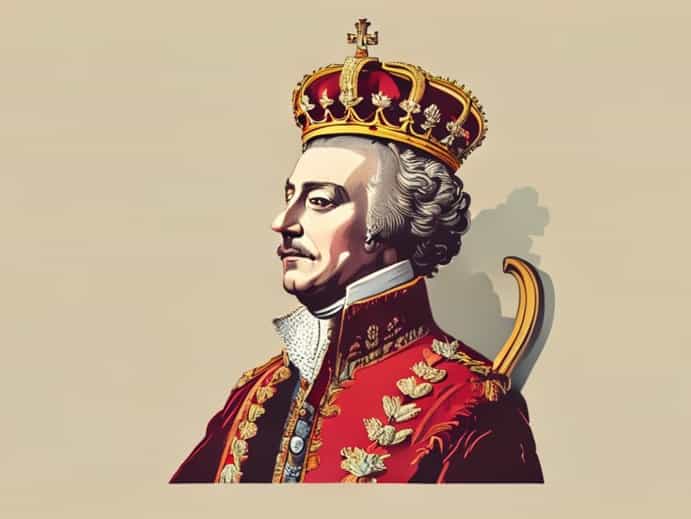
King Louis XIV of France, often referred to as the Sun King, is remembered as one of the most influential monarchs in European history. His reign, which lasted over seventy years from 1643 to 1715, marked a period of unparalleled political, cultural, and economic consolidation in France. Louis XIV’s monarchy is synonymous with absolute power, elaborate court life, and the centralization of authority, reflecting the ideals of absolutism that dominated much of Europe during the seventeenth and early eighteenth centuries. Understanding his reign provides insight into the development of modern statecraft and the complexities of monarchical power.
Early Life and Ascension to the Throne
Louis XIV was born in 1638 to Louis XIII and Queen Anne of Austria. He became king at the tender age of four following the death of his father in 1643. Due to his youth, a regency was established under his mother’s guidance, along with the influence of Cardinal Mazarin, who acted as chief minister. The early years of his reign were shaped by the political turbulence of the Fronde, a series of civil wars that challenged royal authority. Experiencing such unrest firsthand influenced Louis XIV’s determination to consolidate power and prevent similar uprisings during his own rule.
The Fronde and Lessons in Governance
The Fronde was a combination of noble and parliamentary revolts that threatened the monarchy. While young Louis XIV was not actively ruling during this period, the chaos left a lasting impression. It reinforced his belief that a strong, centralized authority was necessary to maintain order and stability. Consequently, once he assumed personal control of the government in 1661, Louis XIV was determined to minimize the influence of the nobility and enforce his vision of absolute monarchy.
Absolutism and Centralization of Power
Louis XIV’s monarchy is a prime example of absolutism, the political doctrine that vested all power in the hands of the sovereign. He famously stated, L’Ãtat, c’est moi (I am the state), highlighting his belief that his authority was supreme. By controlling the military, taxation, legal systems, and administration, Louis XIV centralized power and reduced the independence of regional authorities. His reign established a model for absolute monarchy that influenced rulers across Europe.
Control over the Nobility
One of Louis XIV’s key strategies to consolidate power involved restructuring the nobility. He required many nobles to spend time at the opulent Palace of Versailles, effectively removing them from their regional power bases. By hosting elaborate ceremonies, managing court life, and granting privileges selectively, Louis XIV maintained control over the aristocracy. This system limited potential threats and ensured that the nobility’s loyalty was directed toward the crown rather than their own estates.
Cultural Patronage and Versailles
Louis XIV’s reign is also renowned for its cultural achievements. The king actively promoted the arts, literature, and architecture, reinforcing his political power through cultural dominance. The construction of the Palace of Versailles exemplifies this approach. Versailles was not only a magnificent residence but also a symbol of royal authority, grandeur, and the centralization of governance. Artists, musicians, writers, and architects were commissioned to create works that glorified the monarchy and projected France’s image as the leading power in Europe.
Impact on Arts and Sciences
During Louis XIV’s reign, French culture flourished. He established institutions such as the Académie Française to standardize the French language and promote literary excellence. The king supported painters like Charles Le Brun and composers such as Jean-Baptiste Lully, creating a cultural environment that combined artistic innovation with political propaganda. This cultural legacy not only enhanced the prestige of the monarchy but also influenced European art and culture for generations.
Economic Policies and Administration
Louis XIV’s economic policies were guided by his finance minister, Jean-Baptiste Colbert, who implemented mercantilist strategies to strengthen the French economy. These policies emphasized state control over trade, industry, and colonial expansion to maximize wealth and resources. Colbert’s reforms improved infrastructure, encouraged domestic manufacturing, and sought to reduce reliance on imports. While these measures initially boosted economic growth, the costs of prolonged wars and lavish spending at Versailles eventually strained the treasury.
Military Expansion
Military power was central to Louis XIV’s monarchy. He built one of the most formidable armies in Europe, allowing France to exert influence and pursue territorial expansion. The king engaged in multiple wars, including the War of Devolution, the Franco-Dutch War, and the War of the Spanish Succession. While these campaigns enhanced France’s political standing and territorial reach, they also contributed to mounting national debt and set the stage for future economic challenges.
Religion and Royal Authority
Louis XIV’s reign was marked by a strong alignment with the Catholic Church. The king viewed religious uniformity as essential for political stability and enforced policies such as the revocation of the Edict of Nantes in 1685, which had previously granted religious freedom to Protestants. This decision forced Huguenots to convert to Catholicism or leave France, consolidating the monarchy’s influence but causing social and economic disruptions due to the emigration of skilled workers.
Legacy of Absolutism
The monarchy of Louis XIV left an enduring legacy on French governance and European politics. His centralized authority, administrative reforms, and cultural patronage set standards for future rulers and defined the concept of absolute monarchy. However, his costly wars, extravagant lifestyle, and rigid social control also contributed to economic and social pressures that later fueled unrest in France.
King Louis XIV’s monarchy represents a pinnacle of absolute rule, characterized by centralized authority, cultural patronage, economic ambition, and military strength. His reign reshaped France, elevating it to a position of European dominance while simultaneously laying the groundwork for challenges that would emerge in the following century. By consolidating power, controlling the nobility, and promoting cultural grandeur, Louis XIV exemplified the ideals of absolutism, leaving a profound impact on the history of monarchy and statecraft. Understanding his rule provides valuable insights into the dynamics of power, governance, and the interplay between politics, culture, and society in early modern Europe.