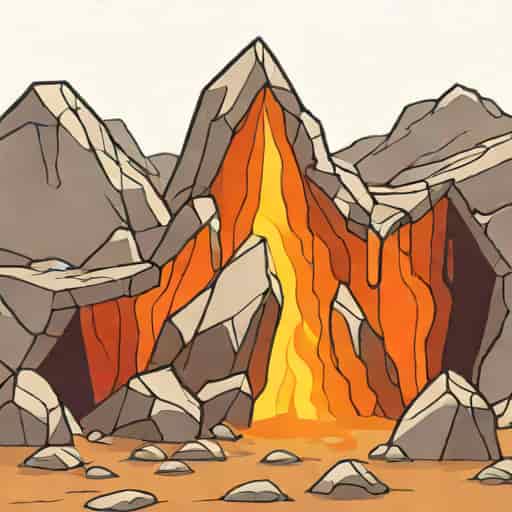
Deep beneath the Earth’s surface, powerful geological processes are constantly at work shaping the planet we live on. One of the most important of these processes involves magma that cools and solidifies within the Earth’s crust. Magmatic rocks that crystallize inside the crust play a crucial role in forming continents, mountains, and the foundations of many landscapes. Although these rocks are hidden from view for long periods of time, they provide valuable clues about Earth’s internal structure, tectonic activity, and long-term geological evolution.
Understanding Magmatic Rocks
Magmatic rocks, also known as igneous rocks, form from molten material called magma. Magma originates deep within the Earth, where temperatures are high enough to melt rock. When this molten material begins to cool and solidify, it forms crystalline structures that become solid rock.
Magmatic rocks are broadly classified into two main types based on where they crystallize those that form at the surface and those that form inside the crust. Rocks that crystallize inside the crust are known as intrusive or plutonic igneous rocks. Their slow cooling environment gives them distinctive textures and characteristics.
What Does It Mean to Crystallize Inside the Crust?
When magma rises from deeper layers of the Earth but does not reach the surface, it becomes trapped within the crust. Over time, this magma cools very slowly due to the insulating effect of surrounding rock. As a result, mineral crystals have enough time to grow large and well-defined.
This slow crystallization process is a key feature of magmatic rocks that form inside the crust. The size and arrangement of crystals provide geologists with information about the cooling history and chemical composition of the magma.
Intrusive Igneous Rocks Explained
Intrusive igneous rocks are formed when magma solidifies beneath the Earth’s surface. These rocks are not exposed immediately and may remain buried for millions of years. Eventually, erosion or tectonic uplift can bring them to the surface, where they become visible.
Because of their underground origin, intrusive rocks generally have coarse-grained textures. This texture reflects the slow cooling process that allows crystals to grow large enough to be seen with the naked eye.
Common Types of Intrusive Magmatic Rocks
Several well-known rock types fall into the category of magmatic rocks that crystallize inside the crust. Each type reflects differences in magma composition and cooling conditions.
- Granite, rich in quartz and feldspar, commonly found in continental crust
- Diorite, with intermediate composition between granite and basalt
- Gabbro, dark-colored and rich in iron and magnesium
- Peridotite, originating deep in the mantle and occasionally intruding the crust
These rocks are important components of the Earth’s crust and are widely used in construction and industry.
Textures and Crystal Formation
The texture of magmatic rocks that crystallize inside the crust is one of their most distinguishing features. Because cooling happens slowly, crystals grow large and interlock with one another. This coarse-grained texture is known as phaneritic texture.
In some cases, magma may cool in stages, resulting in porphyritic texture, where large crystals are embedded in a finer-grained matrix. This texture indicates changes in cooling rate as magma moves through different levels of the crust.
Large Intrusive Structures
Magmatic rocks inside the crust often form large geological structures called plutons. These bodies of solidified magma vary in size and shape, depending on how the magma intruded the surrounding rock.
Types of Plutonic Bodies
Geologists classify intrusive bodies based on their size and geometry. Some of the most common types include
- Batholiths, massive bodies that can span hundreds of kilometers
- Stocks, smaller versions of batholiths
- Dikes, vertical or steeply inclined intrusions that cut across rock layers
- Sills, horizontal intrusions that form between existing rock layers
Batholiths are especially important because they often form the core of mountain ranges, such as those found in continental collision zones.
The Role of Magma Composition
The chemical composition of magma strongly influences the type of magmatic rock that forms inside the crust. Magma rich in silica tends to be thick and sticky, cooling slowly and forming light-colored rocks like granite.
In contrast, magma with lower silica content is more fluid and forms darker rocks such as gabbro. These differences affect not only rock appearance but also how magma moves and crystallizes within the crust.
Tectonic Settings and Formation
Magmatic rocks that crystallize inside the crust are closely linked to plate tectonics. Many intrusive rocks form at convergent plate boundaries, where one tectonic plate moves beneath another. The melting process generates magma that rises and intrudes into the crust.
Intrusive rocks also form at divergent boundaries and hotspots, where mantle material rises and partially melts. These tectonic environments create ideal conditions for magma to accumulate and crystallize underground.
Geological Importance of Intrusive Rocks
These rocks are vital for understanding Earth’s geological history. Their mineral composition can reveal information about temperature, pressure, and chemical conditions deep within the Earth at the time of formation.
Radiometric dating of intrusive rocks allows scientists to determine the age of crustal formation and tectonic events. This information helps reconstruct the evolution of continents and mountain systems.
Economic and Practical Significance
Magmatic rocks that crystallize inside the crust have significant economic value. Granite and related rocks are widely used as building materials due to their durability and aesthetic appeal.
In addition, many valuable mineral deposits are associated with intrusive igneous rocks. Metals such as copper, gold, and molybdenum often form in or near these bodies due to hydrothermal processes linked to magma cooling.
Weathering and Exposure at the Surface
Although intrusive rocks form deep underground, they eventually become exposed at the surface through erosion and uplift. Over millions of years, softer surrounding rocks wear away, leaving resistant intrusive rocks behind.
This process explains why granite domes and rugged mountain landscapes are common features in regions with extensive intrusive rock formations.
Why These Rocks Matter Today
Studying magmatic rocks that crystallize inside the crust helps scientists better understand natural hazards such as volcanic activity and earthquakes. By examining ancient intrusive rocks, geologists gain insight into how magma behaves beneath the surface.
This knowledge is essential for assessing geological risks and managing natural resources responsibly.
Magmatic rocks that crystallize inside the crust are fundamental components of the Earth’s geological framework. Formed through slow cooling and crystallization beneath the surface, these intrusive igneous rocks reveal valuable information about magma processes, tectonic activity, and the evolution of continents. From massive batholiths to everyday building stone, their influence is visible in both natural landscapes and human structures. By understanding how these rocks form and why they matter, we gain a deeper appreciation for the dynamic processes shaping our planet beneath our feet.