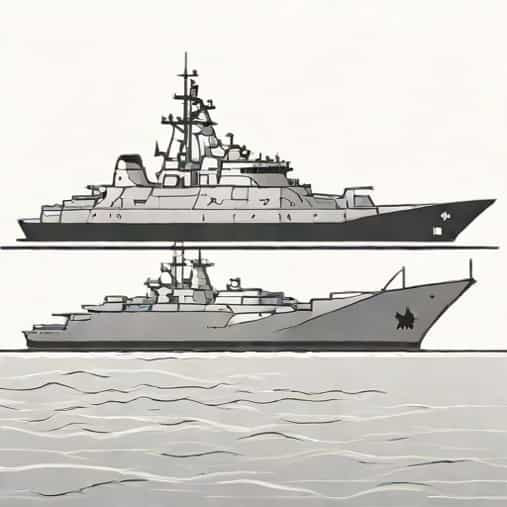
In the modern era of naval warfare, the concept of a warship has evolved far beyond simple battleships and cruisers of the past. Today, the most powerful warships combine advanced technology, heavy firepower, and multi-role capabilities, enabling nations to project power across the globe. These vessels are equipped with sophisticated radar systems, missile launchers, and defense mechanisms that allow them to engage threats in the air, on land, and at sea. Understanding which warships are considered the most powerful in the world today requires examining their capabilities, technology, and the strategic roles they play in contemporary military operations. As global tensions shift and naval powers modernize their fleets, these warships are at the forefront of maritime security and defense strategy.
Defining the Most Powerful Warship
Power in a warship is determined not only by its size but also by its weaponry, speed, defense systems, and versatility. Modern warships are expected to perform a variety of roles, from air defense to missile strikes and anti-submarine warfare. Some of the key features that contribute to a warship’s power include advanced radar and sensor systems, vertical launch systems for missiles, electronic warfare capabilities, and the ability to operate alongside aircraft or drones. The most powerful warships are those that can dominate the seas in multiple domains while maintaining strategic flexibility and survivability against various threats.
Types of Modern Warships
- Aircraft CarriersThese serve as floating airbases, capable of deploying fighter jets, reconnaissance planes, and helicopters. Their power lies in their ability to project air power anywhere in the world.
- DestroyersFast and heavily armed, destroyers are equipped with missiles, guns, and torpedoes. They are used for both offensive strikes and defensive operations, often escorting larger vessels like aircraft carriers.
- SubmarinesAlthough not always visible on the surface, modern nuclear submarines carry powerful missiles and torpedoes, making them stealthy and deadly components of naval power.
- FrigatesFrigates are versatile warships designed for escort duties, anti-submarine warfare, and limited missile strikes, complementing larger vessels in a fleet.
Aircraft Carriers The Flagships of Naval Power
Aircraft carriers are widely regarded as the most powerful warships in the world due to their ability to project air power without relying on local bases. These floating airbases can carry dozens of fighter jets, attack helicopters, and support aircraft. Modern carriers feature nuclear propulsion in some cases, allowing them to operate for extended periods without refueling. They are heavily defended by missile systems, electronic countermeasures, and escort ships that protect them from enemy attacks. The strategic importance of aircraft carriers makes them central to global naval dominance, as they enable nations to influence events thousands of miles from their home shores.
Nimitz-Class Aircraft Carriers
The United States Navy’s Nimitz-class carriers are among the most well-known and powerful in the world. Each ship displaces over 100,000 tons and can carry more than 70 aircraft. Nuclear-powered and equipped with advanced radar and defensive systems, these carriers can operate continuously for decades with minimal refueling. Their ability to launch precision strikes, conduct reconnaissance, and support humanitarian missions makes them versatile assets in both wartime and peacetime operations.
Ford-Class Aircraft Carriers
The newer Ford-class carriers represent the next generation of naval power. With improved technology, faster aircraft launch systems, enhanced radar, and more efficient nuclear reactors, these carriers surpass previous classes in operational efficiency. The Ford-class can carry a similar complement of aircraft as the Nimitz-class but offers increased sortie rates and reduced crew requirements. Their strategic value ensures that the United States maintains naval superiority across multiple oceans.
Destroyers and Guided-Missile Ships
While aircraft carriers are the centerpiece of a fleet, destroyers play a critical role in modern naval warfare. These warships are smaller than carriers but highly maneuverable and armed with advanced missile systems capable of targeting air, surface, and underwater threats. Destroyers often escort carriers to provide layered defense, using anti-missile and anti-submarine systems to protect larger vessels. Their multi-role capability makes them indispensable in both offensive and defensive operations.
Arleigh Burke-Class Destroyers
The Arleigh Burke-class destroyers of the U.S. Navy are considered some of the most capable surface combatants today. Equipped with the Aegis Combat System, these ships can track hundreds of targets simultaneously and launch guided missiles to intercept incoming threats. Their versatility allows them to engage in missile defense, anti-submarine warfare, and land attack missions, ensuring that they remain a critical part of any naval strike group.
Type 45 Destroyers
The United Kingdom’s Type 45 destroyers are among the most advanced air-defense warships. These ships are equipped with cutting-edge radar, missile systems, and electronic warfare capabilities that allow them to defend fleets against modern aerial threats. Although smaller than aircraft carriers, Type 45 destroyers are highly effective in ensuring the safety of larger vessels while maintaining the ability to strike targets on land or at sea.
Nuclear Submarines Stealth and Strike Power
Submarines, particularly nuclear-powered ones, are considered some of the most potent weapons in modern naval arsenals. Their stealth capabilities allow them to operate undetected, while their nuclear or conventional missiles give them a strategic strike capacity that can alter the balance of power in a conflict. Submarines are crucial for both deterrence and combat operations, providing a hidden yet formidable threat to adversaries.
Virginia-Class Submarines
The United States’ Virginia-class submarines are among the most advanced in the world, combining stealth, speed, and firepower. They carry torpedoes, cruise missiles, and advanced sonar systems, allowing them to engage enemy ships and submarines effectively. Their nuclear propulsion enables extended underwater missions, providing persistent presence and strategic deterrence across global waters.
Borei-Class Submarines
Russia’s Borei-class submarines are also highly significant in global naval power. Equipped with intercontinental ballistic missiles and modern stealth technology, these submarines are designed to penetrate defenses and deliver strategic strikes. They are a key component of Russia’s naval deterrent, ensuring the country maintains influence in maritime operations worldwide.
Factors Determining Modern Naval Power
The most powerful warships today are defined not just by their size or weaponry but by their ability to operate effectively in modern warfare. Key factors include
- Advanced radar and sensor technology for detecting threats at long distances
- Versatile missile systems capable of engaging air, land, and sea targets
- Stealth features to reduce detectability by enemy forces
- Electronic warfare systems for disrupting enemy communications and targeting
- Integration with aircraft, drones, and other naval assets for coordinated operations
The most powerful warships in the world today are defined by a combination of technological sophistication, firepower, and strategic versatility. Aircraft carriers like the Nimitz and Ford classes, destroyers such as the Arleigh Burke and Type 45, and nuclear submarines like the Virginia and Borei classes represent the cutting edge of naval capability. These vessels allow nations to project power, deter aggression, and maintain maritime security in an increasingly complex global environment. Understanding the capabilities and roles of these warships provides insight into modern military strategy and highlights the ongoing evolution of naval warfare, where technology, speed, and firepower define dominance on the seas.