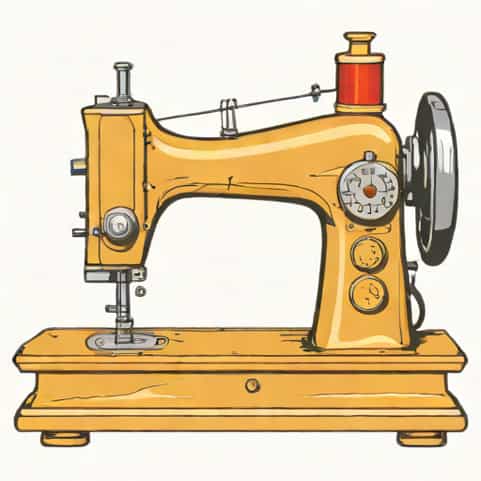
The history of sewing machines is filled with innovation, but few models capture the attention of collectors and sewing enthusiasts like the National Two Spool sewing machine. This unique machine stands out for its unusual design and its ability to operate without a traditional bobbin, making it different from most machines of its era. For many who love vintage sewing tools, the National Two Spool is not only a functional piece of equipment but also a fascinating example of mechanical creativity. Its story combines history, engineering, and practical use, offering insights into the development of sewing technology in the early 20th century.
Origins of the National Two Spool Sewing Machine
The National Sewing Machine Company, based in Belvidere, Illinois, was well-known for producing durable and innovative machines during the late 19th and early 20th centuries. Among its many products, the Two Spool model became one of the most distinctive. Introduced in the early 1900s, it was designed to compete with other sewing machine companies by offering a unique solution to a common sewing challenge the need to wind bobbins constantly.
What Makes the Two Spool Different
Unlike traditional sewing machines that rely on a bobbin and a spool of thread, the National Two Spool used two standard spools of thread-one on top and one below. This eliminated the need for winding bobbins, which was often seen as a time-consuming process. Instead, the machine used a clever mechanism to draw thread directly from a second spool placed in the shuttle, producing stitches with greater efficiency.
Advantages of the Two Spool System
- No need to stop sewing to wind bobbins, saving time for users.
- Compatible with standard thread spools, making it convenient to replace thread.
- Produced a strong and reliable lockstitch comparable to other machines of the time.
- Considered more innovative compared to competing designs in the domestic sewing market.
Design and Build of the National Two Spool
The machine was built with the durability expected from the National Sewing Machine Company. It featured a cast-iron body with ornate designs, often decorated with decals and details that made it visually appealing. Many machines were sold with treadle cabinets, though some were adapted for electric motors as sewing technology advanced. Collectors today admire not only its mechanical uniqueness but also the craftsmanship and decorative qualities of the machine.
Shuttle Mechanism
The shuttle in the Two Spool machine was specially designed to hold a spool of thread instead of a bobbin. This mechanism allowed the machine to create consistent stitches without the added step of rewinding. Although the design was ingenious, it also required users to adapt to a different threading process compared to standard machines.
Popularity and Market Reception
While the National Two Spool was innovative, it did not achieve widespread dominance in the sewing market. Many households were already accustomed to machines with bobbins, and the unfamiliar design may have limited its appeal. Still, it attracted attention among users who appreciated the convenience of skipping bobbin winding. Today, the machine is more well-known among collectors and sewing historians than it was in its prime.
Collecting the National Two Spool Today
The National Two Spool sewing machine is highly sought after by collectors of antique and vintage sewing equipment. Its rarity and unique design make it a prized possession. Many enthusiasts look for machines with intact decals, complete treadle cabinets, and original parts. Machines in working condition are even more valuable, though restoring them can require special knowledge due to their uncommon shuttle system.
What Collectors Look For
- Machines with original decals and decorative finishes intact.
- A functional shuttle that still holds the second spool correctly.
- Original treadle cabinet, drawers, or attachments.
- Documentation, manuals, or advertising materials that came with the machine.
Restoration and Maintenance
For those who acquire a National Two Spool, restoration can be a rewarding project. The cast-iron body ensures durability, but the unique shuttle requires careful handling. Replacing missing parts may be difficult since these machines were produced in limited numbers compared to mainstream models. Collectors often share advice in sewing machine forums and groups dedicated to antique machines, making it possible to find replacement parts or reproduction manuals.
Why the National Two Spool Matters
The significance of the National Two Spool sewing machine lies not just in its rarity but also in its role as a creative response to the challenges of its time. By removing the need for winding bobbins, the designers showed that innovation in sewing was possible in unexpected ways. Though it never became the industry standard, it demonstrated how companies competed for market share by experimenting with new ideas. The machine represents the inventive spirit of early American manufacturing.
Comparison with Other Sewing Machines of Its Era
In the early 20th century, sewing machine companies like Singer, White, and Wheeler & Wilson dominated the market. These machines relied on bobbin systems, which were familiar and widely accepted. The National Two Spool stood apart by breaking this mold. While Singer emphasized reliability and branding, National tried to distinguish itself through mechanical innovation. This contrast shows how diverse the sewing machine market was at the time, with different companies adopting unique strategies to attract users.
Legacy of the National Sewing Machine Company
The National Sewing Machine Company was more than just the producer of the Two Spool. It manufactured a wide variety of machines, from domestic treadles to industrial models. It also produced bicycles, toys, and other products, making it a versatile American manufacturer. Although the company eventually declined in the mid-20th century, its machines remain cherished by collectors and sewing enthusiasts today. The Two Spool model stands out as one of its boldest experiments, remembered for its unusual design and mechanical creativity.
The National Two Spool in Modern Times
Today, the National Two Spool sewing machine is mostly seen in private collections, antique shops, and museums. Sewing enthusiasts often share stories of finding them in attics, barns, or estate sales. For those who value both function and history, owning one represents a connection to a time when mechanical design was at the forefront of household innovation. Even if it is no longer practical for everyday sewing, the machine continues to inspire appreciation for the craftsmanship of early 20th-century inventors.
The National Two Spool sewing machine remains a fascinating example of how creativity shaped the evolution of sewing technology. Its departure from the traditional bobbin system set it apart as a true innovation, even if it never achieved mass popularity. Today, collectors treasure it not only for its rarity but also for the ingenuity it represents. As a product of the National Sewing Machine Company, it reflects an era when manufacturers pushed boundaries and explored new solutions. The legacy of the National Two Spool endures as both a functional machine and a historical artifact, keeping alive the spirit of innovation in the world of sewing.