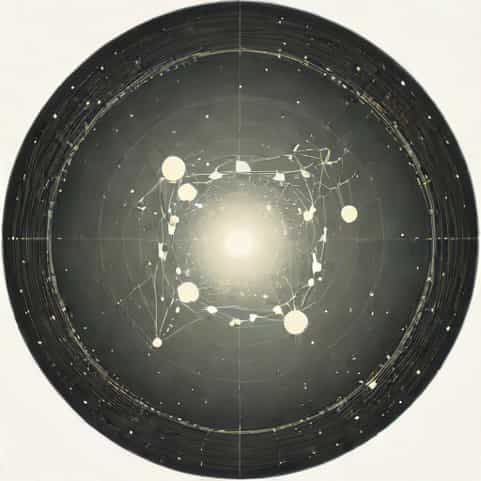
Orion is one of the most recognizable constellations in the night sky and is prominently visible from the Northern Hemisphere. Known as The Hunter, Orion has captivated stargazers for centuries due to its bright stars, distinctive belt, and rich mythology. Observing Orion offers both amateur and professional astronomers the opportunity to explore celestial objects such as stars, nebulae, and deep-sky features. Understanding when and how Orion is visible in the Northern Hemisphere, as well as identifying its main components and significance, provides valuable insight into astronomy, navigation, and cultural heritage. This topic explores the visibility, features, and historical importance of Orion for observers in the Northern Hemisphere.
When Orion is Visible in the Northern Hemisphere
Orion is best observed in the Northern Hemisphere during the winter months, particularly from late November to early February. During this period, the constellation rises in the eastern sky in the evening and moves across the southern sky as the night progresses. Its visibility depends on the observer’s latitude, with Orion being fully visible between approximately 85 degrees north and 75 degrees south. At latitudes closer to the equator, Orion appears higher in the sky, while at more northern latitudes, it may appear lower on the horizon.
Seasonal Appearance
- Winter (November to February) Orion is prominent in the evening sky and easiest to observe.
- Autumn (September to November) Appears later at night, gradually rising higher as winter approaches.
- Spring (March to May) Orion becomes a morning constellation, visible before sunrise.
- Summer (June to August) Orion is mostly below the horizon and largely invisible from most Northern Hemisphere locations.
Observers planning to view Orion should choose clear nights with minimal light pollution to fully appreciate the constellation’s bright stars and celestial details.
Main Stars of Orion
Orion is defined by several prominent stars, many of which are among the brightest in the night sky. Its most famous feature is the Belt of Orion, composed of three aligned stars Alnitak, Alnilam, and Mintaka. Surrounding these stars are other significant stars including Betelgeuse, Bellatrix, Saiph, and Rigel. Together, these stars create a distinctive hourglass shape that is easily recognizable.
Key Stars and Features
- Betelgeuse A red supergiant marking Orion’s right shoulder, notable for its reddish hue and variability in brightness.
- Bellatrix Orion’s left shoulder, a blue-white star contributing to the constellation’s distinctive shape.
- Alnitak, Alnilam, and Mintaka The three stars forming Orion’s Belt, used historically for navigation.
- Saiph Marks Orion’s right knee, a bright blue-white star.
- Rigel A blue-white supergiant representing Orion’s left foot, one of the brightest stars in the night sky.
Orion’s Mythological and Cultural Significance
Orion has been significant in mythology and culture for thousands of years. In Greek mythology, Orion was a giant hunter placed among the stars by Zeus. Different cultures have their interpretations; for example, in Egyptian astronomy, Orion was associated with Osiris, the god of the afterlife. Native American tribes, Chinese astronomers, and other cultures have also identified Orion as a figure of importance, often linking it to hunting, seasonal changes, and navigation.
Cultural Associations
- Greek mythology Orion the Hunter, often depicted pursuing the Pleiades or fighting Taurus the bull.
- Egyptian astronomy Associated with Osiris and agricultural cycles.
- Native American traditions Seen as a celestial hunter or warrior figure.
- Chinese astronomy Represented part of the White Tiger constellation in Chinese celestial mapping.
The constellation’s appearance in myths often reflects the importance of celestial observation for seasonal planning, navigation, and storytelling across cultures.
Deep-Sky Objects in Orion
Orion is not only visually striking due to its bright stars but also rich in deep-sky objects. The most famous of these is the Orion Nebula (M42), a stellar nursery where new stars are born. This nebula is visible to the naked eye as a faint glow in Orion’s Sword, located just below the Belt of Orion. In addition to M42, Orion contains several star clusters, nebulae, and variable stars, making it a popular target for both amateur telescopes and professional astronomical research.
Notable Celestial Objects
- Orion Nebula (M42) A massive star-forming region visible to the naked eye and through telescopes.
- Horsehead Nebula A dark nebula located near Alnitak, often photographed by astrophotographers.
- Flame Nebula An emission nebula adjacent to Orion’s Belt star Alnitak.
- Multiple star clusters Several small clusters are scattered throughout Orion, including the Trapezium Cluster in the Orion Nebula.
Using Orion for Navigation
Historically, Orion has been used as a navigational aid, particularly in the Northern Hemisphere. The Belt of Orion points toward Sirius, the brightest star in the sky, which lies in the constellation Canis Major. Sailors and travelers have used Orion to determine cardinal directions and approximate latitude during winter nights. Its high visibility and distinctive pattern make it one of the most practical and reliable constellations for orientation.
Practical Navigation Tips
- Follow Orion’s Belt southeast to locate Sirius, the brightest star in the sky.
- Use Orion’s Belt alignment to approximate east-west directions at midnight.
- Observe Orion’s position relative to the horizon to estimate seasonal changes.
Observing Orion
To fully appreciate Orion, observers should find a location with minimal light pollution and a clear, dark sky. The constellation is large, spanning roughly 30 degrees across the sky, so it is easily visible to the naked eye. Binoculars or small telescopes can enhance views of the Orion Nebula and other deep-sky objects. Winter evenings are ideal for observation, and tracking the constellation’s movement throughout the night provides a dynamic view of celestial motion.
Observation Tips
- Look for the three-star Belt of Orion as the easiest starting point.
- Identify bright stars such as Betelgeuse and Rigel to outline the constellation.
- Use binoculars to explore the Orion Nebula and surrounding clusters.
- Observe from areas with low artificial light for the best visibility.
Orion is one of the most prominent and recognizable constellations visible in the Northern Hemisphere, offering a combination of bright stars, deep-sky objects, and cultural significance. Its visibility during winter, distinctive Belt, and mythological associations make it a favorite among stargazers, astronomers, and cultural historians alike. Observing Orion provides both aesthetic enjoyment and educational opportunities, from tracking celestial motion to exploring stellar nurseries like the Orion Nebula. For anyone interested in astronomy or the history of human engagement with the night sky, Orion remains a compelling and accessible gateway to understanding the universe.