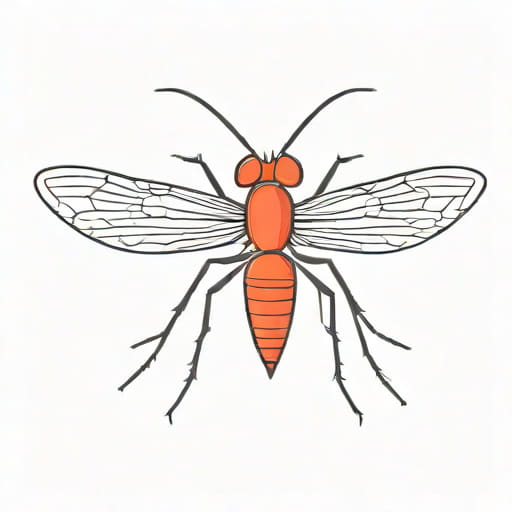
A picture of an Anopheles mosquito provides a detailed view of one of the most significant insects in the world due to its role as a primary vector for malaria. Anopheles mosquitoes are recognized for their distinctive resting posture, spotted wings, and slender body. Observing a picture of this mosquito allows scientists, students, and the general public to identify its unique features, understand its biology, and appreciate the critical impact it has on human health. Such images are crucial in education, research, and public health campaigns aimed at malaria prevention and vector control. Beyond its scientific relevance, a picture of an Anopheles mosquito also highlights the intricate anatomy and behavior of this fascinating yet dangerous insect.
Identification and Physical Features
Anopheles mosquitoes are easily distinguishable from other mosquito species due to several key characteristics. When viewed in a picture, they often appear with their body angled at a 45-degree angle while resting, with their abdomen pointing upward. Their wings have distinctive dark and light patterns, and their slender body measures around 3 to 7 millimeters in length. These visual cues are essential for proper identification, particularly in regions where multiple mosquito species coexist. A picture can help entomologists and public health workers distinguish Anopheles from other mosquitoes that are less significant in malaria transmission.
Distinctive Features
- Slender, elongated body measuring 3-7 millimeters
- Angled resting posture with abdomen pointing upwards
- Spotted wings with dark and light markings
- Long, segmented legs suitable for delicate landing
- Proboscis adapted for blood-feeding
Life Cycle and Behavior
A picture of an Anopheles mosquito often captures it in various stages of its life cycle or feeding behavior. Like all mosquitoes, Anopheles undergoes complete metamorphosis egg, larva, pupa, and adult. Eggs are laid on water surfaces, often in clean, stagnant water, which serves as a breeding ground. Larvae and pupae live in water, feeding on organic matter and microorganisms. Adult Anopheles mosquitoes are nocturnal feeders, with females requiring blood meals for egg production. Observing a picture of an adult female mosquito feeding or resting can provide insight into its feeding habits and ecological role.
Life Cycle Stages
- Egg Laid on or near water surfaces
- Larva Aquatic, feeds on microorganisms
- Pupa Aquatic, non-feeding, transitional stage
- Adult Terrestrial, capable of flight, feeds on nectar and blood (females)
- Reproduction Blood meal required for female egg production
Role in Malaria Transmission
The Anopheles mosquito is infamous as the primary vector for malaria, a disease caused by Plasmodium parasites. When a female Anopheles mosquito bites an infected person, it ingests the parasites, which then develop in the mosquito’s gut and migrate to its salivary glands. During subsequent bites, the mosquito transmits the parasite to new hosts, perpetuating the malaria cycle. A picture of an Anopheles mosquito in feeding position can help illustrate the transmission process, making it a powerful visual tool for educational and public health purposes. Understanding its appearance and behavior is critical for malaria control strategies worldwide.
Malaria Transmission Process
- Female mosquito bites an infected host and ingests Plasmodium parasites
- Parasites develop inside the mosquito and reach salivary glands
- Mosquito bites another human, transmitting the parasites
- Cycle continues, causing widespread malaria infections
- Visual identification aids in vector control efforts
Geographical Distribution
Pictures of Anopheles mosquitoes often accompany educational materials showing their widespread distribution. These mosquitoes are found in tropical and subtropical regions, particularly in Africa, Asia, and South America. Some species are more prevalent in specific regions, making regional identification critical for targeted malaria control. Images can highlight regional variations in wing patterns, body coloration, and size, helping entomologists track and manage mosquito populations effectively.
Regional Presence
- Africa Home to Anopheles gambiae, the most efficient malaria vector
- Asia Various species including Anopheles stephensi and Anopheles dirus
- South America Anopheles darlingi is a primary vector
- Distribution influenced by water sources, climate, and human activity
- Visual identification aids in mapping and control strategies
Preventive Measures and Public Health
A picture of an Anopheles mosquito is also vital for raising awareness about preventive measures against mosquito-borne diseases. Strategies include eliminating standing water, using insecticide-treated bed nets, applying repellents, and implementing vector control programs. Visual materials showing the mosquito, its life stages, and its feeding habits reinforce educational campaigns and improve public understanding. Images can also illustrate proper protective behaviors, making the abstract concept of mosquito transmission more tangible and actionable.
Key Preventive Measures
- Eliminate standing water to prevent breeding
- Use insecticide-treated bed nets during sleep
- Apply mosquito repellents on exposed skin
- Wear protective clothing in high-risk areas
- Support community and governmental vector control programs
Scientific and Educational Value
Pictures of Anopheles mosquitoes hold tremendous scientific and educational value. Entomologists rely on high-quality images for species identification, behavioral studies, and ecological research. Educators use pictures in classrooms to teach students about insect anatomy, life cycles, and disease transmission. Public health campaigns employ images to illustrate the importance of vector control and malaria prevention. Each picture can highlight anatomical details, such as the proboscis, legs, and wing patterns, making it a valuable tool for learning and awareness.
Applications in Research and Education
- Species identification in entomology
- Visual aid for understanding life cycle and feeding behavior
- Teaching material for biology and health education
- Public health campaigns to prevent malaria
- Research documentation for vector control strategies
A picture of an Anopheles mosquito provides more than a visual reference; it serves as an educational, scientific, and public health tool. From its distinctive anatomy and life cycle to its role in malaria transmission, such images help individuals and professionals understand and manage one of the world’s most significant vectors of disease. By studying and sharing pictures of Anopheles mosquitoes, we gain insights into their biology, behavior, and global impact, while also promoting preventive measures that save lives. Whether for research, education, or public awareness, these images are essential in the ongoing effort to reduce the burden of malaria and improve human health worldwide.