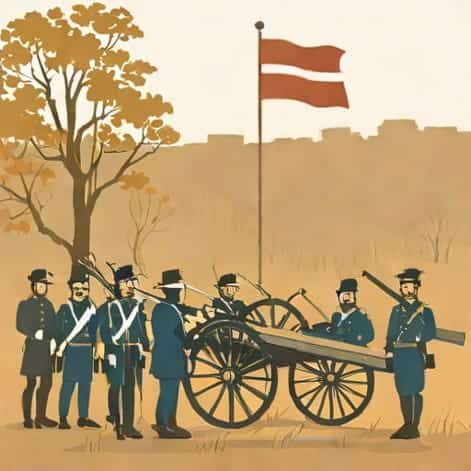
The Battle of Chancellorsville, fought from April 30 to May 6, 1863, is often considered one of the most remarkable engagements of the American Civil War due to its combination of bold tactics, unexpected maneuvers, and significant consequences for both the Union and Confederate forces. Despite being outnumbered, Confederate General Robert E. Lee executed daring strategies that ultimately led to a Confederate victory, but the battle came at a high cost, including the loss of one of Lee’s most trusted generals, Stonewall Jackson. This battle is frequently studied for its demonstration of leadership, risk-taking, and the unpredictability of war, providing lessons in both military strategy and human endurance.
Prelude to the Battle
In the spring of 1863, Union forces under Major General Joseph Hooker launched a campaign aimed at capturing the Confederate capital of Richmond, Virginia. Hooker’s Army of the Potomac consisted of over 130,000 men, significantly larger than Lee’s Army of Northern Virginia, which numbered around 60,000. Despite this numerical advantage, Hooker’s cautious approach and hesitation allowed Lee to take the initiative. Understanding the terrain and the strengths of his troops, Lee decided to engage in a bold offensive maneuver rather than retreat, setting the stage for the Battle of Chancellorsville.
Union and Confederate Strategies
Hooker initially intended to use his superior numbers to flank Lee and force the Confederates into retreat. He positioned his forces along the Rappahannock River, planning to cross and surround Lee’s army. Meanwhile, Lee, recognizing the danger of being outflanked, executed one of the most daring strategies in Civil War history. He divided his already smaller force, sending Lieutenant General Thomas Stonewall Jackson on a wide flanking march to attack the Union right. This decision, though risky, demonstrated Lee’s willingness to take calculated risks to achieve strategic advantage.
The Battle Unfolds
The Battle of Chancellorsville began in earnest on April 30, with Union forces occupying strong defensive positions near Chancellorsville, Virginia. Early skirmishes set the stage for more intense fighting, as both sides maneuvered to gain control of key roads and high ground. Hooker initially held a strong position, but Lee’s bold decision to divide his forces would soon turn the tide. Jackson’s flanking maneuver, executed on May 2, surprised the Union troops and caused significant disarray in their lines. The sudden Confederate attack forced Union soldiers to retreat in confusion, demonstrating the effectiveness of Lee and Jackson’s strategy.
Stonewall Jackson’s Flank Attack
Jackson’s flanking attack is one of the most famous events of the battle. Taking advantage of dense forest known as the Wilderness, Jackson’s troops moved silently and struck the Union right flank in the late afternoon. The attack created chaos and allowed Confederate forces to capture key positions, effectively destabilizing Hooker’s command. Jackson’s ability to coordinate a complex movement under challenging conditions highlighted his tactical brilliance. Tragically, after the attack, Jackson was accidentally shot by his own men during a nighttime reconnaissance, leading to his death several days later from pneumonia. This loss would deeply affect Confederate morale despite the tactical success.
Union Response and Challenges
Union forces, although larger, faced significant challenges during the battle. Hooker’s initial caution and delayed reactions allowed Lee and Jackson to seize the initiative. The difficult terrain of the Wilderness, with thick underbrush and narrow roads, hindered communication and troop movements. Union soldiers were unable to effectively coordinate counterattacks, leading to fragmented defenses and confusion. Despite these challenges, Hooker attempted to reorganize his forces, but the momentum gained by the Confederate attacks proved difficult to overcome, resulting in heavy Union casualties and eventual withdrawal from the battlefield.
Casualties and Losses
The Battle of Chancellorsville was costly for both sides. Confederate forces suffered approximately 13,000 casualties, including the loss of Stonewall Jackson. Union forces incurred around 17,000 casualties, reflecting the intensity of the fighting and the effectiveness of Confederate tactics. The high number of casualties underscores the brutal nature of Civil War battles and the significant human cost of strategic decisions. Despite winning the battle, Lee’s army was weakened, and the loss of Jackson deprived the Confederates of one of their most capable commanders for the remainder of the war.
Aftermath and Significance
The Confederate victory at Chancellorsville demonstrated the effectiveness of audacious strategy and the value of leadership under pressure. Lee’s ability to defeat a larger force through daring maneuvers has made the battle a classic case study in military strategy. However, the death of Stonewall Jackson served as a sobering reminder that even successful battles can have long-term consequences. For the Union, the defeat led to criticism of Hooker’s leadership and a reevaluation of tactics used in subsequent campaigns. The battle set the stage for the Gettysburg campaign later that year, influencing the trajectory of the war.
Lessons from Chancellorsville
Several key lessons emerge from the Battle of Chancellorsville
- The importance of taking calculated risks and seizing initiative in military operations.
- The impact of terrain and environment on troop movements and battlefield outcomes.
- The critical role of leadership, communication, and coordination in complex engagements.
- The human cost of war, as demonstrated by high casualties and the loss of key commanders.
- How a smaller, well-coordinated force can overcome a larger but less decisive opponent.
Legacy of the Battle
Chancellorsville is remembered as a remarkable Confederate victory and a testament to the leadership of Robert E. Lee and Stonewall Jackson. It is often cited in military studies for its bold tactics and innovative approaches to battlefield strategy. At the same time, the battle exemplifies the unpredictable nature of war, where victories can come with heavy losses. The engagement remains a crucial event in Civil War history, reflecting the complexities of leadership, the challenges of command, and the sacrifices made by soldiers on both sides.
In summary, the Battle of Chancellorsville was a pivotal encounter in the American Civil War, highlighting both the brilliance and the costs of military strategy. Lee’s daring division of his forces, combined with Jackson’s decisive flanking attack, led to a Confederate victory despite overwhelming Union numbers. The battle demonstrated the importance of initiative, leadership, and terrain, while also serving as a reminder of the human toll of war. Chancellorsville’s events influenced subsequent campaigns and remain a key chapter in the study of Civil War history, offering lessons that extend beyond the battlefield to leadership and strategic thinking in any context.