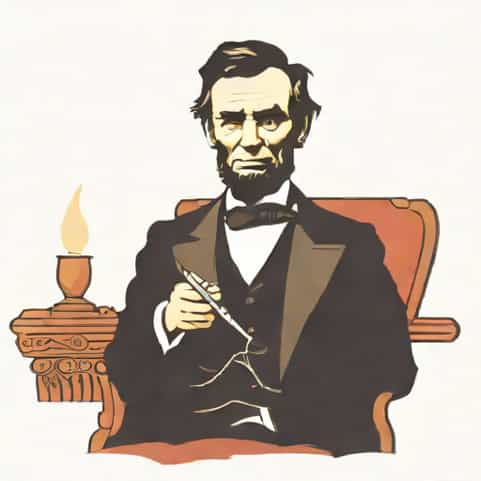
The assassination of Abraham Lincoln remains one of the most significant and tragic events in American history. Occurring in the final days of the Civil War, it shocked the nation and left an indelible mark on the course of American politics and society. Lincoln, the 16th President of the United States, had guided the country through its most severe internal conflict and was widely admired for his leadership and vision for a united nation. His untimely death, however, abruptly ended his plans for reconstruction and reconciliation, leaving the country to grapple with profound grief, political uncertainty, and the long-term consequences of his absence.
Background of Abraham Lincoln
Abraham Lincoln rose from humble beginnings to become a transformative leader in American history. Born in 1809 in a log cabin in Kentucky, Lincoln’s early life was marked by hardship and self-education. He developed a keen interest in law, politics, and public service, eventually entering politics as a member of the Illinois State Legislature and later the U.S. House of Representatives. Lincoln’s election as president in 1860 came at a time of deep division in the United States, as tensions over slavery and states’ rights reached a critical point.
Leadership During the Civil War
Lincoln’s presidency was defined by the Civil War, a conflict that tested the nation’s unity and survival. He faced enormous challenges, including managing military strategy, navigating political divisions, and maintaining public support. His leadership was characterized by determination, pragmatism, and a commitment to preserving the Union. The Emancipation Proclamation of 1863 and his advocacy for the passage of the 13th Amendment reflected his vision for a country free from the institution of slavery. Lincoln’s tireless efforts earned him admiration, but also enemies, some of whom harbored violent intentions.
John Wilkes Booth and the Conspiracy
John Wilkes Booth, a well-known actor and Confederate sympathizer, was the central figure in the plot to assassinate Lincoln. Booth vehemently opposed the abolition of slavery and Lincoln’s policies during the Civil War. He believed that killing the president would avenge the South’s defeat and potentially destabilize the Union government. Booth did not act alone; he orchestrated a broader conspiracy that aimed to eliminate key members of the federal government, including Vice President Andrew Johnson and Secretary of State William H. Seward, in an attempt to create chaos and revive the Confederate cause.
Motivations Behind the Assassination
- Booth’s loyalty to the Confederate cause and resentment toward the Union victory.
- Opposition to Lincoln’s policies, particularly the abolition of slavery.
- Desire for revenge for the South’s defeat in the Civil War.
- Intention to disrupt the government and create political instability.
The Events of April 14, 1865
On the evening of April 14, 1865, Lincoln attended a performance of the play Our American Cousin at Ford’s Theatre in Washington, D.C., accompanied by his wife, Mary Todd Lincoln. Unbeknownst to the president, John Wilkes Booth had gained access to the theater and positioned himself in a box above the stage. As the play reached a climactic moment, Booth entered the box and fired a single shot into the back of Lincoln’s head. Lincoln was instantly mortally wounded, and Booth leapt onto the stage, escaping into the night amid the ensuing panic.
Immediate Aftermath
After being shot, Lincoln was carried across the street to the Petersen House, where he remained unconscious for several hours. Despite the efforts of doctors, Lincoln passed away early the next morning on April 15, 1865. The nation was plunged into mourning, and the news of his assassination spread rapidly, eliciting shock, grief, and outrage. Booth, meanwhile, fled and evaded capture for nearly two weeks before being cornered and killed by Union soldiers. Other conspirators involved in the plot were eventually apprehended and brought to trial, facing execution or imprisonment for their roles in the crime.
Impact on the Nation
The assassination of Abraham Lincoln had immediate and long-term consequences for the United States. In the short term, it left the country without its guiding leader during a critical period of reconstruction and healing. Vice President Andrew Johnson assumed the presidency, facing the daunting task of reconciling a divided nation while navigating political conflicts with Congress. Lincoln’s death also fueled national trauma and mourning, with memorials and public ceremonies held to honor his legacy. Over time, the assassination became a defining moment in American history, symbolizing both the cost of the Civil War and the vulnerability of national leaders.
Legacy of Lincoln’s Assassination
- Accelerated the urgency of Reconstruction and the integration of formerly enslaved individuals into society.
- Influenced public perception of presidential security and led to increased protective measures for future leaders.
- Strengthened Lincoln’s legacy as a martyr for the Union and a champion of freedom.
- Inspired historical reflection on the consequences of political violence in shaping the nation.
The assassination of Abraham Lincoln stands as a pivotal event in American history, intertwining tragedy, political upheaval, and national reflection. The actions of John Wilkes Booth abruptly ended the life of a president who had guided the nation through its most difficult period, leaving a legacy of courage, vision, and sacrifice. Lincoln’s death underscored the fragility of leadership and the profound impact that one individual can have on the course of history. Today, the story of his assassination continues to resonate, reminding us of the enduring importance of unity, justice, and the values that Lincoln championed throughout his life.