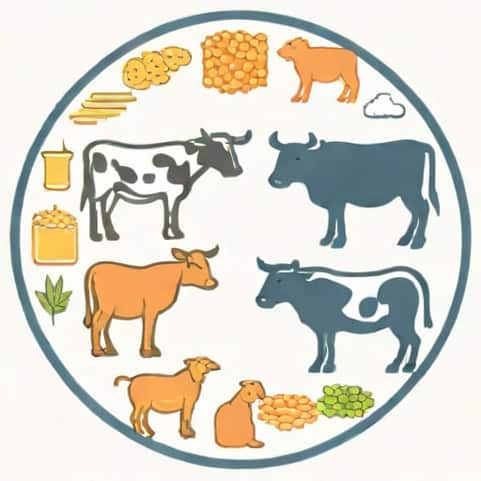
Animals have evolved diverse digestive systems to process the foods available in their environments, allowing them to obtain essential nutrients efficiently. Among these adaptations, one of the most significant distinctions is between ruminant and non-ruminant animals. This difference affects not only their feeding habits but also their physiology, behavior, and nutritional requirements. Understanding these distinctions is essential for animal husbandry, veterinary care, and agricultural practices, as it informs diet formulation, management strategies, and the overall health of livestock and other domesticated animals.
Definition of Ruminant Animals
Ruminant animals are herbivores that possess a specialized stomach with multiple compartments, allowing them to efficiently digest fibrous plant materials such as grasses and hay. The ruminant digestive system includes four compartments the rumen, reticulum, omasum, and abomasum. This complex system enables ruminants to break down cellulose and extract maximum nutrients through a process known as rumination, or chewing the cud. Examples of ruminants include cattle, sheep, goats, deer, and giraffes.
Characteristics of Ruminants
- Four-compartment stomach (rumen, reticulum, omasum, abomasum)
- Ability to digest cellulose from plant cell walls
- Chewing of cud to aid in mechanical and chemical breakdown of food
- Symbiotic relationship with microorganisms in the rumen to ferment food
- Predominantly herbivorous diet, mainly grasses and roughage
Digestive Process in Ruminants
The digestive process in ruminants begins when they initially consume plant material and swallow it into the rumen. The rumen acts as a fermentation vat, where microorganisms such as bacteria, protozoa, and fungi break down cellulose into volatile fatty acids that provide energy. Partially digested food, called cud, is regurgitated, chewed again, and swallowed for further breakdown. The reticulum collects dense ptopics and moves them back to the rumen or omasum. The omasum absorbs water and nutrients, while the abomasum functions similarly to a monogastric stomach, secreting enzymes to digest proteins. This highly efficient system allows ruminants to thrive on low-quality, fibrous plant material.
Definition of Non-Ruminant Animals
Non-ruminant animals, in contrast, have a simpler, single-chambered stomach and cannot efficiently digest large amounts of fibrous plant material. They rely more on enzymatic digestion in the stomach and small intestine rather than microbial fermentation in a multi-compartment stomach. Non-ruminants include monogastric herbivores, omnivores, and carnivores. Examples include pigs, horses, rabbits, and humans. Some non-ruminant herbivores, like horses and rabbits, possess a well-developed cecum for microbial fermentation, but this is less efficient than the rumen of ruminants.
Characteristics of Non-Ruminants
- Single-chambered stomach for enzymatic digestion
- Limited ability to digest cellulose from plant material
- Rely on dietary proteins, carbohydrates, and fats for nutrition
- May use cecum or colon for partial microbial fermentation (hindgut fermenters)
- Diet can include a mix of plants, grains, and animal products
Digestive Process in Non-Ruminants
In non-ruminants, food passes from the mouth to the stomach, where acids and enzymes initiate protein breakdown. From the stomach, partially digested food moves into the small intestine, where enzymes from the pancreas and bile from the liver continue digestion and nutrient absorption. For herbivorous non-ruminants, fermentation may occur in the cecum or colon, allowing partial breakdown of fibrous materials. However, this process is less efficient than the foregut fermentation seen in ruminants. Non-ruminants typically require higher-quality feed that is easier to digest to meet their nutritional needs.
Comparison Between Ruminants and Non-Ruminants
The differences between ruminants and non-ruminants are both anatomical and functional, reflecting their adaptation to different types of diets and environments. Ruminants excel at extracting nutrients from coarse, fibrous plant material, whereas non-ruminants often require softer, more digestible food. The table below summarizes the main distinctions
Key Differences
- Stomach StructureRuminants have a four-chambered stomach, non-ruminants have a single-chambered stomach.
- Digestion MethodRuminants use microbial fermentation in the rumen; non-ruminants rely mainly on enzymatic digestion.
- Cud ChewingRuminants regurgitate and chew food multiple times; non-ruminants do not chew cud.
- DietRuminants can efficiently digest fibrous grasses; non-ruminants require more digestible food.
- Fermentation LocationForegut in ruminants; hindgut (cecum or colon) in some non-ruminants.
- EfficiencyRuminants can survive on low-quality forage; non-ruminants need nutrient-rich feed.
Examples and Importance in Agriculture
Understanding the distinction between ruminant and non-ruminant animals is crucial for livestock management, feed formulation, and economic efficiency in agriculture. Ruminants like cows, sheep, and goats are raised primarily for milk, meat, and wool, thriving on pasture and roughage. Non-ruminants such as pigs and poultry are often fed grains, fruits, and vegetables that are easier to digest and provide concentrated energy. Tailoring feed and care to the digestive system of each type of animal optimizes growth, reproduction, and overall health.
Examples of Ruminant Animals
- Cattle
- Sheep
- Goats
- Deer
- Giraffes
Examples of Non-Ruminant Animals
- Pigs
- Horses
- Rabbits
- Chickens
- Humans
Feeding Strategies
Feeding strategies must account for the digestive physiology of the animal. Ruminants benefit from grazing and roughage-rich diets, while non-ruminants require more energy-dense and easily digestible feeds. Supplements and additives are often necessary for non-ruminants to meet protein, vitamin, and mineral requirements. In contrast, ruminants can synthesize certain nutrients through microbial activity, reducing dependence on supplemental feeds.
Nutritional Considerations
- Ruminants Focus on forage quality, fiber content, and rumen health
- Non-Ruminants Focus on protein, energy, and digestibility
- Water requirements vary based on diet type and digestive system
- Monitoring feed conversion efficiency is critical for both types
The difference between ruminant and non-ruminant animals lies primarily in their digestive anatomy and the methods by which they extract nutrients from food. Ruminants, with their four-chambered stomachs, excel at breaking down fibrous plant material through microbial fermentation and cud chewing. Non-ruminants, with single-chambered stomachs, rely on enzymatic digestion and require higher-quality feed. These differences influence feeding strategies, livestock management, and agricultural productivity. Understanding these distinctions is essential for optimizing animal health, growth, and productivity, while also supporting sustainable farming practices that make efficient use of natural resources.