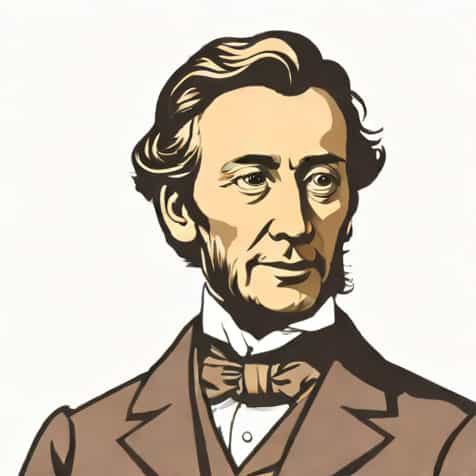
Alexis de Tocqueville is widely remembered as one of the most insightful political thinkers of the nineteenth century, a writer whose observations about democracy continue to shape discussions today. Many people know his name because of his famous work on the United States, but understanding what Alexis de Tocqueville did requires a closer look at his life, his travels, his political career, and his lasting influence. His ideas about democracy, equality, social conditions, and political institutions remain essential for anyone studying political science, sociology, or history.
Early Life and Intellectual Formation
Alexis de Tocqueville was born in 1805 in France during a time marked by political upheaval. The French Revolution and the rise of Napoleon deeply shaped the world he grew up in. Coming from a noble family, Tocqueville was surrounded by discussions about politics, society, and the role of government from a young age. These early experiences influenced his curiosity about how different forms of government affected daily life.
Education and Legal Training
Before becoming a writer and political thinker, Tocqueville studied law. This training helped him develop a structured way of analyzing institutions and social behavior. His legal background also prepared him for later government work, and it shaped his analytical approach when he examined society.
The Journey to America
When people ask what Alexis de Tocqueville did, the most famous answer involves his trip to the United States. In 1831, Tocqueville traveled to America with his friend Gustave de Beaumont. The official purpose of the trip was to study the American prison system, but the two men used the opportunity to investigate American society much more broadly.
Observation of American Life
Tocqueville spent nine months traveling across the United States, visiting cities, small towns, frontier settlements, and political institutions. He met with politicians, ordinary citizens, religious leaders, and reformers. His intention was to understand what made the American democratic experiment so successful.
-
He studied the role of local government.
-
He observed the influence of religion on society.
-
He examined how equality shaped daily interactions.
-
He investigated the strengths and weaknesses of democratic institutions.
These extensive observations later became the foundation for his most famous book.
The Writing of Democracy in America
One of the most important things Alexis de Tocqueville did was write Democracy in America, published in two volumes between 1835 and 1840. The book remains a classic work of political philosophy and one of the best analyses of American society ever written.
The Central Themes
Tocqueville explored a wide range of themes. His writing focused on the nature of democracy, the importance of civil society, and the potential dangers of majority rule. He also examined how equality was reshaping social relationships and how Americans balanced individual freedom with community responsibility.
Some of the main themes in Democracy in America include
-
The importance of local self-government
-
The role of religion in stabilizing democratic society
-
The potential threat of tyranny of the majority
-
The growing power of public opinion
-
The tension between liberty and equality
Impact of the Book
Tocqueville’s work made him famous in Europe and America. Scholars, politicians, and readers admired his clarity, insight, and ability to see both the strengths and weaknesses of democracy. Even today, his book is frequently studied for its remarkable predictions about the future of democratic societies.
Tocqueville as a Political Figure
While Tocqueville is mostly known as a writer and thinker, he also played an active role in French politics. His political involvement reveals another dimension of what Alexis de Tocqueville did during his lifetime.
Participation in Government
After returning from America, Tocqueville entered French public life. He served in the Chamber of Deputies and later became the foreign minister of France for a short period. Throughout his political career, he championed constitutional government, civil liberties, and social reform.
Views on Revolution and Society
Tocqueville lived through the 1848 Revolution in France, which strengthened his belief that societies must balance freedom and stability. His experiences during these political changes influenced his later writings, including his major study of the French Revolution.
The Study of the French Revolution
Another major accomplishment of Tocqueville’s career was his book The Old Regime and the Revolution. This work examined the causes and consequences of the French Revolution, offering a detailed analysis of the social and political structures that shaped France.
Insights into Social Change
Tocqueville argued that many features of the old monarchy survived even after the revolution and that deeper structural issues contributed to the upheaval. His analysis remains influential among historians because it connects political revolution with long-term social changes.
Contributions to Political Thought
When exploring what Alexis de Tocqueville did, it becomes clear that his lasting legacy lies in his contributions to political theory and sociology. His ideas help explain how democratic societies function and why they face certain challenges.
Analysis of Democracy
Tocqueville saw democracy as the future of the Western world. However, he also warned about potential risks, including excessive centralization of power and the possibility that people might trade freedom for comfort.
Influence on Modern Thinkers
His work influenced generations of scholars in both political science and sociology. Tocqueville is often credited with anticipating ideas such as
-
The importance of civic engagement
-
The need for checks on majority power
-
The challenges of maintaining individuality in mass society
-
The cultural impact of equality
What Made Tocqueville Unique
Many writers have studied democracy or political institutions, but Tocqueville stood out for several reasons. His combination of travel, observation, practical politics, and deep reflection made him one of the most comprehensive political thinkers of his time.
A Balance of Idealism and Realism
Tocqueville believed in the potential of democracy but also recognized its dangers. This balanced perspective makes his work valuable to readers across different political viewpoints.
A Sociological Approach
Unlike many philosophers of his era, Tocqueville paid close attention to everyday social behavior. He analyzed how cultural habits, religion, and community organizations shaped political life, making his approach surprisingly modern.
Legacy and Lasting Importance
Alexis de Tocqueville’s work continues to be widely read and discussed. His insights into political life remain relevant in a world where democracy faces new challenges and transformations.
Relevance Today
Tocqueville’s thoughts about equality, public opinion, individual freedom, and political participation still resonate. Modern debates about civic engagement, social trust, and the role of government frequently draw on his ideas.
A Timeless Observer
Few thinkers have been able to capture the spirit of democracy as accurately as Tocqueville. His ability to observe, question, and reflect made him a lasting voice in political philosophy.
Understanding what Alexis de Tocqueville did requires looking at his travels, his writing, his political involvement, and his intellectual contributions. He journeyed across America to study democracy firsthand, wrote one of the most important political books in history, served in French government, and analyzed the deep roots of social change. His ideas continue to shape modern discussions about democracy, society, and the future of political life. Tocqueville’s work endures because he combined careful observation with a genuine curiosity about how people live, govern, and shape their world.