Understanding basic geometric concepts is an important part of everyday learning, whether someone is studying mathematics at school, working in construction, or simply trying to solve practical problems at home. One of the most fundamental ideas in geometry is the perimeter of a square. Even though it sounds simple, this concept connects to many real-life applications, from measuring land and designing rooms to calculating materials needed for a project. Taking time to explore what the perimeter of a square really means helps build a strong foundation for more advanced math topics.
Understanding the Shape of a Square
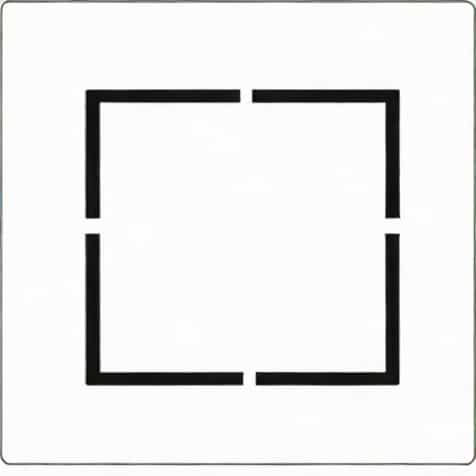
A square is one of the most familiar shapes in geometry. It belongs to a group of shapes known as quadrilaterals, which means it has four sides. What makes a square special is that all four sides are exactly the same length, and all four angles are right angles, measuring 90 degrees each. Because of this symmetry, a square is often used as the starting point for learning about area, perimeter, and other geometric properties.
Key Properties of a Square
Before discussing the perimeter of a square, it is helpful to understand its main characteristics. These properties make calculating the perimeter straightforward and consistent.
- All four sides have equal length
- All interior angles are 90 degrees
- Opposite sides are parallel
- The shape is perfectly symmetrical
What Is Perimeter in Geometry?
In geometry, the perimeter refers to the total distance around the outside of a shape. It is similar to measuring how far you would walk if you traveled along the edge of an object and returned to your starting point. Perimeter is always a linear measurement, which means it is expressed in units such as meters, centimeters, inches, or feet.
Why Perimeter Matters
The concept of perimeter is used in many everyday situations. For example, it helps determine how much fencing is needed to enclose a garden or how much trim is required to frame a window. Understanding perimeter is not just an academic exercise, but a practical skill with real-world value.
The Perimeter of a Square Explained Simply
The perimeter of a square is the total length of all four of its sides. Since every side of a square has the same length, calculating the perimeter becomes very simple. You only need to know the length of one side to find the entire distance around the square.
The Basic Formula
The formula for the perimeter of a square is straightforward. It is found by multiplying the length of one side by four. This is because the square has four equal sides.
Perimeter of a square = 4 Ã side length
For example, if one side of a square measures 5 units, the perimeter would be 4 Ã 5, which equals 20 units.
Units Used for Measuring the Perimeter of a Square
The perimeter of a square can be measured using different units depending on the situation. The unit used should match the unit of the side length. This consistency ensures accurate calculations and clear communication.
Common Units of Measurement
- Centimeters for small objects or drawings
- Meters for rooms, buildings, or land
- Inches for crafts or household items
- Feet for construction and landscaping
No matter which unit is used, the method for finding the perimeter of a square remains the same.
Real-Life Examples of the Perimeter of a Square
Understanding what is the perimeter of a square becomes easier when we see how it applies to everyday life. Squares appear in many places, both naturally and in human-made designs.
Home and Construction Projects
If you are installing a square tile floor, you may need to know the perimeter to calculate how much border material is required. Similarly, when framing a square window, the perimeter tells you how much wood or metal trim is needed.
Gardens and Outdoor Spaces
Imagine a square garden with equal sides. To place a fence around it, you must know the perimeter of the square. By measuring one side and multiplying by four, you can quickly estimate the total length of fencing required.
Common Mistakes When Calculating the Perimeter of a Square
Although the formula is simple, mistakes can still happen. Being aware of common errors helps avoid confusion and incorrect answers.
Confusing Perimeter with Area
One of the most frequent mistakes is confusing perimeter with area. The perimeter measures distance around the shape, while the area measures the space inside it. The formulas and units for these two concepts are different.
Using Inconsistent Units
Another mistake occurs when different units are mixed. If one side is measured in meters, the perimeter should also be expressed in meters. Mixing units can lead to inaccurate results.
Perimeter of a Square Compared to Other Shapes
Comparing the perimeter of a square to other shapes helps highlight its simplicity. Shapes like rectangles, triangles, and circles each have different formulas for calculating perimeter.
Square vs Rectangle
A rectangle has two pairs of equal sides, so its perimeter formula is different. A square is actually a special type of rectangle where all sides are equal, making its perimeter easier to calculate.
Square vs Circle
Unlike a square, a circle does not have sides. Its perimeter is called circumference and is calculated using a different formula involving pi. This comparison shows how unique and simple the square’s structure is.
Why the Perimeter of a Square Is Important in Education
The perimeter of a square is often one of the first geometric formulas taught in school. This is because it introduces students to the idea of measuring boundaries and using formulas in a logical way.
Building Mathematical Confidence
Learning how to calculate the perimeter of a square helps students gain confidence in math. The clear pattern and simple multiplication make it an excellent starting point for understanding more complex geometric concepts.
Foundation for Advanced Topics
Once students understand the perimeter of a square, they can more easily learn about polygons, coordinate geometry, and even real-world problem solving involving measurements.
Practical Tips for Remembering the Formula
Remembering how to calculate the perimeter of a square does not have to be difficult. A few simple tips can make it stick.
- Think of walking around the square and counting each side
- Remember that all sides are equal
- Use the phrase four sides, same length
These small memory aids help reinforce the concept in a natural way.
The perimeter of a square is the total distance around its four equal sides, calculated by multiplying the length of one side by four. While it is one of the simplest concepts in geometry, it plays a crucial role in education and everyday life. From home improvement projects to school lessons, understanding what is the perimeter of a square provides practical value and builds a strong foundation for learning mathematics. By mastering this basic idea, anyone can approach more complex measurements with greater confidence and clarity.